Source: Fortune.com
Summary
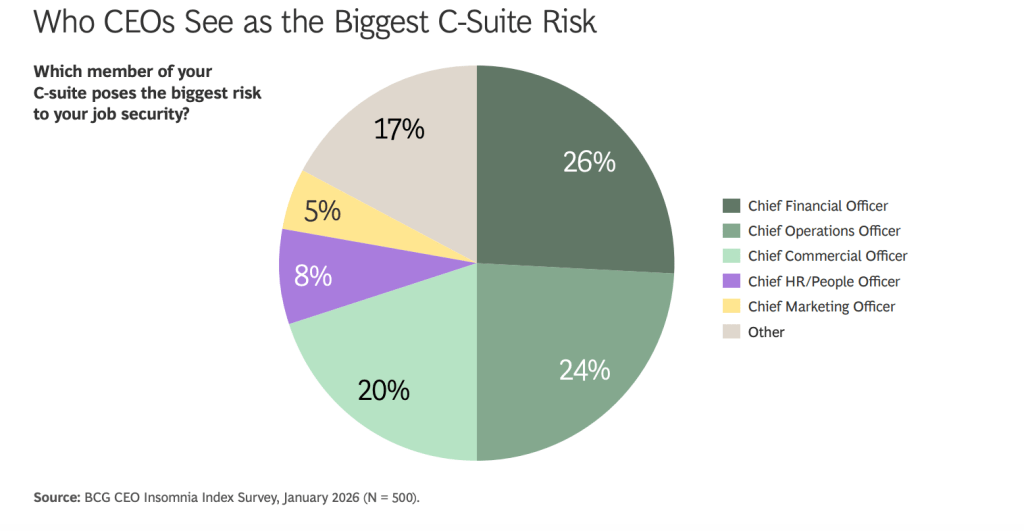
According to the BCG CEO Insomnia Index, a survey of 500 chief executives, 25% of CEOs view their CFO as the greatest threat to their job security, ahead of other C-suite roles. The survey found that CEOs rely heavily on CFOs for decision support, making it critical that finance chiefs are integrated into strategy and execution. The CFO role is evolving to be more forward-looking, and CEOs are looking to them to lead AI implementation and ensure returns. The report also noted that CEOs are experiencing high stress levels, with growth targets and cost management ranking among top concerns.
Our Reading
The numbers tell one story.
CEOs are increasingly dependent on their CFOs, but also fear them as a potential threat to their job security. The CFO’s role is evolving to be more forward-looking, and CEOs are looking to them to lead AI implementation and ensure returns. This shift reflects the growing importance of the CFO in strategy and execution. However, this also creates tension, as the CFO’s regular interaction with the board can build credibility and influence, potentially positioning them as a successor.
The CEO’s stress levels are intensifying, with an average stress score of 66.7 out of 100. Managing this stress requires balance between short- and long-term priorities and in how CEOs approach the role in their own lives.
The CFO’s growing influence is a double-edged sword for CEOs.
Author: Evan Null