Source: Fox News
Summary
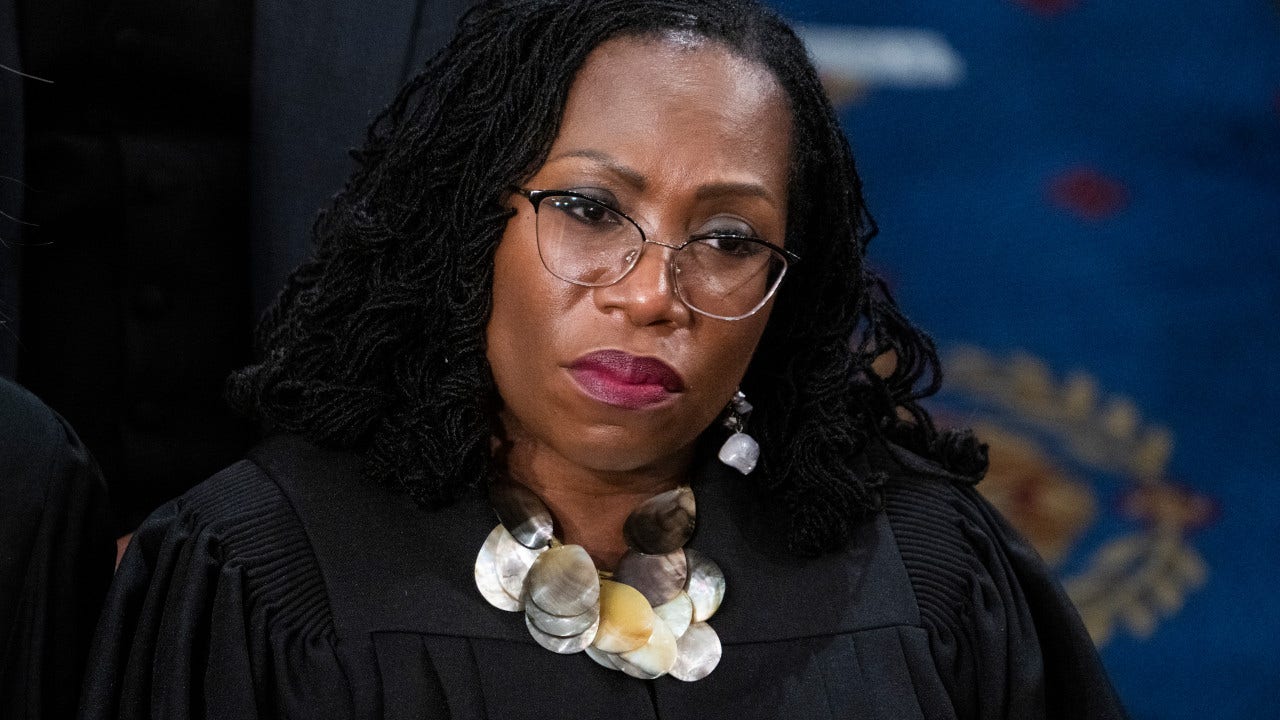
Justice Ketanji Brown Jackson dissented from the Supreme Court’s decision to send a Mississippi case back to U.S. District Court for reconsideration in light of the Court’s recent ruling in Louisiana v. Callais. The ruling limited the scope of Section 2 of the Voting Rights Act, which restricts how states draw districts affecting minority voters. Jackson argued that the Court’s decision did not address the issue of private enforcement of Section 2, and thus saw no basis for vacating the lower court’s judgment. The Court’s ruling in Louisiana v. Callais rejected race-based gerrymandering and may trigger new legal challenges over congressional boundaries.
Our Reading
As expected, the matter has reached another stage.
The Supreme Court’s decision in Louisiana v. Callais has sparked a new wave of legal challenges over congressional boundaries. Justice Ketanji Brown Jackson’s dissent highlights the ongoing debate over the interpretation of Section 2 of the Voting Rights Act. The Court’s ruling has the potential to make it harder for plaintiffs to challenge maps in question, requiring them to prove a racially discriminatory motive. The decision has also led to a re-examination of the role of race in redistricting. The familiar question of how to balance competing interests in the redistricting process remains a contentious issue.
Author: Evan Null