
Native Americans Commemorate 150th Anniversary of Battle of Little Bighorn
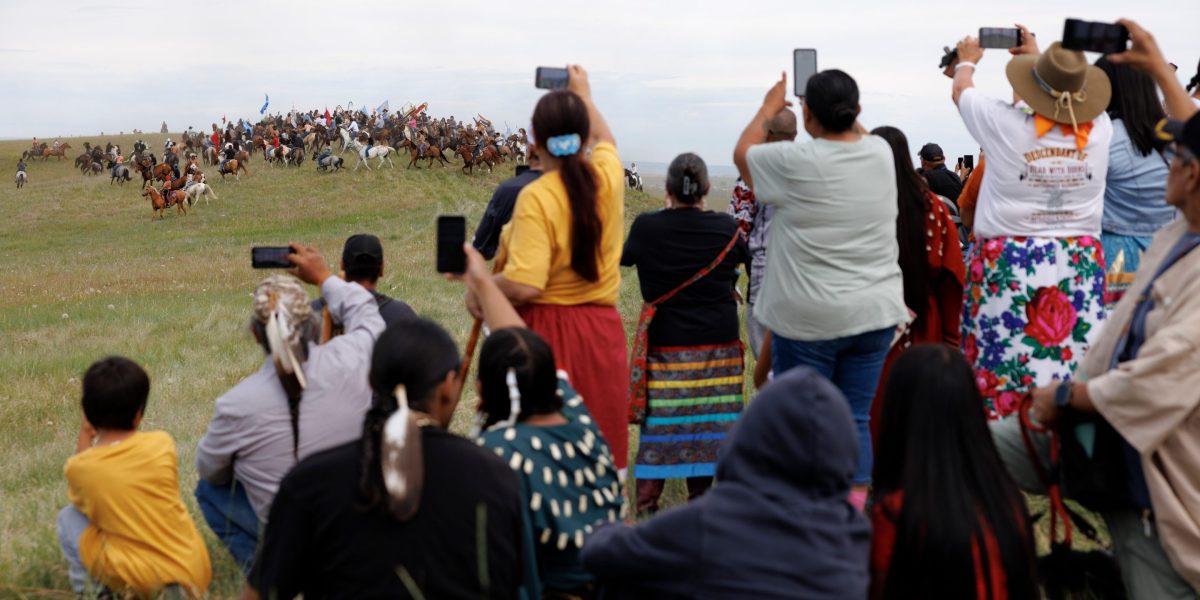
Source: Fortune
Summary
Native Americans are commemorating the 150th anniversary of the Battle of Little Bighorn with horse rides, battle reenactments, and a camp of hundreds of people. The battle, also known as the Battle of Greasy Grass, was a rare defeat for the U.S. Army, with Lt. Col. George Armstrong Custer and over 200 of his troops killed. The anniversary is being marked with events at the Standing Rock Sioux Reservation in North Dakota and the Crow Agency area in Montana.
Our Reading
The numbers tell one story.
The Battle of Little Bighorn’s 150th anniversary is a reminder of the ongoing legacy of Native American resistance against the U.S. government’s efforts to displace them. The battle was a significant defeat for the U.S. Army, but it also marked the beginning of a long period of hardship and upheaval for Native Americans. Today, Native Americans are still fighting to preserve their way of life and their connection to their ancestral lands.
The commemoration of the battle is an opportunity for Native Americans to share their oral histories and cultural traditions with younger generations. It’s also a reminder of the importance of preserving Native languages and cultural practices.
The story of the Battle of Little Bighorn is a complex one, with multiple perspectives and interpretations. However, one thing is clear: the battle was a pivotal moment in the history of Native American resistance against the U.S. government.
In the end, the Battle of Little Bighorn was a victory for Native Americans, but it was also a defeat. It marked the beginning of a long period of colonization and marginalization, but it also showed that Native Americans would not go quietly into the night.
Author: Evan Null