Source: Fortune
Summary
The U.S. has launched a new round of strikes on Iran, hours after President Donald Trump announced the reinstatement of a naval blockade on the Strait of Hormuz. Trump also revealed a policy reversal, stating that the U.S. will charge other ships for safe passage. The move comes as Iran has insisted it controls the critical waterway, and the exchange of fire threatens a return to all-out war. The U.S. military has begun another round of strikes against Iran, with Trump calling it “another major attack.”
Our Reading
The numbers tell one story. The U.S. has launched a new round of strikes on Iran, with Trump calling it “another major attack.” The move comes as Iran has insisted it controls the critical waterway, and the exchange of fire threatens a return to all-out war. The U.S. military has begun another round of strikes against Iran, with Trump calling it “another major attack.” The situation is escalating, with Iran vowing to fight back against any U.S. interference in the strait. The U.S. had previously opposed charging fees in the strait, but Trump has now reversed that policy. The move is seen as a major escalation in the conflict.
The struggle for control of the Strait of Hormuz has reached a boiling point. Iran asserts it has the right to manage traffic through the strait and potentially charge fees, while the U.S. disputes that. The International Maritime Organization has opposed tolls for passage through international waterways. The situation is further complicated by the fact that a fifth of the world’s oil and gas passes through the strait. The conflict has already driven up global prices of energy, fertilizer, and other goods.
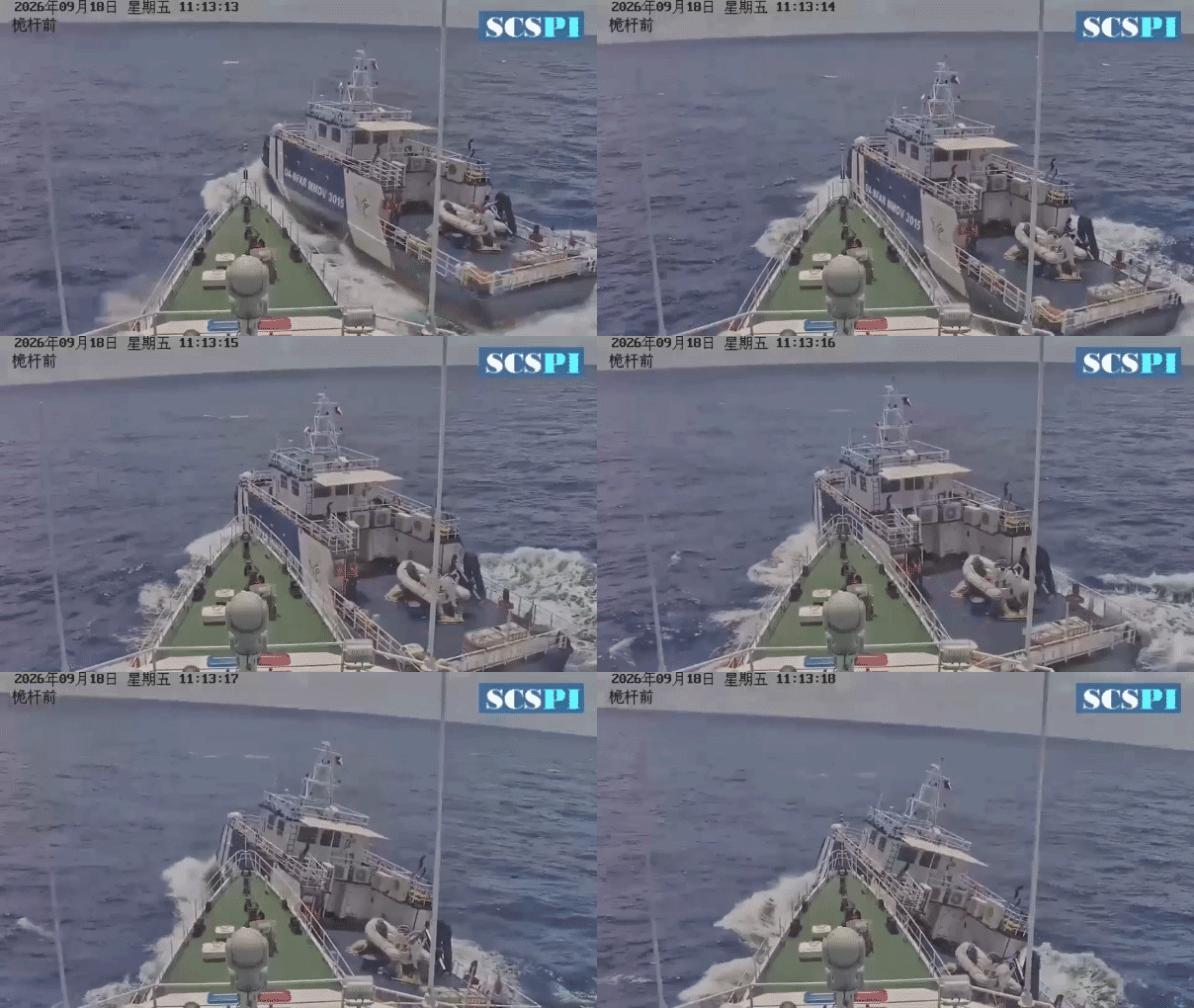
The U.S. military has tried to establish a route through the strait along the coast of Oman that would be outside of Iranian control. However, Iran has attacked ships using that route, saying the U.S. is violating the interim peace deal. The U.S. has attacked Iran in response, drawing Iranian attacks on U.S.-allied Arab states. The situation is escalating, with missile alert sirens sounding in Bahrain and Kuwait condemning Iran for attacks on its border points and a maritime oil drilling platform.
Iran blames the U.S. for the chaos in the region. Iran’s Foreign Ministry spokesperson Esmail Baghaei blamed Washington for the chaos gripping the region. He said Iran wouldn’t agree to visits by the International Atomic Energy Agency to nuclear sites the U.S. bombed in 2025. The situation is further complicated by the fact that mediators, including Pakistan, Qatar, and Egypt, have continued efforts to reach a final agreement to end the war.
In a sharp reversal, Trump suggested last week that the interim deal in the war was “over” and the U.S. ended waivers allowing Iran to sell crude oil on the open market in U.S. dollars. However, mediators have continued efforts to reach a final agreement to end the war. Iran and the U.S. are nearly halfway through the 60-day period in which they were supposed to negotiate such an agreement, which was also supposed to address Iran’s disputed nuclear program. The situation is highly volatile, with both sides dug in and refusing to back down.
Author: Evan Null