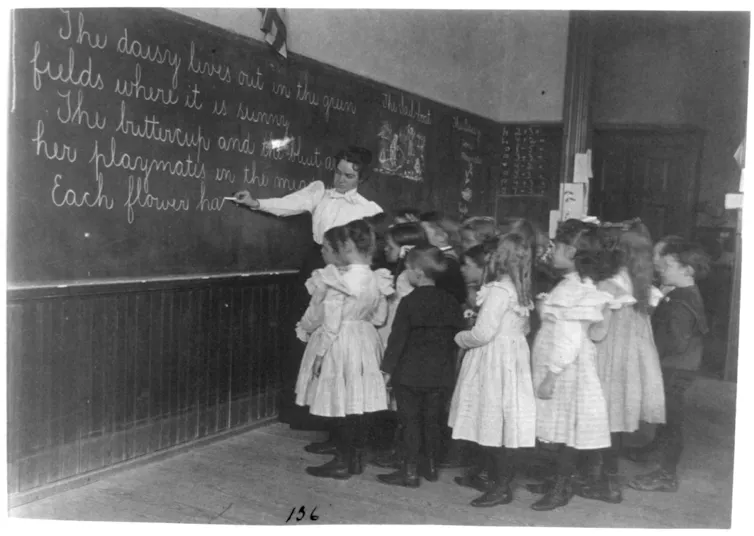
Source: Fortune
Summary
The article discusses the decline and recent resurgence of cursive writing in U.S. schools. Once a standard part of elementary education, cursive instruction has been reduced due to shifting educational priorities and the rise of digital technology. However, some states have reintroduced cursive requirements, citing benefits such as reading historical documents and preventing AI use in schoolwork. Research suggests cursive may aid memory and reading skills, but its effectiveness compared to print remains debated. Educators face challenges in teaching cursive to students and themselves who may not have learned it.
Our Reading
The numbers tell one story.
Cursive instruction has declined in schools, but 25 states now require it.
Lawmakers cite historical reading and AI prevention as reasons.
Studies show cursive may aid memory and reading, but results are mixed.
Teachers struggle to teach a skill they may not have learned themselves.
Author: Evan Null
A shift away from cursive
By the 1980s, cursive instruction time in schools was reduced to 30-60 minutes per week. The 1990s standards-based movement led to overcrowded curricula, with more focus on math and social studies. Computers became more common, making typing a priority. Cursive began to seem outdated, and the Common Core standards emphasized keyboarding. This shift reduced the time and emphasis on cursive in schools.
A return to cursive?
The pendulum began to swing back in the early 2010s. North Carolina was the first state to pass a cursive law in 2013, requiring students to read and write in cursive by fifth grade. By 2015, 14 other states had cursive requirements. As of 2026, more than 25 states, including Pennsylvania, Florida, California, and Michigan, require cursive instruction. Lawmakers argue that cursive is needed for reading historical documents and preventing AI use in schoolwork.
Benefits of cursive
Research suggests cursive may have benefits for learners. A 2020 study found that writing in cursive activates brain pathways for learning and memory. It is also associated with better outcomes for learners with dyslexia and dysgraphia. Some studies show cursive can help people write faster, while others find no speed advantage. First graders in Portugal who were taught cursive wrote in longer bursts, and a 2019 study found that cursive learners read better by the end of the school year.
Cursive in today’s world
Not everyone is convinced cursive deserves a comeback. The science is mixed, and it is unclear if cursive has a specific advantage over print. Many teachers and future educators never learned cursive, making it difficult to teach. Teaching cursive properly can take 70 minutes a week, which is challenging in busy school schedules. Not every student is excited about learning cursive, and some teachers struggle to engage young children in the skill.
Conclusion
The debate over cursive highlights the tension between tradition and modernity in education. While some see value in cursive for historical and practical reasons, others question its relevance in a digital age. The challenge lies in balancing the benefits of cursive with the realities of modern education, including time constraints and the need for digital literacy. As more states require cursive, the question remains whether it will truly benefit students or simply serve as a nostalgic nod to the past.