Source: Fortune
Summary
A study finds that only about 1% of state legislators in the U.S. and 2% of national legislators globally have backgrounds in working-class jobs, despite these jobs making up half the labor force. Researchers say working-class people are less likely to run for office due to financial and personal risks, and political parties often favor white-collar candidates. The study suggests reforms like training programs and quotas could help increase representation.
Our Reading
The numbers tell one story.
Working-class people are underrepresented in politics.
Candidates from these backgrounds face financial and personal hurdles.
Parties often favor white-collar candidates.
Reforms could help increase their presence in office.
Author: Evan Null
The working class rarely holds office
About half of Americans have working-class jobs, but only 1% of state legislators and 2% of national legislators in democracies have such backgrounds. This underrepresentation is a global issue, with similar patterns seen in countries like Germany and Finland. Despite efforts to increase access, working-class individuals still face significant barriers to entering politics.
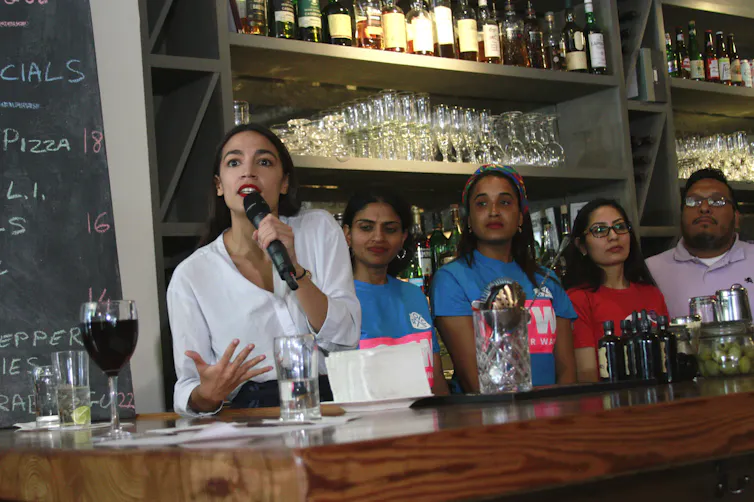
The lack of working-class representation affects policy outcomes, as these individuals are less likely to advocate for stronger safety nets, labor protections, and business regulations. While some politicians, like Alexandria Ocasio-Cortez, have risen from working-class backgrounds, they remain exceptions rather than the norm.
Researchers argue that the problem isn’t a lack of interest or ability among working-class people, but rather systemic obstacles. Campaigning is time-consuming, risky, and financially draining, making it difficult for those without stable incomes to run for office. This creates a cycle where working-class candidates are rarely recruited or supported by political parties.
Even in countries with public financing and strong union presence, working-class representation remains low. This suggests that the issue is not just about money, but about the broader structure of political systems that favor certain types of candidates over others.
The study highlights the need for reforms that address these systemic barriers, such as training programs, financial support, and institutional changes that encourage more working-class individuals to run for office.
What keeps workers out of office?
Working-class individuals are just as qualified and interested in running for office as their white-collar counterparts, but they are less likely to do so. This is due to the personal and financial costs of campaigning, which can include time away from work, uncertainty about income, and potential risks to personal safety.
Political parties and interest groups play a key role in selecting candidates, and they often prioritize those who are seen as more likely to succeed. This leads to a preference for white-collar professionals, even when working-class candidates are equally qualified. As a result, working-class people are underrepresented in political institutions.
The study found that working-class individuals are more likely to cite financial concerns as a barrier to running for office. They are also less likely to be recruited by parties or supported by interest groups, further limiting their chances of entering politics.
These findings suggest that the lack of working-class representation is not due to a lack of interest or ability, but rather due to the structure of the political system itself. Without changes to how candidates are recruited and supported, the underrepresentation of working-class people in politics is likely to continue.
The researchers argue that reforms such as candidate training programs, financial assistance, and institutional quotas could help increase working-class participation in politics. However, these changes would require significant political will and structural shifts.
Reforms that help workers are possible
The study outlines several potential reforms to increase working-class representation in politics. These include training programs that help working-class individuals prepare for campaigns, financial support to cover the costs of running, and institutional changes that make it easier for them to enter politics.
Some of these reforms already exist in certain states, such as the New Jersey AFL-CIO’s Labor Candidates School, which provides training and support for working-class candidates. However, these programs are not widely available and need to be expanded to have a broader impact.
Other proposals include the use of party or institutional quotas to ensure that working-class individuals are represented in political institutions. This could be done through formal requirements or informal pressures within parties to recruit more diverse candidates.
The researchers also suggest the use of citizen juries or other forms of participatory democracy to give working-class individuals a voice in policymaking. These mechanisms could help ensure that their perspectives are considered in the political process.
While some of these reforms may be difficult to implement in the current political climate, the study argues that without serious efforts to address the barriers facing working-class candidates, their representation in politics will remain low.