Source: Fortune
Summary
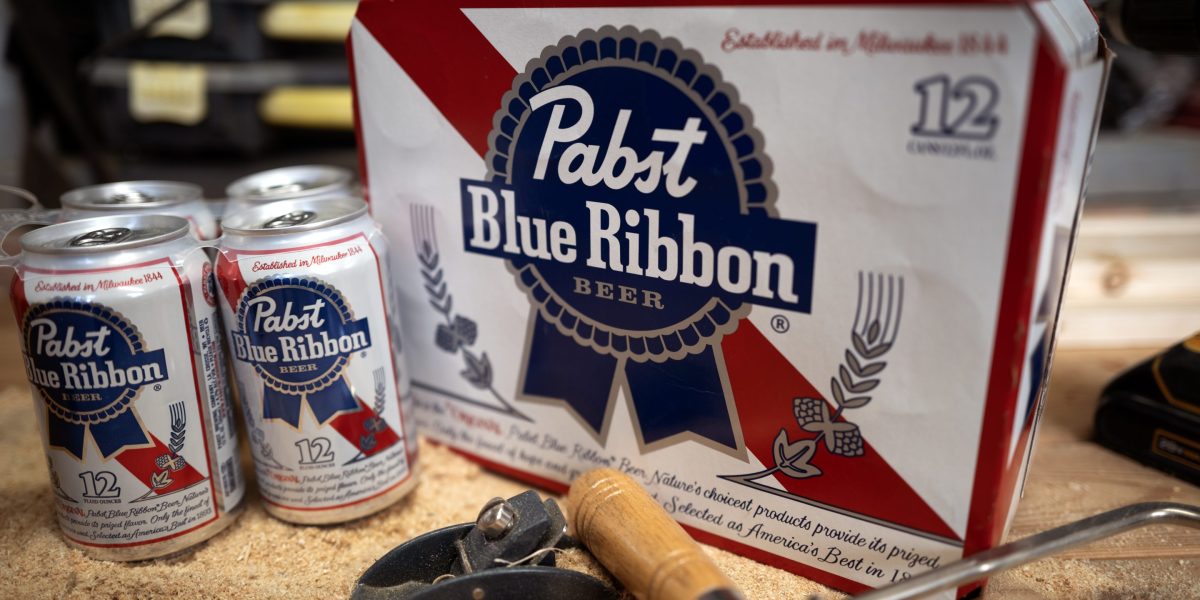
Pabst Blue Ribbon reported the theft of 40,000 pounds of beer from an Anheuser-Busch distribution center in Montclair, Calif. The company offered a reward and a 18-day deadline for the return of the stolen goods. Montclair police confirmed the theft was not a prank and were investigating two separate cargo thefts on Aug. 17. The stolen beer included 1,602 cases of PBR and nonalcoholic Old Milwaukee. The incident is not the largest beer heist, as a 2010 theft in Germany involved 10 truckloads of beer.
Our Reading
The numbers tell one story.
Pabst Blue Ribbon lost 40,000 pounds of beer in a theft.
The company gave thieves 18 days to return the goods.
Police confirmed the theft was real, not a marketing stunt.
Companies offer rewards, but legal action remains in the hands of the state.
Author: Evan Null
No questions asked doesn’t mean no legal action taken
Pickups arranged with fake paperwork, sometimes called fictitious or strategic cargo theft, aren’t new. Fortune reported on the tactic a decade ago, when fraud accounted for roughly one in 10 cargo thefts and food was the most attractive target, since it can be resold through unscrupulous distributors with no serial numbers to trace.
The method has only gotten more sophisticated. This summer, organized groups are now using spoofed emails, fake URLs, and “ghost carriers” to hijack freight, prompting an FBI warning about cyber-enabled tactics used to impersonate legitimate businesses.
While a reward (like the one PBR is offering for information on the theft) is a private contract in which the company promises payment, it has no power to stop a district attorney from filing charges. That’s because, ultimately, the decision to prosecute belongs to the state, not to the victim of the crime.
One of the most famous examples stems from Lady Gaga in 2021, after her two French bulldogs, Koji and Gustav, were stolen at gunpoint and her dog walker was shot. She offered a $500,000 reward “no questions asked” for their return. Jennifer McBride brought the dogs back and sought the money, but Los Angeles prosecutors charged her anyway, and she pleaded no contest to receiving stolen property.
When McBride later sued Gaga for the reward plus $1.5 million in damages, arguing the offer was unconditional, a judge sided with Gaga: McBride’s own admission meant she knew the dogs were stolen, and Gaga’s promise never had the power to protect McBride from the state.
Truckloads of beer, but no truckloads of clarity
The stolen beer is still unaccounted for, and Pabst’s latest social media post hints at a growing sense of urgency.
Despite the company’s public plea, the situation remains murky, with no clear path to recovery.
The theft highlights the growing risks of cargo fraud, a problem that has only become more complex over time.
Companies like Pabst are left to navigate the legal and public relations fallout, often with limited control over the outcome.
The case shows how even well-intentioned offers can fall short when legal realities take over.
Marketing or misdirection?
Pabst’s social media posts have raised questions about whether the theft was a marketing stunt.
The company’s tone, however, suggests a genuine effort to recover its goods.
Police have since clarified that the theft was real and not a prank.
Still, the line between public relations and actual crisis management remains thin.
Companies must balance transparency with the need to protect their brand reputation.
Old Milwaukee, new problems
The stolen goods included nonalcoholic Old Milwaukee, a brand owned by Anheuser-Busch.
This highlights the broader issue of cargo theft across multiple brands and companies.
With the involvement of subcontractors and fraudulent documentation, the theft is not isolated to one company.
The incident underscores the vulnerability of supply chains to organized crime.
As cargo theft becomes more sophisticated, companies must adapt to new threats.
The clock is ticking
Pabst’s latest message, “Beer is getting warmer, trail is getting colder,” suggests a growing sense of urgency.
The company has yet to recover the stolen goods, and time is running out.
The 18-day deadline adds pressure, but it also raises questions about the feasibility of recovery.
Without a breakthrough, the stolen beer may never be returned.
The case serves as a reminder of the challenges companies face in protecting their assets.