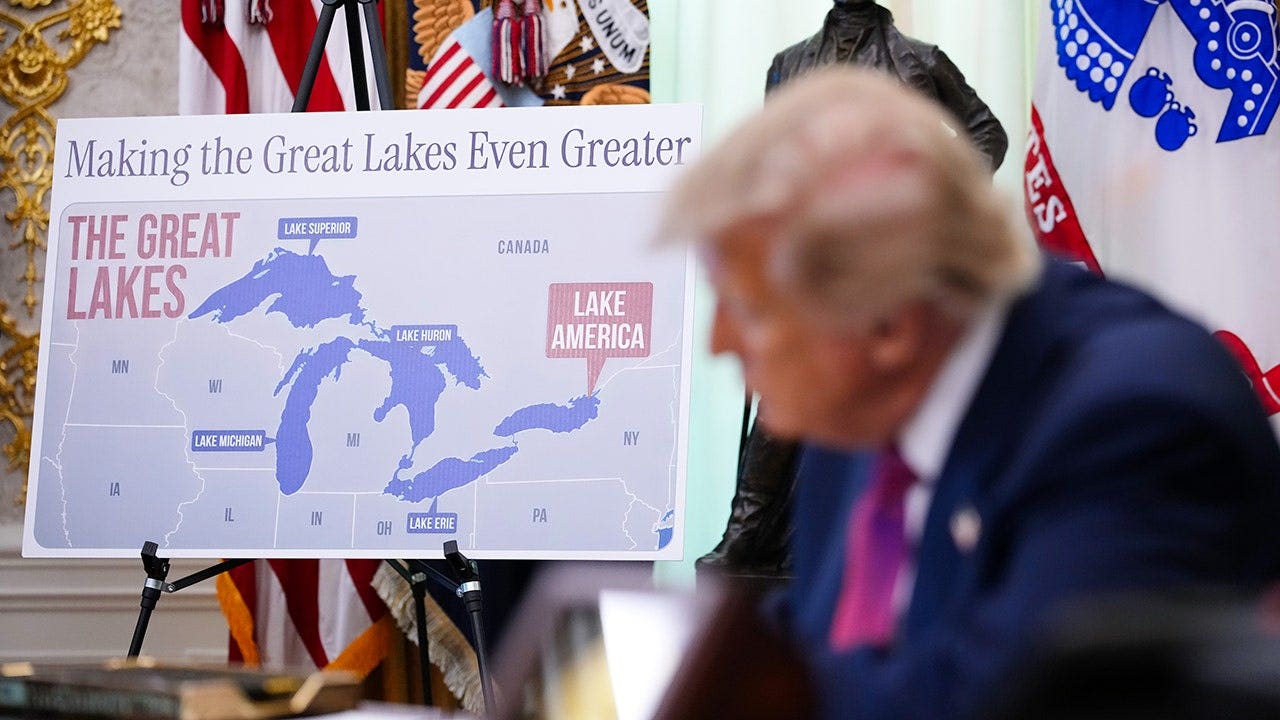
Source: FOX News
Summary
Pennsylvania state Rep. David Maloney, a Republican, is urging President Donald Trump to rename Lake Erie to “Lake Pennsylvania.” Maloney argues the change reflects the lake’s modern identity and Pennsylvania’s unique status as the only state with a single Great Lake. The request follows Trump’s previous executive orders to rename Lake Ontario to “Lake America,” which Canada rejected. The renaming only affects U.S. federal government designations, and Apple and Google Maps updated the name for U.S. users.
Our Reading
As expected, the matter has reached another stage.
Maloney pushes for a name change, citing Pennsylvania’s identity.
Trump signs orders, naming lakes and oceans after America.
Canada refuses, maps update, but no one else must comply.
It’s a ritual of power, not geography, and everyone plays along.
Author: Evan Null
Renaming as Performance
Donald Trump has made renaming lakes and oceans a recurring act. It’s not about geography, but about control and visibility. Each time, the same pattern emerges: a presidential order, a public statement, and a mix of resistance and compliance.
The process feels rehearsed, like a political routine. Maloney joins the chorus, not to challenge the system, but to claim a piece of it. He speaks of identity, but the real identity is the performance itself.
Canada’s rejection is a formal gesture, but it doesn’t stop the U.S. from renaming. The maps change, but the world keeps spinning. It’s a small but symbolic act of influence, repeated with each new order.
Apple and Google comply, not out of agreement, but out of practicality. They adjust for users, not for truth. The names shift, but the lakes remain the same.
It’s a strange kind of power, where words can reshape the world, even if only for a moment.
Geography as a Stage
Every time Trump issues a renaming order, it’s like a new act in a familiar play. The script is always the same: a president, a lake, a name change, and a chorus of reactions. The audience watches, some with amusement, others with frustration, but no one stops the performance.
Maloney’s request fits into this pattern. He’s not just asking for a name change—he’s playing a role in a political routine. He cites Pennsylvania’s identity, but the real identity is the act itself.
Canada refuses, but it doesn’t matter. The U.S. government can rename things, and the rest of the world can choose to ignore it. It’s a small but meaningful act of influence, repeated with each new order.
Maps update, but the lakes remain the same. It’s a strange kind of power, where words can reshape the world, even if only for a moment.
The performance continues, and everyone plays their part, even if the meaning is unclear.
The Ritual of Renaming
Renaming lakes and oceans has become a ritual for Trump. It’s not about geography, but about making a statement. Each time, the same pattern emerges: a presidential order, a public statement, and a mix of resistance and compliance.
Maloney’s request is part of this ritual. He speaks of Pennsylvania’s identity, but the real identity is the act itself. It’s a performance, not a policy, and everyone knows the script.
Canada rejects the change, but it doesn’t stop the U.S. from renaming. The maps update, but the world keeps spinning. It’s a small but symbolic act of influence, repeated with each new order.
Apple and Google comply, not out of agreement, but out of practicality. They adjust for users, not for truth. The names shift, but the lakes remain the same.
It’s a strange kind of power, where words can reshape the world, even if only for a moment.
Names as Symbols
Names have become symbols in the political theater. Trump’s renaming orders are not about geography, but about making a statement. Each time, the same pattern emerges: a presidential order, a public statement, and a mix of resistance and compliance.
Maloney’s request is part of this ritual. He speaks of Pennsylvania’s identity, but the real identity is the act itself. It’s a performance, not a policy, and everyone knows the script.
Canada rejects the change, but it doesn’t stop the U.S. from renaming. The maps update, but the world keeps spinning. It’s a small but symbolic act of influence, repeated with each new order.
Apple and Google comply, not out of agreement, but out of practicality. They adjust for users, not for truth. The names shift, but the lakes remain the same.
It’s a strange kind of power, where words can reshape the world, even if only for a moment.
The Politics of Naming
Trump’s renaming efforts have become a political routine. It’s not about geography, but about influence and visibility. Each time, the same pattern emerges: a presidential order, a public statement, and a mix of resistance and compliance.
Maloney’s request fits into this pattern. He speaks of Pennsylvania’s identity, but the real identity is the act itself. It’s a performance, not a policy, and everyone knows the script.
Canada rejects the change, but it doesn’t stop the U.S. from renaming. The maps update, but the world keeps spinning. It’s a small but symbolic act of influence, repeated with each new order.
Apple and Google comply, not out of agreement, but out of practicality. They adjust for users, not for truth. The names shift, but the lakes remain the same.
It’s a strange kind of power, where words can reshape the world, even if only for a moment.