—
Source: Fox News
Summary
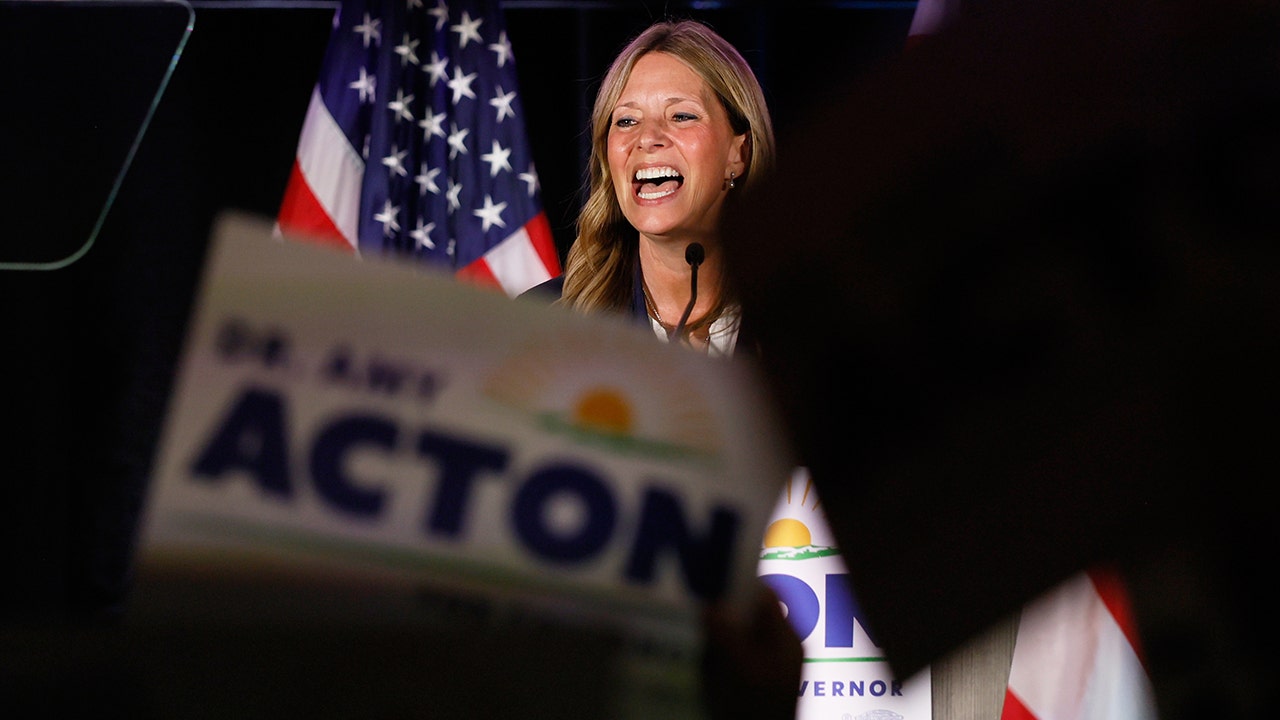
Campaign staff for Amy Acton, Ohio’s former health director and Democratic governor candidate, confronted a Republican activist with a camera during a campaign event in Harrison, Ohio. The activist asked Acton why she declined to debate her Republican opponent, Vivek Ramaswamy. Acton’s staff blocked the cameraman and refused to allow photos or interviews. The incident occurred as Ramaswamy’s campaign criticized Acton for avoiding debates. Acton’s campaign cited concerns about Ramaswamy’s attacks, including AI-generated ads and allegations of abuse. Ramaswamy argued that Acton’s refusal to debate questioned her qualifications. The general election between the two candidates is set for Nov. 3.
Our Reading
As expected, the matter has reached another stage.
Acton’s staff blocked the cameraman.
They repeated “no photos, no videos.”
The cameraman asked them to be careful.
Acton walked away, no answer given.
Author: Evan Null
Key Moments in the Confrontation
The confrontation began when a Republican activist approached Amy Acton during a campaign event in Harrison, Ohio. The activist asked why Acton refused to debate her opponent, Vivek Ramaswamy. Acton’s campaign staff quickly intervened, blocking the cameraman and preventing any photos or interviews.
The video of the event shows Acton walking away from the interviewer, while her staff repeated the same message: “No photos, no videos.” At one point, the staff bumped into the cameraman, causing his camera to fall out of frame. The activist then asked them to be “careful.”
Acton did not respond to the questions. Her campaign had previously stated that she would not accept a debate invitation from CNN, citing concerns about Ramaswamy’s attacks. These included allegations of substance abuse and claims of sexual abuse, which Acton’s team called baseless.
Ramaswamy, in turn, criticized Acton for avoiding debates and questioned her qualifications to lead Ohio. He pointed to her past failures and recent police reports as evidence of her unfitness for office.
The incident highlights the growing tension between the two candidates as they head into the general election on Nov. 3.
Political Dynamics in the Race
The confrontation between Acton’s campaign and the Republican activist reflects the broader political dynamics in the Ohio governor’s race. Both candidates are entering the final stretch of their campaigns, with Ramaswamy having raised over $50 million, including $25 million of his own money.
Acton’s campaign has been focused on countering Ramaswamy’s attacks, which include AI-generated ads and claims about her personal history. The campaign has accused Ramaswamy of spreading “baseless lies” and using “AI to falsely paint her as someone with a substance abuse problem.”
Ramaswamy, however, has continued to push Acton on her refusal to debate, arguing that it undermines her credibility as a potential governor. He has also criticized her for resigning as Ohio’s health director and for recent allegations involving police reports.
The race has become increasingly contentious, with both sides accusing each other of using misleading tactics and spreading misinformation. The general election on Nov. 3 will determine the next governor of Ohio.
Impact of Media and Public Perception
The media coverage of the confrontation has played a significant role in shaping public perception of the race. The video of Acton’s staff blocking the cameraman has been widely shared, highlighting the tension between the two campaigns.
Ramaswamy’s campaign has used the incident to question Acton’s willingness to engage with voters, while her team has framed the confrontation as a necessary response to his attacks. The media has amplified these narratives, influencing how voters view both candidates.
Acton’s refusal to debate has been a central issue in the race, with Ramaswamy using it to challenge her qualifications. The media has covered this aspect extensively, further fueling the political debate.
The public’s perception of both candidates is being shaped by these exchanges, with each side using the media to reinforce their messaging. The final weeks of the campaign will likely see even more intense coverage and public scrutiny.
Broader Implications for the Election
The Ohio governor’s race is part of a larger national trend in which political campaigns are increasingly focused on media strategy and public perception. Both Acton and Ramaswamy are using the media to shape their narratives and influence voters.
The use of AI-generated ads and other digital tactics has raised concerns about the integrity of the election process. Both campaigns have accused each other of using misleading or deceptive tactics to gain an advantage.
As the election approaches, the role of the media in shaping public opinion will become even more significant. The final weeks will likely see a surge in campaign ads, public appearances, and media coverage as both candidates seek to win over voters.
The outcome of the race will depend not only on the candidates’ policies and platforms but also on how effectively they can manage their public image and respond to the challenges posed by their opponents.
Future Outlook for the Race
With the general election just weeks away, both Acton and Ramaswamy are intensifying their efforts to secure votes. The focus remains on key issues such as healthcare, economic policy, and the state’s response to ongoing challenges.
Ramaswamy’s campaign has been particularly aggressive, using his financial resources to dominate media coverage and outspend his opponent. His team has also been active in responding to Acton’s criticisms, countering her claims with their own messaging.
Acton’s campaign, meanwhile, continues to emphasize her experience and commitment to public service. She has also been working to counter the negative narratives spread by Ramaswamy’s team, particularly those related to her personal history and past role as health director.
The race is expected to remain highly competitive, with both candidates vying for the support of Ohio voters. The final weeks will be critical in determining the outcome of the election.