Source: Fortune.com
Summary
Security researchers warn that advances in artificial intelligence are increasing risks associated with a vulnerability in Georgia’s voting equipment, which could allow voters to be matched to their ballots. The flaw, known for years, has drawn criticism from election security advocates who say state officials have not adequately addressed it. While Georgia officials claim they have taken steps to mitigate the issue, some experts argue the measures are insufficient. The vulnerability does not alter votes but could compromise ballot secrecy, a constitutional right. AI tools are now making it easier to exploit such flaws, according to researchers.
Our Reading
The numbers tell one story.
Georgia’s voting system has a flaw that could let someone match voters to ballots.
AI makes it easier to exploit that flaw.
Officials say they’re taking steps, but critics say it’s not enough.
Ballot secrecy is a constitutional right, and this flaw could undermine it.
Author: Evan Null
Georgia’s Voting System Vulnerability
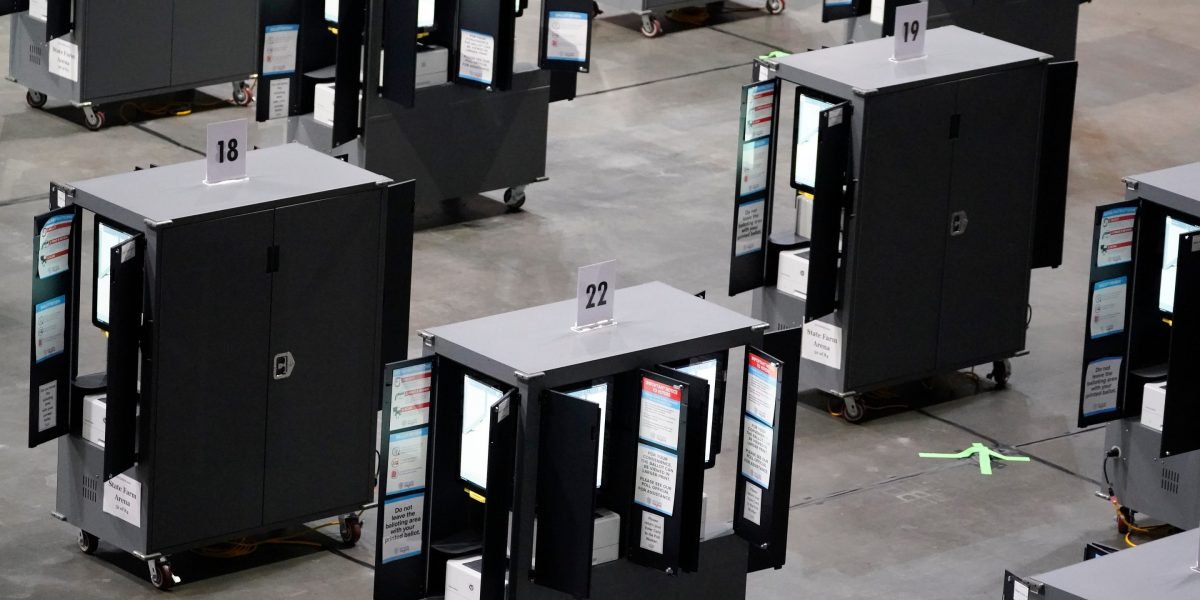
Georgia’s voting equipment has a flaw that could allow someone to match voters to their ballots. This issue has been known for years but has gained more attention due to the rapid development of artificial intelligence. Security researchers say AI tools are making it easier to exploit such vulnerabilities, which could compromise ballot secrecy. The flaw does not alter votes, but it could lead to legal challenges if voters’ choices are exposed.
The vulnerability is in the system used by Georgia, which is the only state using it statewide. Other states have applied software updates to fix the issue, but Georgia has not. Election security advocates argue that the state is not doing enough to protect ballot secrecy. They say the flaw could be used to identify voters, which violates the constitutional right to a secret ballot.
Researchers have demonstrated how AI can be used to reverse the shuffling of electronic ballot records, making it easier to match voters to their ballots. This has raised concerns about the security of Georgia’s voting system. While some states have taken steps to address the issue, Georgia’s approach has been criticized as insufficient. The state’s open records law has also contributed to the problem, as it allows access to key documents that could be used to exploit the flaw.
Georgia’s secretary of state’s office has sent guidance to county officials on handling open records requests. They plan to black out problematic information before releasing it. However, some experts argue that this is not a long-term solution. They believe the only way to fully protect ballot secrecy is to stop recording information that could be used to trace ballots to voters.
With the November elections approaching, the debate over how to address the flaw continues. Some officials say they are working on solutions, but others remain skeptical. The issue highlights the growing challenges of securing election systems in the age of AI, where vulnerabilities can be exploited more easily than ever before.
Impact of AI on Election Security
The rise of AI has made it easier for individuals to exploit vulnerabilities in election systems. Researchers have shown that AI can be used to reverse the shuffling of electronic ballot records, making it possible to match voters to their ballots. This has raised concerns about the security of Georgia’s voting equipment, which is the only system of its kind used statewide. The flaw does not allow votes to be changed, but it could be used to identify voters, which violates the constitutional right to a secret ballot.
AI tools are now making it easier for people to access and manipulate election data. This has led to calls for stronger security measures to protect ballot secrecy. Some experts argue that the only way to fully address the issue is to stop recording information that could be used to trace ballots to voters. Others believe that restricting public access to certain records is a necessary step, but they acknowledge that this is not a long-term solution.
The use of AI in election security has also raised questions about the role of technology in safeguarding democratic processes. As AI becomes more sophisticated, the potential for exploitation increases. This has led to increased scrutiny of election systems and a push for more robust security measures. The challenge is to balance transparency with the need to protect the integrity of the voting process.
While some states have taken steps to address similar vulnerabilities, Georgia’s approach has been criticized as insufficient. The state’s open records law has made it easier for researchers to access key documents, which has contributed to the problem. Experts say that without stronger safeguards, the risk of ballot secrecy being compromised remains high.
The debate over how to address the flaw continues as the November elections approach. Some officials say they are working on solutions, but others remain skeptical. The issue highlights the growing challenges of securing election systems in the age of AI, where vulnerabilities can be exploited more easily than ever before.
Legal and Ethical Concerns
The vulnerability in Georgia’s voting system raises significant legal and ethical concerns. Ballot secrecy is a fundamental right under the state constitution, and any breach of this right could lead to legal challenges. The flaw allows for the potential identification of voters, which could be used to coerce or influence their choices. This has led to calls for stronger protections to ensure that the integrity of the election process is maintained.
Some officials argue that the risk of vote-buying or coercion is low, as it would be easier to use mail ballots for such purposes. However, experts warn that the potential for exploitation is real and that the consequences could be severe. The issue has sparked a debate about the balance between transparency and security in election systems. While some advocate for restricting access to certain records, others believe that the only way to fully protect ballot secrecy is to stop recording information that could be used to trace ballots to voters.
The legal framework surrounding election security is also under scrutiny. While there are penalties for revealing how someone voted, some experts argue that these measures may not be sufficient to deter exploitation. The challenge is to find a solution that protects the rights of voters while also ensuring the integrity of the election process. This requires a careful balance between transparency and security.
The debate over how to address the flaw has also highlighted the need for more robust oversight of election systems. Some officials have proposed new rules to require the implementation of software updates, but these have faced resistance due to concerns about funding and timelines. The issue underscores the importance of proactive measures to address vulnerabilities before they can be exploited.
As the November elections approach, the focus remains on finding a solution that protects the rights of voters while also maintaining the integrity of the election process. The challenge is to ensure that the use of AI and other technologies does not compromise the fundamental principles of democracy.
Responses from Election Officials
Election officials in Georgia have responded to concerns about the vulnerability in the state’s voting system. They claim they have taken steps to address the issue, but some advocates argue that these measures are not sufficient. The secretary of state’s office has sent guidance to county officials on handling open records requests, instructing them to refer certain requests to the office. They plan to release records with problematic information blacked out, but some experts believe this is not a long-term solution.
Officials have also been working with vendors to scramble the original order of ballot images and cast-vote records before they are made public. This is intended to prevent someone from reconstructing the order and identifying voters. However, some experts argue that this measure is not enough and that the only way to fully protect ballot secrecy is to stop recording information that could be used to trace ballots to voters.
Despite these efforts, some officials remain skeptical about the effectiveness of the measures being taken. They argue that the software update recommended by the manufacturer has not been certified and that the implementation would take months. Additionally, some members of the state election board have raised concerns about the short timeline before the November midterms and the lack of funding for the necessary changes.
The debate over how to address the flaw has also highlighted the need for more robust oversight of election systems. Some officials have proposed new rules to require the implementation of software updates, but these have faced resistance due to concerns about funding and timelines. The issue underscores the importance of proactive measures to address vulnerabilities before they can be exploited.
As the November elections approach, the focus remains on finding a solution that protects the rights of voters while also maintaining the integrity of the election process. The challenge is to ensure that the use of AI and other technologies does not compromise the fundamental principles of democracy.
Public and Expert Reactions
The vulnerability in Georgia’s voting system has drawn attention from both the public and election security experts. Advocacy groups have criticized state officials for not taking sufficient action to address the issue. They argue that the flaw could be exploited to identify voters, which violates the constitutional right to a secret ballot. Some experts have demonstrated how AI can be used to reverse the shuffling of electronic ballot records, making it easier to match voters to their ballots.
Public reaction has been mixed, with some expressing concern about the security of the voting process and others dismissing the issue as overblown. Officials have pushed back against the concerns, arguing that the risk of vote-buying or coercion is low. They claim that it would be easier to use mail ballots for such purposes and that the penalties for revealing how someone voted are severe enough to deter exploitation.
Despite these arguments, some experts remain skeptical. They believe that the potential for exploitation is real and that the consequences could be severe. The issue has sparked a debate about the balance between transparency and security in election systems. While some advocate for restricting access to certain records, others believe that the only way to fully protect ballot secrecy is to stop recording information that could be used to trace ballots to voters.
The debate over how to address the flaw has also highlighted the need for more robust oversight of election systems. Some officials have proposed new rules to require the implementation of software updates, but these have faced resistance due to concerns about funding and timelines. The issue underscores the importance of proactive measures to address vulnerabilities before they can be exploited.
As the November elections approach, the focus remains on finding a solution that protects the rights of voters while also maintaining the integrity of the election process. The challenge is to ensure that the use of AI and other technologies does not compromise the fundamental principles of democracy.