Source: Fortune.com
Summary
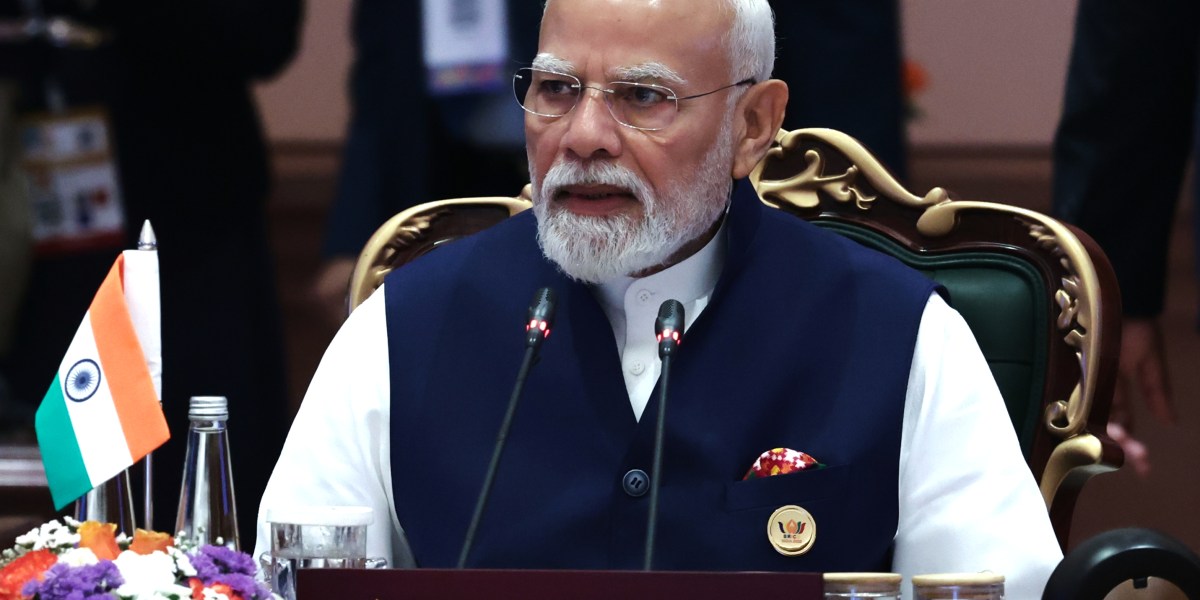
Indian Prime Minister Narendra Modi addressed the BRICS summit in New Delhi, warning of rising global tensions, supply chain issues, and climate crises. He called for greater cooperation among developing nations. The summit, which includes Brazil, Russia, India, China, and other members, agreed to establish an early warning system for infectious diseases. Leaders also expressed concerns over Middle East and Sudan conflicts and supported a multipolar world order. The joint declaration criticized unilateral sanctions and called for reforms in global institutions.
Our Reading
The numbers tell one story.
Modi warned of global crises and called for unity among BRICS nations.
Leaders agreed on disease monitoring and criticized Western-dominated systems.
They opposed sanctions and supported local currencies in trade.
The deal reflects a push for more equitable global governance.
Author: Evan Null
Modi’s Global South Appeal
Indian Prime Minister Narendra Modi emphasized the need for cooperation among developing nations during the BRICS summit. He highlighted the growing impact of global crises on everyday people. His speech focused on strengthening ties within the Global South. The summit included leaders from Brazil, Russia, India, China, and other emerging economies.
BRICS Expansion and Influence
BRICS, founded in 2006, now has 11 members. The group represents about half the world’s population. It seeks greater representation for developing countries in global institutions. The bloc promotes alternatives to Western-dominated financial systems. Its influence continues to grow as it expands its membership and goals.
Health and Economic Concerns
Modi announced the creation of an integrated early warning system for infectious diseases. The system aims to improve global preparedness for future outbreaks. Leaders also discussed economic challenges, including supply chain disruptions and climate disasters. They warned that no crisis remains confined to one region.
Political and Economic Criticisms
The BRICS leaders criticized unilateral sanctions and coercive economic measures. They opposed sanctions not authorized by the U.N. The group also criticized rising trade barriers. They called for reforms in global financial institutions like the World Bank and IMF. The declaration emphasized the need for a more balanced world order.
Regional Tensions and Diplomacy
The joint declaration expressed concern over Middle East and Sudan conflicts. It called for peaceful resolutions through dialogue and diplomacy. The bloc faced challenges in reaching consensus among members with conflicting interests. Despite this, the declaration marked a significant diplomatic achievement. It highlighted the group’s growing role in global politics and economics.