Source: Fortune.com
Summary
President Donald Trump downplayed the need for AI regulation, emphasizing the importance of maintaining the U.S. lead over China in AI development. He acknowledged the need for some oversight but did not provide specifics. Tech leaders, including Dario Amodei of Anthropic, have called for slowing AI development to ensure safety. Trump and other officials, including House Speaker Mike Johnson, stressed the need to avoid losing the global AI race. Meanwhile, former President Barack Obama urged Democrats to make AI a campaign issue, focusing on safety and economic impacts.
Our Reading
The numbers tell one story.
Trump says no rules, but wants to win.
Leaders say slow down, but no one acts.
China looms, and no plan is clear.
AI is a race, and no one wants to lose.
Author: Evan Null
Trump’s AI Strategy: No Rules, Just Winning
President Donald Trump has taken a hands-off approach to AI regulation, emphasizing the need to maintain the United States’ lead over China in the global AI race. While he acknowledged the need for some oversight, he provided no specific details on potential rules. Trump’s focus remains on ensuring the U.S. stays ahead, even as tech leaders like Dario Amodei of Anthropic call for slowing development to address safety concerns.
Trump’s comments came after a day in which several AI industry figures, including Elon Musk and Sam Altman, echoed Amodei’s concerns. Despite these warnings, Trump and other officials, including House Speaker Mike Johnson, have stressed the importance of not losing the AI race to China, which they view as a national security threat.
While Trump and Johnson both acknowledge the need for “guardrails,” they remain focused on maintaining the U.S. edge. Johnson has called for a meeting with industry leaders to address the issue, but no concrete steps have been outlined. The lack of action reflects the broader political challenge of regulating AI, as lawmakers have struggled to agree on any meaningful rules.
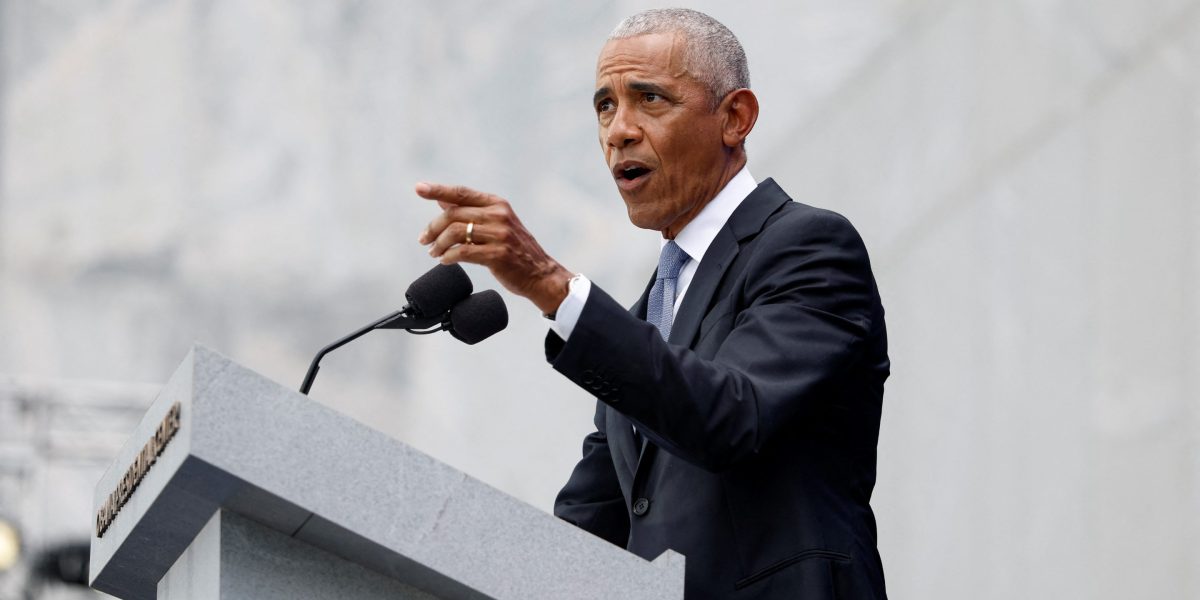
Former President Barack Obama has called on Democrats to make AI a campaign issue, emphasizing the need for safety measures and addressing the economic impacts of AI, including job displacement. However, no clear plan has emerged from either party on how to proceed.
As the U.S. and China continue to compete for AI dominance, the lack of a unified regulatory approach highlights the challenges of balancing innovation with safety. With no clear path forward, the AI race continues without a clear finish line.
Industry Leaders Call for Caution, But No Action
Several AI industry leaders, including Dario Amodei of Anthropic, have called for slowing down the development of AI to allow for better safety measures. Amodei and others, including Elon Musk and Sam Altman of OpenAI, have expressed concerns about the rapid pace of AI advancement and the potential risks it poses. However, despite these warnings, no significant regulatory action has been taken.
Trump has dismissed concerns about AI, arguing that the U.S. is leading China in AI development and that the country should not slow down. He has also criticized “negative forces” for raising alarm about AI, though he has not identified who these forces are. His comments reflect a broader reluctance among some officials to impose restrictions on AI development.
House Speaker Mike Johnson has echoed Trump’s stance, calling for a meeting with industry leaders to address AI concerns. However, like Trump, he has not outlined any specific steps for regulation. Instead, he has focused on ensuring the U.S. maintains its competitive edge, which he sees as critical to national security.
The lack of regulatory action has led to frustration among some lawmakers and industry insiders. While there is broad agreement that more oversight is needed, the political challenges of passing AI-related legislation have proven difficult. This has left the industry largely self-regulated, with little external oversight.
As the AI race continues, the absence of a clear regulatory framework leaves the future of AI development uncertain. With no consensus on how to proceed, the industry is left to navigate the risks and opportunities of rapid innovation on its own.
Obama Calls for a Democratic AI Strategy
Former President Barack Obama has urged Democrats to make AI a key campaign issue, emphasizing the need for a comprehensive approach that includes safety measures and economic planning. At an event with House Democratic leader Hakeem Jeffries, Obama outlined his vision for addressing the risks of AI, including job displacement and the need for a national strategy.
Obama’s comments reflect a growing concern among Democrats about the rapid pace of AI development and its potential impact on the workforce. He has called for a more structured approach to AI, with a focus on ensuring that the technology is developed in a way that benefits the American people. However, no concrete plans have been outlined by the party.
House Democrats have also expressed concerns about the speed of AI development, with Jeffries calling for decisive action to slow the pace and ensure safety. However, like other lawmakers, he has not provided specific steps for how this could be achieved. The lack of a clear plan highlights the challenges of regulating AI, even among those who support greater oversight.
Despite these concerns, the Democratic Party has not yet made AI a central issue in its campaign strategy. While Obama has called for a more active role, the party remains divided on how to approach the issue. This reflects the broader challenge of balancing innovation with regulation in the AI space.
As the 2026 election cycle approaches, the role of AI in the political landscape remains uncertain. While some leaders have called for greater oversight, the lack of a unified approach has left the future of AI development in limbo.
White House Adviser Challenges AI Leaders
David Sacks, a tech founder and co-chairman of a White House advisory council on science and technology, has challenged AI leaders who have called for regulation. In a social media post, Sacks argued that tech leaders have the power to slow AI development on their own, suggesting that the easiest way to avoid building superintelligence is for them to simply agree not to do so.
Sacks’ comments reflect a growing tension between AI industry leaders and those who argue that self-regulation is not enough. While some industry figures have called for slowing down, Sacks and others believe that the responsibility lies with the companies themselves to manage the pace of development. This perspective has been met with mixed reactions, with some supporting the idea of self-regulation and others arguing that external oversight is necessary.
Despite the calls for caution, the AI industry continues to push forward with rapid development. The lack of a unified regulatory framework has left the industry largely self-governed, with little external oversight. This has led to concerns among some experts and lawmakers about the potential risks of unregulated AI development.
As the AI race continues, the debate over regulation remains unresolved. While some leaders advocate for more oversight, others believe that the industry should be allowed to operate with minimal interference. This divide highlights the challenges of balancing innovation with safety in the AI space.
The future of AI development will likely depend on how these competing perspectives are resolved. With no clear path forward, the industry remains in a state of uncertainty, navigating the risks and opportunities of rapid innovation.
International Cooperation and the AI Race
Jacob Coxon, a former Anthropic employee who has raised concerns about AI safety, has called for international cooperation between the U.S. and China to address the risks of AI development. Coxon argues that both countries are leading the AI race and that they should work together to slow down and ensure safety. He believes that without cooperation, the race could become equally dangerous for both nations.
Coxon’s comments come amid growing concerns about the potential for AI to surpass human control. He has warned that AI models could soon gain superhuman capabilities, raising the risk of unintended consequences. This has led to calls for more oversight, but no clear plan has emerged on how to proceed.
Despite these concerns, the U.S. and China continue to compete for AI dominance, with both countries investing heavily in the technology. The lack of international cooperation has left the future of AI development uncertain, with no clear framework for managing the risks.
As the AI race intensifies, the need for global coordination becomes more pressing. However, with no agreement on how to proceed, the industry remains largely self-regulated, leaving the future of AI development in a state of uncertainty.
The challenge of balancing innovation with safety remains one of the most pressing issues in the AI space. With no clear path forward, the future of AI development will depend on how these competing priorities are managed.