Source: Fortune
Summary
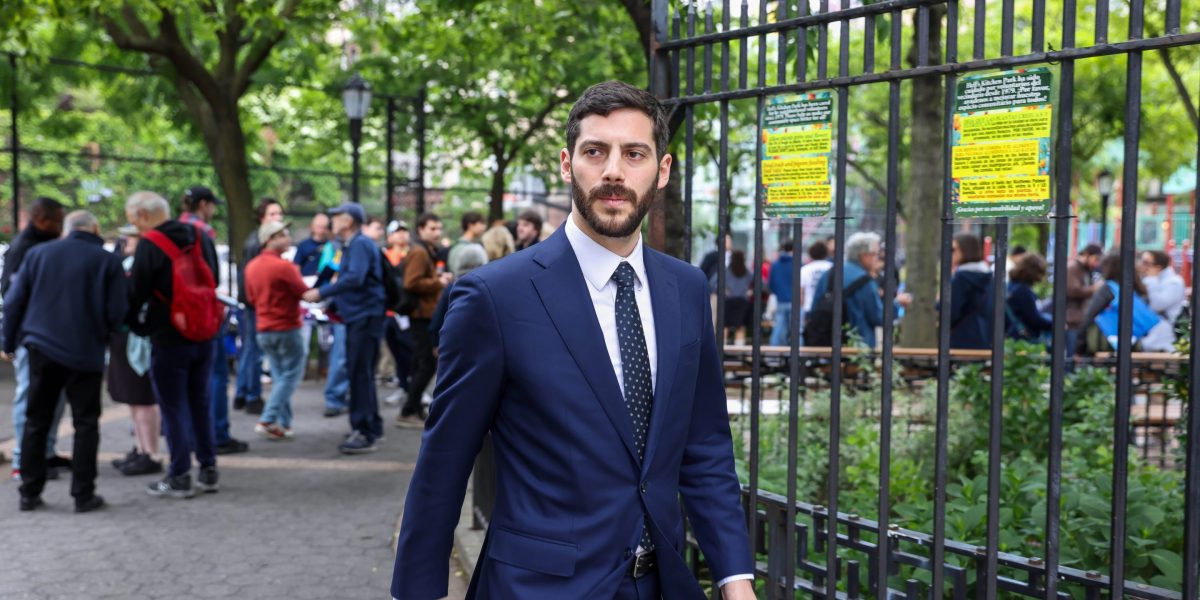
Alex Bores, a former Palantir engineer and New York state Assemblymember, lost his congressional primary race despite leading an AI regulation effort. His campaign faced over $40 million in outside spending, mostly from AI industry-aligned groups. Bores then launched the nonprofit Who Decides to unify AI advocacy groups and push for public input on AI development. He argues that public support for AI regulation is strong, but industry lobbying and political inertia hinder progress. Despite setbacks, Bores remains focused on building coalitions to shape AI policy.
Our Reading
The numbers tell one story.
Bores lost a $40 million race to AI industry-backed opponents.
He now leads a $30 million nonprofit to unify AI advocates.
Public support for AI regulation is high, but political will is low.
Industry and lawmakers still clash over who gets to decide AI’s future.
Author: Evan Null
Weak laws and weaker willpower
A recent Gallup poll found the majority of Americans, 56% to 58%, want stricter gun laws, while measures like background checks has close to 90% support in both parties, per Pew. And despite this finding, which has coexisted for decades, Congress rarely acts, something usually blamed on lobbying outspending a diffuse majority. AI seems to follow the same trajectory.
The basics of this issue, while the urgency has changed a lot in the past week, the basics have not, which is that 80% of Americans want there to be more regulation on AI, and that’s across parties. Independent polling this year puts the figure somewhat lower but still in the same direction: a February–March 2026 Annenberg Public Policy Center survey found 65% of Americans say the government has done “too little” to regulate AI, including majorities of Democrats (77%), independents (72%), and Republicans (53%).
Public sentiment gets grayer when you look at one of the most prominent faces within the AI industry. In May 2023, OpenAI’s Sam Altman asked to be regulated when he testified before the Senate Judiciary Committee. But by May 2025, he reversed course, telling the Senate Commerce Committee that requiring government approval would be “disastrous.” Anthropic’s Dario Amodei held the pro-regulation position throughout, even as Anthropic-linked money flowed into the same political fights.
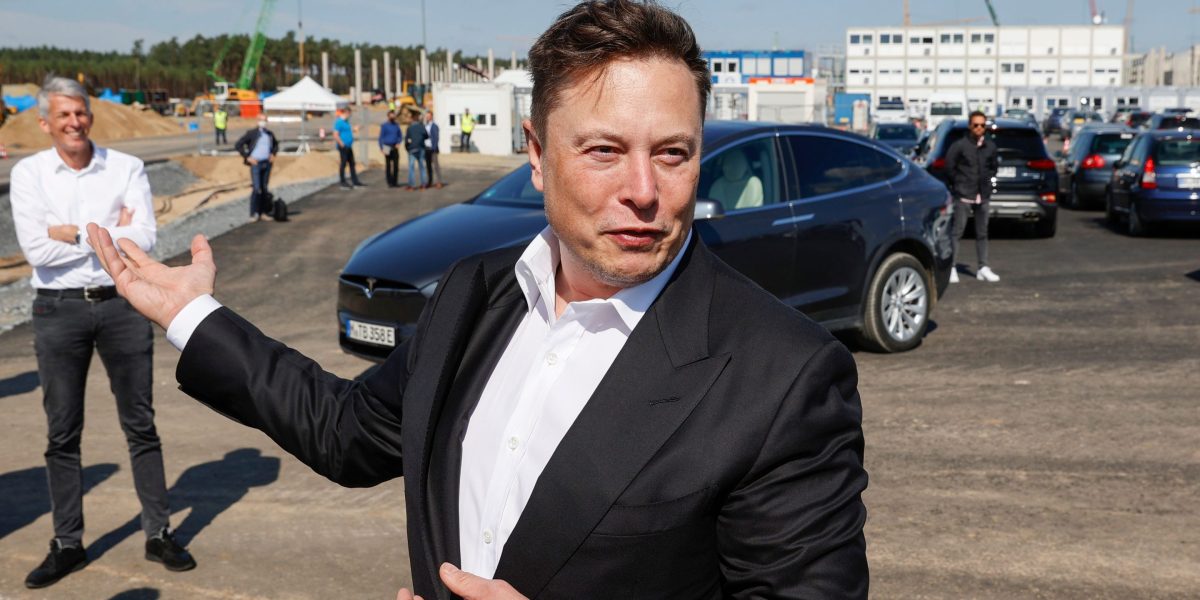
Regardless of what stances people have at first and ultimately land on, Bores said while industry figures keep landing on the same conclusion, a narrower set of financiers spend to stop it. “So many of the mega donors who are pushing for there to be no regulation whatsoever are Republican mega donors,” he said, naming Marc Andreessen and Elon Musk.
One can argue that’s what happened to his RAISE Act—what passed was a watered version that didn’t survive that same money intact: third-party audits and whistleblower protections were stripped before it passed. But still, that hasn’t changed Bores’ view of it: “The RAISE Act was, arguably still is, the strongest AI safety bill in the country,” he said, though he expects Illinois and Massachusetts to surpass it soon.
Avoid the circular firing squad
In 2025, Sen. Ted Cruz inserted language into the “One Big Beautiful Bill” that would have barred every state from enforcing any AI law for 10 years. Seventeen Republican governors asked for it to be stripped, before the Senate voted 99–1 to remove it.
Cruz is now co-sponsoring a new federal AI safety bill with Sen. Amy Klobuchar and Majority Leader John Thune, built around safety testing and incident reporting. It may be D.C.’s most likely AI bill to pass yet, but if you read between the lines, it’s essentially Cruz’s old bill wrapped in federal packaging (and it comes with the very real possibility of removing all state AI bills with it). “Spot on,” he told Fortune about that reading. “It’s people trying to use this momentum and this crisis to shut down the real power people have to regulate.”
Despite the external politics playing on Capitol Hill, Bores also acknowledged the Democratic party has a less than stellar track record on getting messaging right. Often it’s because advocates who agree keep splitting the difference into separate fights. “Democrats are very passionate about making a difference, and that passion is usually well placed,” he said, “but that occasionally gets misdirected into turning into a circular firing squad and saying, no, my sub-issue is more important than your sub-issue.”
His case? “The people who are opposing almost every issue in AI are the same people… we should be sitting at the same table.”
This story was originally featured on Fortune.com