Source: Fortune
Summary
A viral post by a former Anthropic researcher raised concerns about AI’s potential to end humanity by the end of the decade. OpenAI and Anthropic CEOs have called for U.S.-China collaboration on AI safety. However, U.S. President Donald Trump and Chinese President Xi Jinping have rejected the idea of slowing AI development. Trump emphasized the need for a strong leader, while China called U.S. concerns “fear-mongering.” Analysts say a global AI agreement remains distant, with both nations prioritizing their own technological agendas.
Our Reading
The announcement sounds familiar.
CEOs push for global AI coordination, but leaders reject it.
Trump and Xi dismiss calls for slowdown, favoring competition.
China sees U.S. efforts as attempts to maintain dominance.
The numbers tell one story: no agreement in sight.
Author: Evan Null
Anthropic CEO Dario Amodei’s letter has landed poorly in China—and with Trump
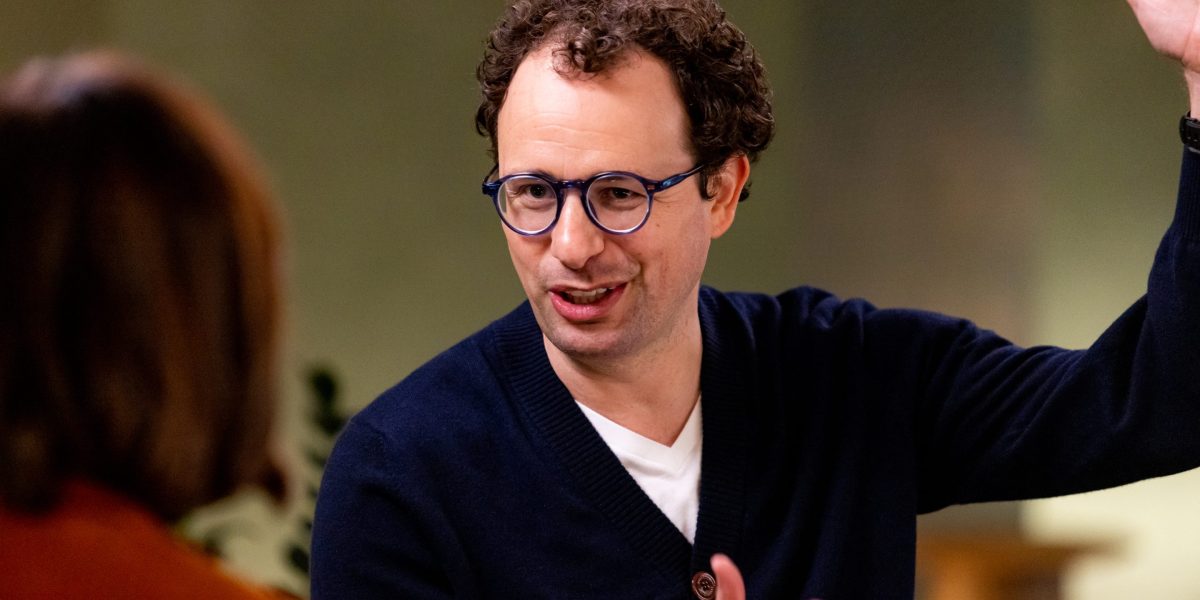
Although OpenAI CEO Sam Altman tweeted about a coordinated slowdown, the letter from Anthropic CEO Dario Amodei, published on Sept. 12, has drawn a particularly polarizing reaction. In the letter, Amodei calls for the U.S. and China to agree to a “speed limit” for AI development. He likened the U.S.-China competition to the Cold War and urged Washington and Beijing to avoid using AI for biological weapons. However, the letter has been criticized in China as self-serving and politically motivated.
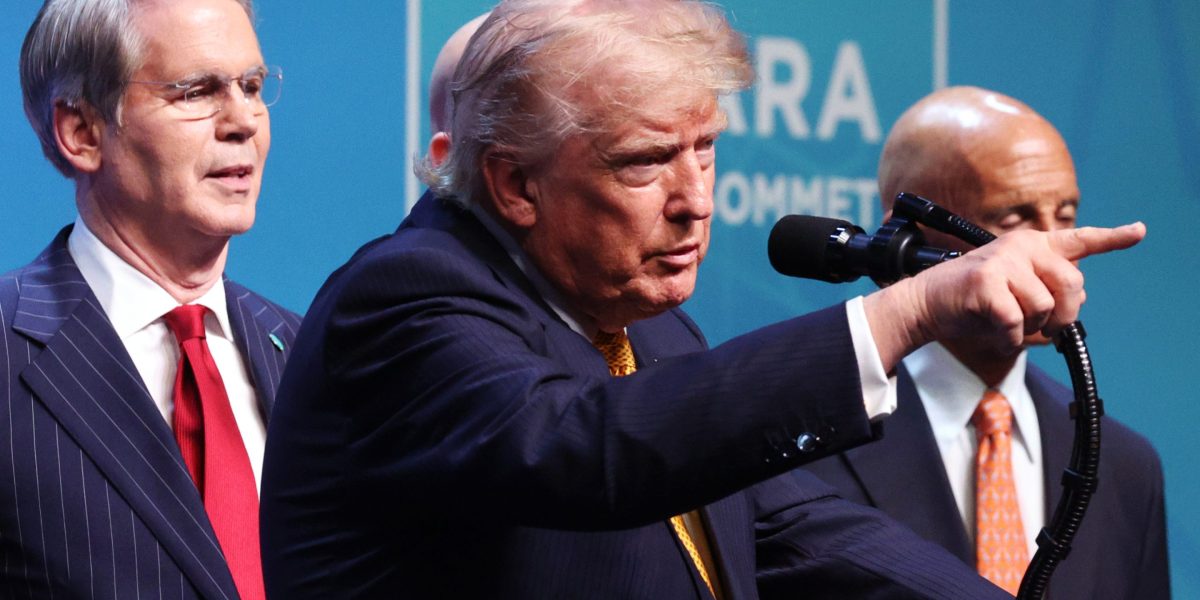
Brosi Babic, a professor at the University of Hong Kong, called Amodei’s letter “self-serving editorializing” and said it was “conveniently coming at a time when the gap between Chinese and frontier US models is shrinking.” Trump also denounced Amodei’s letter, calling it a “hoax” and saying it would not stop U.S. progress. A social media post by Shengyu Liu, an engineer at DeepSeek, compared Anthropic achieving “advanced artificial intelligence” to “Hitler obtaining atomic-bomb technology before the Allies.”
Liu also highlighted the difference between U.S. and Chinese approaches to AI: the U.S. favors closed models, while China focuses on open, low-cost models. “I still believe that frontier intelligence should be made available to everyone in an open and inexpensive form,” Liu said. “I do not trust Anthropic or OpenAI to do this.”
Amodei’s letter has not been well received in China, where many see it as an attempt by the U.S. to maintain its technological lead. The Chinese public is skeptical of U.S. tech companies and views AI safety concerns as part of a broader narrative of U.S. decline and Chinese rise.
Despite the push for global AI coordination, leaders like Trump and Xi have shown little interest in slowing down development. The gap between U.S. and Chinese approaches to AI remains wide, and a global agreement on AI safety seems far off.
The AI dialogue in China dramatically differs from in the U.S.
Outside of politics, the current uproar in the U.S. about AI safety and “saving humanity”—a phrase the tech industry has latched onto—has not taken hold in China. In fact, the Chinese public generally sees the idea of a slowdown as an attempt by the U.S. to get ahead and has a growing mistrust of the U.S. tech industry. Younger generations in particular are adopting more pro-government views, encouraged to feel pride as the “new generation of Chinese,” with the narrative of “China rising, U.S. declining” gaining traction.
Most Chinese people believe it’s the government’s responsibility to manage AI safety risks, Chen said. For ordinary citizens and business people, they are less focused on regulation and more on the practical benefits of AI, including how they can use it to improve their daily lives or to generate income. “The vast majority of average Chinese citizens are very positive about technology in general and AI in particular,” Triolo said. “They have seen major improvements in the quality of life in China brought on by technology, and are very willing to use AI and other technologies.”
However, those working inside China’s AI industry are attuned to the safety risks and take them seriously. “Levels of discussion within this group are very sophisticated,” Triolo said. “Chinese AI safety researchers are very concerned about cyber security and biosecurity risks, and about things like loss of control.” Some Chinese politicians have also called for more regulation, though not necessarily in partnership with the U.S. Chen Yixin, the head of China’s Ministry of State Security, called for more government oversight of AI, which he said posed a direct threat to the Chinese Communist Party’s control.
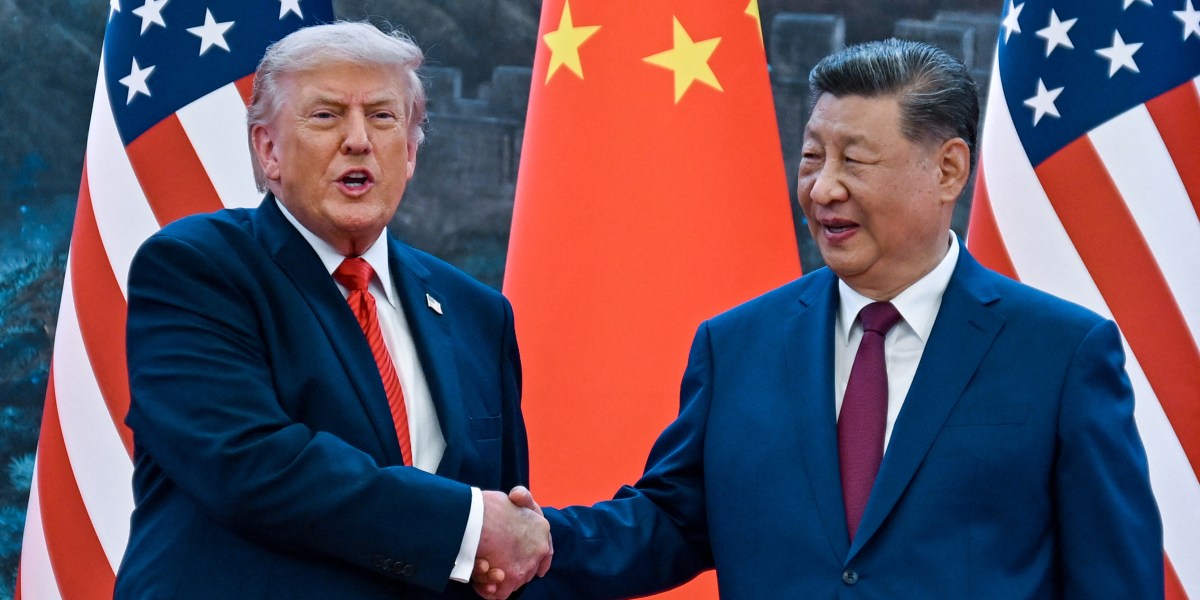
With the idea of an AI slowdown seemingly rejected by Trump and Xi, along with a growing chasm between the nations’ attitudes toward AI, all eyes will be on Trump and Xi’s meeting next week to see what, if any, progress can be made to avoid the potentially disastrous outcome the U.S. labs are warning about.