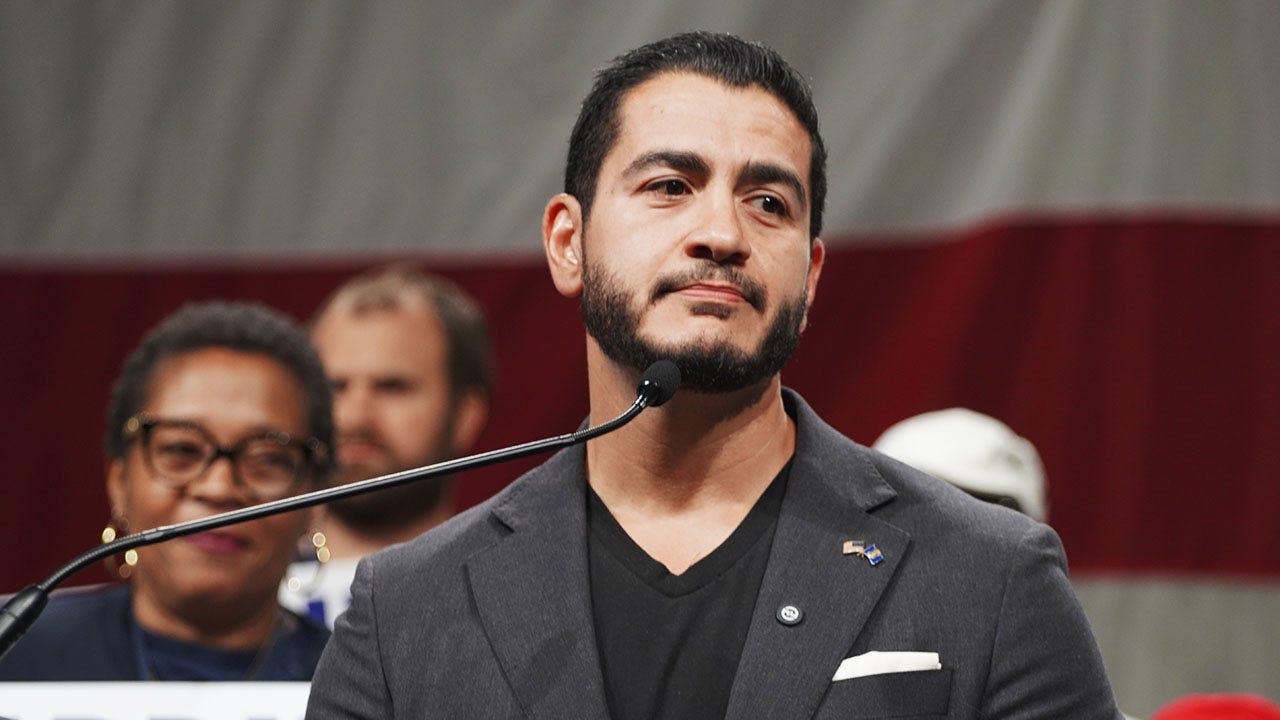
Source: FOX News
Summary
Michigan Democratic Senate nominee Abdul El-Sayed faced questions about his ties to Hasan Piker, views on Israel, campaign finances, and socialist affiliations during a debate in Detroit. His Republican opponent, Mike Rogers, declined to participate, citing concerns over the moderator. El-Sayed condemned Piker’s rhetoric, avoided a direct answer on U.S. recognition of Israel as a Jewish state, and defended his engagement with Piker. He also addressed questions about campaign donations from individuals linked to CAIR and rejected the socialist label, stating he believes in capitalism.
Our Reading
As expected, the matter has reached another stage.
El-Sayed answers questions about Piker, Israel, money, and socialism.
Rogers skips the debate, leaving El-Sayed alone with the moderator.
El-Sayed condemns Piker but still talks to him.
He avoids a yes-or-no answer on Israel, but says he wants peace for all.
His campaign takes money from people linked to a controversial group, but he says it’s okay.
Author: Evan Null
Michigan Senate Race Heats Up
The Michigan Senate race between Abdul El-Sayed and Mike Rogers is intensifying as El-Sayed faces scrutiny over his political affiliations and statements. The debate, which was supposed to feature both candidates, was canceled when Rogers declined to participate. This left El-Sayed to answer questions from the moderator and audience, which included topics such as his ties to Hasan Piker and his views on Israel.
El-Sayed’s campaign has received donations from individuals associated with the Council on American-Islamic Relations (CAIR), a group with controversial ties. Despite this, El-Sayed defended the organization, calling it a civil rights group. He also faced questions about his relationship with the Democratic Socialists of America (DSA), which he denied being a member of, but acknowledged speaking at some of their events.
The debate was scheduled for Tuesday night in Detroit, but Rogers declined the invitation, citing concerns about the moderator. This left El-Sayed to address the questions alone, which included his stance on U.S. recognition of Israel as a Jewish state. He avoided a direct answer, instead focusing on the need for peace and equal rights for all.
El-Sayed also criticized Rogers for focusing on his ethnicity and Muslim faith, calling it a culture war. He accused Rogers of being influenced by corporate interests and questioned his attendance at AIPAC fundraisers. Despite this, El-Sayed acknowledged the diversity within the Republican Party, even referencing JD Vance and the second lady.
El-Sayed has repeatedly rejected the socialist label, describing himself as a capitalist. However, he has spoken at events organized by the DSA, and some members have supported his campaign. The candidates are set to meet again in October ahead of the November general election.
El-Sayed’s Responses to Key Issues
El-Sayed faced a range of questions during the debate, including his relationship with Hasan Piker, his views on Israel, and his campaign finances. He condemned Piker’s rhetoric but defended his decision to engage with the streamer, arguing that it offered a pathway back into politics for his followers. He also avoided a direct answer on whether the U.S. should continue recognizing Israel as a Jewish state, instead emphasizing the need for peace and equal rights for both Palestinians and Jewish Israelis.
El-Sayed’s campaign received donations from individuals linked to CAIR, a group with controversial ties. He defended the organization, calling it a civil rights group, and accused Rogers of trying to make the race about his ethnicity and faith. He also criticized Rogers for being influenced by corporate interests and questioned his attendance at AIPAC fundraisers.
El-Sayed denied being a member of the Democratic Socialists of America (DSA), but acknowledged speaking at some of their events. He described himself as a capitalist and argued that corporate consolidation, not government regulation, poses a greater threat to free markets. Despite this, he acknowledged that some members of the DSA have supported his campaign.
El-Sayed’s responses were met with mixed reactions, with some viewers and members of the studio audience expressing concern over his statements. The debate, which was supposed to feature both candidates, was canceled when Rogers declined to participate, leaving El-Sayed to answer questions alone.
El-Sayed’s campaign has been under scrutiny for its connections to controversial groups and individuals, but he has continued to defend his positions. The candidates are set to meet again in October ahead of the November general election, where the outcome could have significant implications for the Senate.
Political Implications and Public Reaction
The debate highlighted the growing tensions in the Michigan Senate race, with El-Sayed facing scrutiny over his political affiliations and statements. His responses to questions about Hasan Piker, Israel, and campaign finances were closely watched by viewers and members of the studio audience. The debate, which was supposed to feature both candidates, was canceled when Rogers declined to participate, leaving El-Sayed to address the questions alone.
El-Sayed’s campaign has received donations from individuals linked to CAIR, a group with controversial ties. He defended the organization, calling it a civil rights group, and accused Rogers of trying to make the race about his ethnicity and faith. He also criticized Rogers for being influenced by corporate interests and questioned his attendance at AIPAC fundraisers.
El-Sayed denied being a member of the Democratic Socialists of America (DSA), but acknowledged speaking at some of their events. He described himself as a capitalist and argued that corporate consolidation, not government regulation, poses a greater threat to free markets. Despite this, he acknowledged that some members of the DSA have supported his campaign.
The debate, which was supposed to feature both candidates, was canceled when Rogers declined to participate, leaving El-Sayed to answer questions alone. His responses were met with mixed reactions, with some viewers and members of the studio audience expressing concern over his statements. The candidates are set to meet again in October ahead of the November general election, where the outcome could have significant implications for the Senate.
El-Sayed’s campaign has been under scrutiny for its connections to controversial groups and individuals, but he has continued to defend his positions. The debate highlighted the challenges he faces in maintaining a broad base of support, particularly among Jewish voters and moderate Democrats.
El-Sayed’s Political Strategy and Challenges
El-Sayed’s campaign has been focused on positioning him as a progressive but moderate candidate who can appeal to a broad range of voters. However, his ties to controversial figures and groups have raised concerns among some voters and political analysts. The debate, which was supposed to feature both candidates, was canceled when Rogers declined to participate, leaving El-Sayed to address questions alone.
El-Sayed faced scrutiny over his relationship with Hasan Piker, a controversial streamer whose rhetoric has drawn criticism from both sides of the aisle. He condemned Piker’s comments but defended his decision to engage with the streamer, arguing that it offered a pathway back into politics for his followers. He also avoided a direct answer on whether the U.S. should continue recognizing Israel as a Jewish state, instead emphasizing the need for peace and equal rights for all.
El-Sayed’s campaign received donations from individuals linked to CAIR, a group with controversial ties. He defended the organization, calling it a civil rights group, and accused Rogers of trying to make the race about his ethnicity and faith. He also criticized Rogers for being influenced by corporate interests and questioned his attendance at AIPAC fundraisers.
El-Sayed denied being a member of the Democratic Socialists of America (DSA), but acknowledged speaking at some of their events. He described himself as a capitalist and argued that corporate consolidation, not government regulation, poses a greater threat to free markets. Despite this, he acknowledged that some members of the DSA have supported his campaign.
The candidates are set to meet again in October ahead of the November general election, where the outcome could have significant implications for the Senate. El-Sayed’s campaign has been under scrutiny for its connections to controversial groups and individuals, but he has continued to defend his positions and focus on his message of unity and progress.
El-Sayed’s Future Prospects and Challenges
El-Sayed’s campaign is navigating a complex political landscape as he seeks to position himself as a viable candidate for the Senate. His responses to questions about Hasan Piker, Israel, and campaign finances have drawn both support and criticism, with some voters concerned about his affiliations and statements. The debate, which was supposed to feature both candidates, was canceled when Rogers declined to participate, leaving El-Sayed to address the questions alone.
El-Sayed’s campaign has received donations from individuals linked to CAIR, a group with controversial ties. He defended the organization, calling it a civil rights group, and accused Rogers of trying to make the race about his ethnicity and faith. He also criticized Rogers for being influenced by corporate interests and questioned his attendance at AIPAC fundraisers.
El-Sayed denied being a member of the Democratic Socialists of America (DSA), but acknowledged speaking at some of their events. He described himself as a capitalist and argued that corporate consolidation, not government regulation, poses a greater threat to free markets. Despite this, he acknowledged that some members of the DSA have supported his campaign.
The debate highlighted the challenges El-Sayed faces in maintaining a broad base of support, particularly among Jewish voters and moderate Democrats. His responses were met with mixed reactions, with some viewers and members of the studio audience expressing concern over his statements. The candidates are set to meet again in October ahead of the November general election, where the outcome could have significant implications for the Senate.
El-Sayed’s campaign has been under scrutiny for its connections to controversial groups and individuals, but he has continued to defend his positions and focus on his message of unity and progress. As the race intensifies, his ability to navigate these challenges will be crucial to his prospects in the upcoming election.