Source: BroBible
Summary
Arnold Schwarzenegger expressed concerns about Los Angeles’ ability to host the 2028 Summer Olympics, citing inadequate infrastructure. He criticized politicians for failing to invest in systems like water, sewage, and public transit. Schwarzenegger noted that California, the fourth-largest economy, operates like a third-world country. He also referenced the 2025 Pacific Palisades fires, where poor infrastructure hindered firefighters. His comments were made on a recent episode of “Front Office Sports Tonight.”
Our Reading
The routine arrives with confidence.
Infrastructure is always the problem, never the solution.
Politicians are the villains, even when they’re not the ones building.
California’s economy is huge, but its systems are ancient.
It’s not about the Olympics—it’s about the same old mess.
Los Angeles is hosting the Olympics, but it can’t even fix its own streets.
Author: Evan Null
Arnold Schwarzenegger’s Olympic Woes
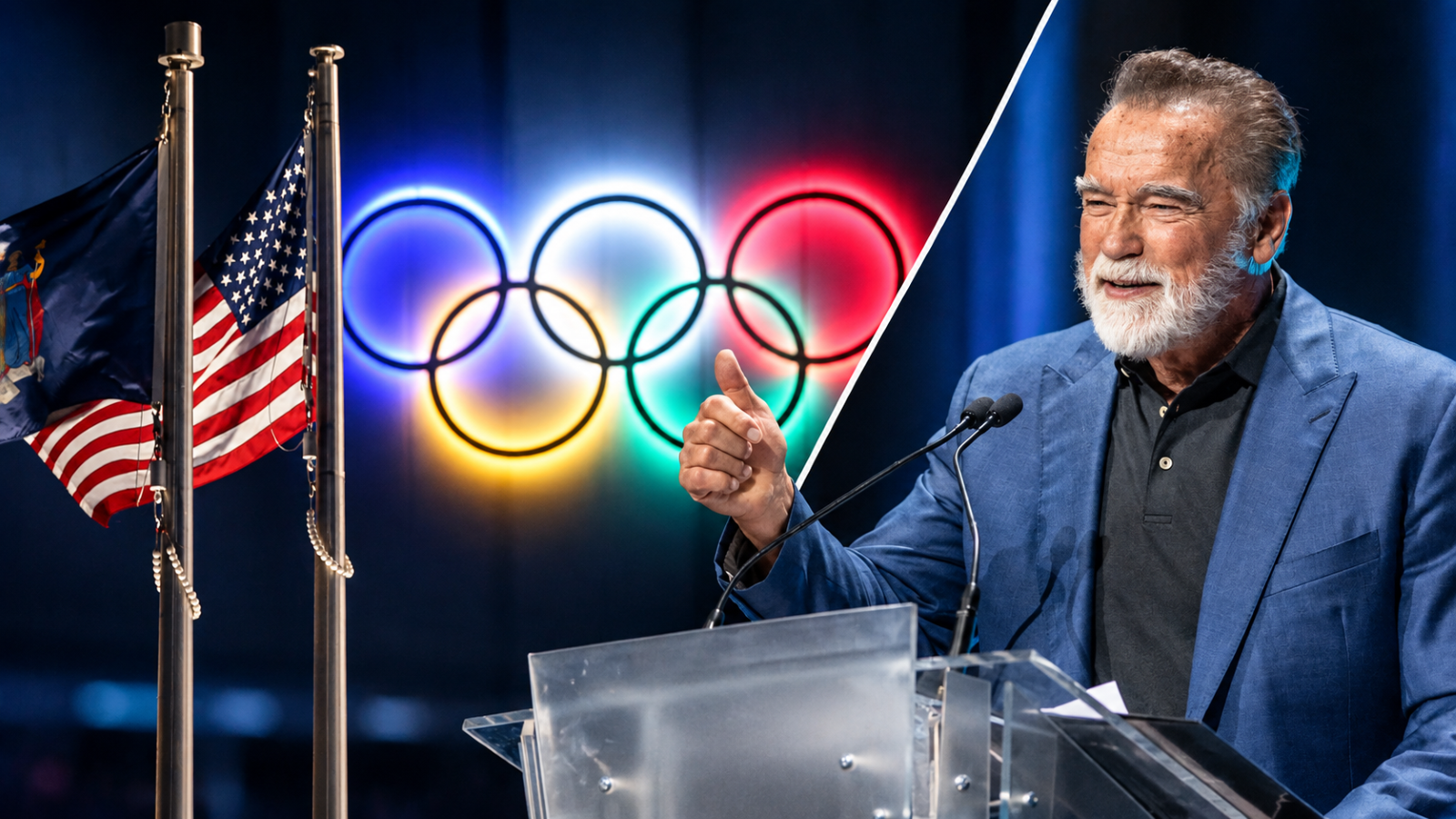
Arnold Schwarzenegger, former governor of California, has voiced concerns about Los Angeles’ ability to host the 2028 Summer Olympics. His comments were made during a recent appearance on “Front Office Sports Tonight.” Schwarzenegger highlighted the lack of infrastructure improvements in the city, which he believes could lead to problems during the games.
He pointed out that the water and sewage systems in Los Angeles are outdated, with frequent issues like flooding and contaminated beaches. Schwarzenegger also criticized the lack of public transit, noting that Los Angeles once had a robust light rail system that was dismantled decades ago.
The Governator’s remarks extended beyond the Olympics, touching on broader infrastructure issues in California. He argued that the state’s economy, the fourth-largest in the world, is not being supported by its infrastructure. Schwarzenegger claimed that politicians are the main obstacle to progress, as they fail to invest in necessary improvements.
His concerns were also fueled by recent events, such as the 2025 Pacific Palisades fires, where inadequate infrastructure hindered firefighting efforts. Schwarzenegger suggested that the lack of infrastructure is not unique to Los Angeles but is a nationwide issue.
Despite his criticism, Schwarzenegger acknowledged that Los Angeles residents are welcoming to visitors and would do their best to make the Olympics a success. However, he believes that without significant infrastructure investment, the games could face major challenges.
The Olympics and the Infrastructure Crisis
The 2028 Summer Olympics in Los Angeles have become a focal point for discussions about infrastructure in the United States. Arnold Schwarzenegger, a former governor of California, has raised concerns about the city’s ability to host the event, citing a lack of investment in critical systems. His comments reflect a broader frustration with the state’s aging infrastructure and the political will to improve it.
During his appearance on “Front Office Sports Tonight,” Schwarzenegger emphasized that the problems go beyond the Olympics. He pointed to issues like outdated water and sewage systems, which are prone to failure and cause public health concerns. He also criticized the lack of public transit, noting that Los Angeles once had a comprehensive light rail system that was dismantled in favor of car-centric development.
His remarks were not limited to California. Schwarzenegger argued that the infrastructure crisis is a national issue, with many cities facing similar challenges. He suggested that the failure to invest in infrastructure is a result of political inaction and a lack of long-term planning. This, he claimed, is holding back economic growth and quality of life.
The 2025 Pacific Palisades fires served as a recent example of how poor infrastructure can impact emergency response efforts. Schwarzenegger used this as evidence of the need for better planning and investment. He also pointed to the lack of high-speed rail and other modern transit options as a major obstacle to progress.
Despite his concerns, Schwarzenegger acknowledged that the people of Los Angeles are welcoming and would work to make the Olympics a success. However, he believes that without significant infrastructure improvements, the games could face serious challenges that could undermine their impact and reputation.
California’s Infrastructure: A Third-World Problem?
Arnold Schwarzenegger’s comments on California’s infrastructure have sparked a conversation about the state’s ability to support major events like the 2028 Olympics. He argued that despite being the fourth-largest economy in the world, California is operating like a third-world country. His remarks highlight a growing frustration with the state’s aging systems and the lack of investment in critical infrastructure.
During his appearance on “Front Office Sports Tonight,” Schwarzenegger pointed to several key areas of concern, including water and sewage systems that are over a century old and prone to failure. He also criticized the lack of public transit, noting that Los Angeles once had a robust light rail system that was dismantled in favor of car-centric development. This, he argued, has left the city with a transportation network that is ill-suited for modern needs.
His concerns were not limited to Los Angeles. Schwarzenegger suggested that the infrastructure crisis is a nationwide issue, with many cities facing similar challenges. He pointed to the 2025 Pacific Palisades fires as an example of how poor infrastructure can hinder emergency response efforts. He also criticized the lack of high-speed rail and other modern transit options, which he argued are essential for economic growth and quality of life.
Despite his criticism, Schwarzenegger acknowledged that the people of Los Angeles are welcoming and would do their best to make the Olympics a success. However, he believes that without significant infrastructure improvements, the games could face serious challenges that could undermine their impact and reputation.
His comments reflect a broader sentiment among many Californians who feel that the state is not living up to its potential. With the 2028 Olympics on the horizon, the pressure is on to address these issues before the world comes to visit.
Arnold Schwarzenegger’s Critique of American Infrastructure
Arnold Schwarzenegger has long been known for his bold opinions, and his recent comments on infrastructure in the United States are no exception. During an appearance on “Front Office Sports Tonight,” he expressed concerns about Los Angeles’ ability to host the 2028 Summer Olympics, citing a lack of investment in critical systems. His remarks highlight a growing frustration with the state of infrastructure in California and beyond.
Schwarzenegger pointed to several key areas of concern, including outdated water and sewage systems that are prone to failure and cause public health issues. He also criticized the lack of public transit, noting that Los Angeles once had a comprehensive light rail system that was dismantled in favor of car-centric development. This, he argued, has left the city with a transportation network that is ill-suited for modern needs.
His concerns were not limited to Los Angeles. Schwarzenegger suggested that the infrastructure crisis is a nationwide issue, with many cities facing similar challenges. He pointed to the 2025 Pacific Palisades fires as an example of how poor infrastructure can hinder emergency response efforts. He also criticized the lack of high-speed rail and other modern transit options, which he argued are essential for economic growth and quality of life.
Despite his criticism, Schwarzenegger acknowledged that the people of Los Angeles are welcoming and would do their best to make the Olympics a success. However, he believes that without significant infrastructure improvements, the games could face serious challenges that could undermine their impact and reputation.
His comments reflect a broader sentiment among many Californians who feel that the state is not living up to its potential. With the 2028 Olympics on the horizon, the pressure is on to address these issues before the world comes to visit.
The Olympics and the Infrastructure Debate
The 2028 Summer Olympics in Los Angeles have become a focal point for discussions about infrastructure in the United States. Arnold Schwarzenegger, a former governor of California, has raised concerns about the city’s ability to host the event, citing a lack of investment in critical systems. His comments reflect a growing frustration with the state’s aging infrastructure and the political will to improve it.
During his appearance on “Front Office Sports Tonight,” Schwarzenegger emphasized that the problems go beyond the Olympics. He pointed to issues like outdated water and sewage systems, which are prone to failure and cause public health concerns. He also criticized the lack of public transit, noting that Los Angeles once had a comprehensive light rail system that was dismantled in favor of car-centric development.
His remarks were not limited to California. Schwarzenegger suggested that the infrastructure crisis is a national issue, with many cities facing similar challenges. He pointed to the 2025 Pacific Palisades fires as an example of how poor infrastructure can hinder emergency response efforts. He also criticized the lack of high-speed rail and other modern transit options, which he argued are essential for economic growth and quality of life.
Despite his criticism, Schwarzenegger acknowledged that the people of Los Angeles are welcoming and would do their best to make the Olympics a success. However, he believes that without significant infrastructure improvements, the games could face serious challenges that could undermine their impact and reputation.
His comments reflect a broader sentiment among many Californians who feel that the state is not living up to its potential. With the 2028 Olympics on the horizon, the pressure is on to address these issues before the world comes to visit.