—
Source: Fox News
Summary
The United States and China agreed to lower tariffs on $30 billion in goods after a three-day summit between President Donald Trump and Chinese President Xi Jinping in Washington, D.C. The White House stated the tariff reductions apply to “non-sensitive goods.” U.S. exports like agricultural products and medical devices will receive favorable treatment in China, while U.S. imports of small appliances and toys will also see preferential treatment. The agreement was reached through the U.S.-China Board of Trade, established during Xi’s visit. U.S. Trade Representative Jamieson Greer said more details will be released soon. The move marks a significant step in cooling the trade war Trump initiated in 2025.
Our Reading
As expected, the matter has reached another stage.
Trump and Xi meet in Washington, shake hands, say nice things.
They lower tariffs, call it progress, promise more talks.
Board of Trade is formed, like a committee for the same problem.
Another round of talks, another pause in the war, same pattern.
Author: Evan Null
Trump and Xi’s Summit
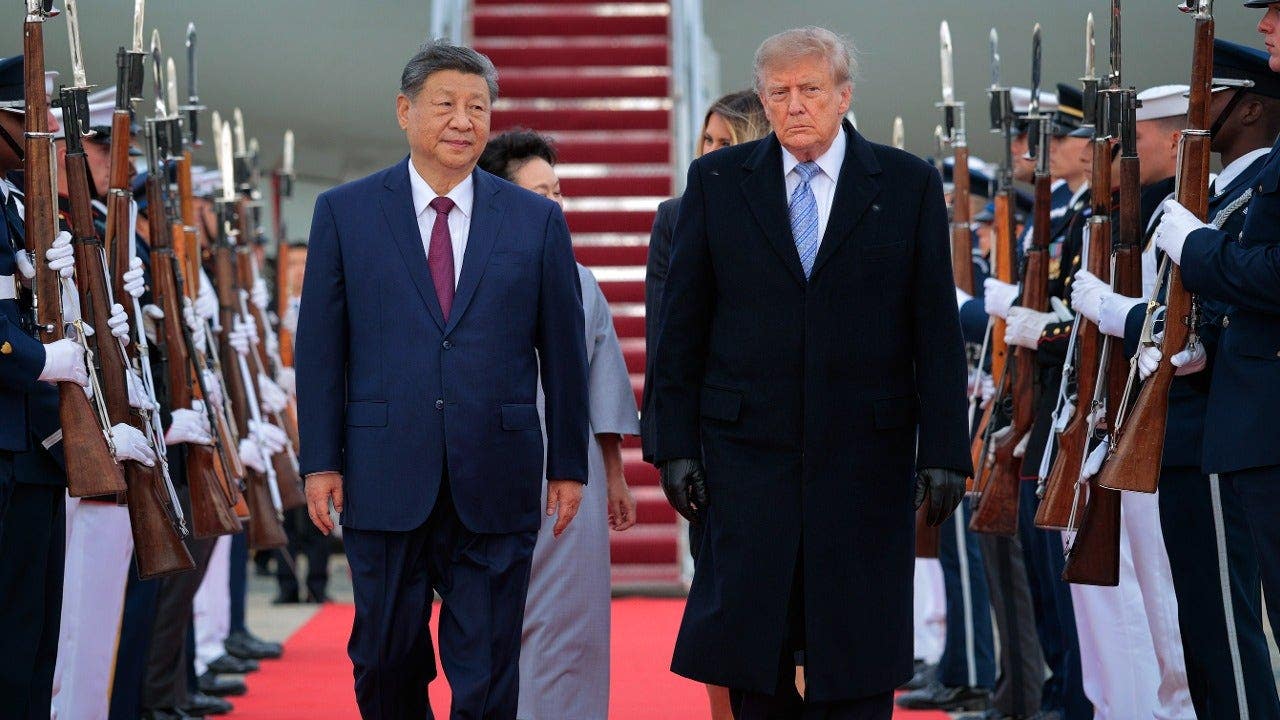
President Donald Trump and Chinese President Xi Jinping met in Washington, D.C., for a three-day summit. The meeting took place amid ongoing trade tensions between the two countries. Both leaders participated in public statements and private discussions. The summit was seen as a critical moment in their ongoing trade negotiations.
The summit was held in the context of a broader trade war that had been escalating since 2025. Trump had imposed tariffs on Chinese imports, while China retaliated with its own levies. The meeting was intended to address these issues and find a resolution.
During the summit, both leaders expressed optimism about the potential for a trade agreement. They emphasized the importance of cooperation and mutual benefit. However, no concrete details of the agreement were released at the time.
Trump and Xi also discussed other areas of cooperation, including trade, security, and economic relations. The summit was viewed as a step toward reducing tensions and improving bilateral relations.
The summit was followed by a series of meetings and negotiations between U.S. and Chinese officials. These discussions aimed to finalize the terms of the trade agreement and address other outstanding issues.
The Tariff Reductions
The U.S. and China agreed to lower tariffs on $30 billion in goods. The reduction applied to “non-sensitive goods,” which included a range of products from both countries. The agreement was seen as a significant step toward easing the trade war.
U.S. exports such as agricultural products, fish, and medical devices would receive favorable tariff treatment in China. In return, U.S. imports of small appliances, toys, and other goods would also see reduced tariffs. The agreement was intended to promote trade and economic growth.
The tariff reductions were part of a broader effort to resolve trade disputes between the two countries. The agreement was reached through the U.S.-China Board of Trade, a new body established during the summit. The board was tasked with negotiating further tariff reductions and addressing other trade issues.
Both countries had previously engaged in a series of trade negotiations, including a 90-day truce in 2025. The new agreement was seen as a continuation of these efforts to find a long-term solution to the trade war.
The tariff reductions were expected to have a positive impact on trade and economic relations between the U.S. and China. However, the full details of the agreement were not yet available, and further negotiations were anticipated.
The U.S.-China Board of Trade
The U.S.-China Board of Trade was established during the summit as a new mechanism for resolving trade disputes. The board was first proposed during Trump’s visit to China in May and formally created during Xi’s visit to Washington. It was intended to facilitate ongoing negotiations and address trade issues.
The board was seen as a key component of the new trade agreement. It would be responsible for negotiating further tariff reductions and addressing other trade-related matters. The establishment of the board was viewed as a positive step toward improving bilateral trade relations.
The board was composed of representatives from both countries, including officials from the U.S. Trade Representative and Chinese trade authorities. It was designed to provide a structured framework for ongoing discussions and negotiations.
The board’s creation was part of a broader effort to find a long-term solution to the trade war. It was intended to provide a more stable and predictable environment for trade between the two countries. The board would also be responsible for monitoring the implementation of the new tariff reductions.
The establishment of the board was seen as a sign of commitment from both countries to work together on trade issues. It was expected to play a key role in future negotiations and the resolution of ongoing disputes.
The Trade War Context
The trade war between the U.S. and China began in 2025 when Trump imposed tariffs on Chinese imports. The tariffs were justified as a response to what the administration described as unfair trade practices and the fentanyl crisis. China retaliated with its own levies on U.S. goods, leading to a cycle of escalating tensions.
The trade war had a significant impact on both economies. U.S. businesses faced higher costs due to the tariffs, while Chinese companies experienced reduced demand for their exports. The conflict also affected global trade, as other countries were drawn into the dispute.
Throughout the trade war, there were periods of negotiation and temporary truces. In 2025, a 90-day truce was agreed upon, which reduced some tariffs. The truce was later extended, but tensions remained high. The new agreement was seen as a potential turning point in the conflict.
The trade war had broader implications beyond economics. It affected diplomatic relations between the two countries and influenced global geopolitics. The conflict also had an impact on international trade policies and the stability of global markets.
The new agreement was viewed as a significant step toward resolving the trade war. However, it was also seen as a temporary solution, with the potential for future negotiations and adjustments. The long-term impact of the agreement remained to be seen.
Future Prospects
The new trade agreement is expected to have a positive impact on U.S.-China trade relations. It is likely to reduce costs for businesses and improve the flow of goods between the two countries. However, the full extent of the benefits will depend on the implementation of the agreement.
The U.S.-China Board of Trade will play a key role in the future of the agreement. It will be responsible for negotiating further tariff reductions and addressing any remaining trade disputes. The board’s effectiveness will be crucial in determining the long-term success of the agreement.
Both countries have expressed a commitment to continued negotiations and cooperation. However, there are still significant challenges to overcome, including differences in trade policies and economic priorities. The future of the agreement will depend on the willingness of both sides to work together.
The agreement is also expected to have implications for global trade. It may set a precedent for future trade negotiations and influence the way other countries approach trade disputes. The success of the agreement could have a ripple effect on international trade relations.
While the agreement represents a positive step forward, it is not a permanent solution to the trade war. Ongoing negotiations and adjustments will be necessary to address new challenges and maintain the stability of the agreement. The long-term success of the agreement will depend on the continued cooperation of both countries.