Source: Fortune
Summary
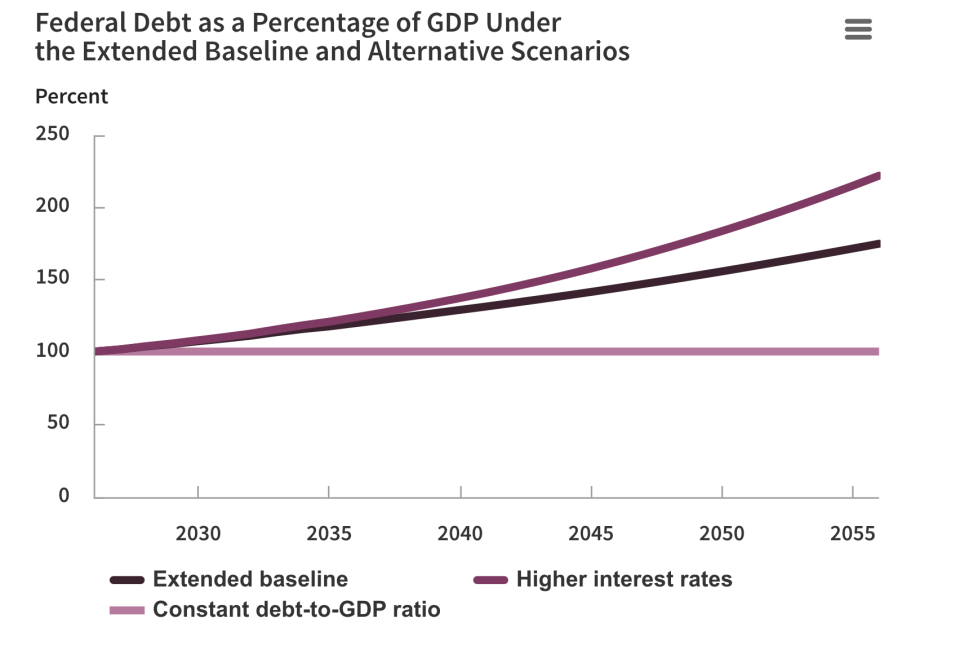
The 10-year Treasury yield rose to 5.23%, the highest since 2007, and the 30-year yield hit 5.49%, the highest since 2004. These levels exceed the Congressional Budget Office’s (CBO) previous forecasts. The CBO estimated that a 1 percentage point rise in interest rates would increase the total deficit to 14% of GDP by 2056. Publicly held debt would rise to 222% of GDP, up from 101% today. The CBO also noted that higher debt could further raise interest rates, creating a feedback loop. The U.S. debt now stands at $40 trillion.
Our Reading
The numbers tell one story.
Treasury yields are surging past forecasts.
CBO projections look outdated.
Debt-to-GDP ratio is climbing sharply.
Interest costs are becoming a bigger burden.
Higher debt could push rates even higher.
Author: Evan Null
Soaring Yields and Debt Concerns
Treasury yields have reached their highest levels in over a decade, raising alarm among lawmakers and economists. The 10-year yield hit 5.23%, the highest since 2007, while the 30-year yield climbed to 5.49%, the highest since 2004. These numbers far exceed the Congressional Budget Office’s (CBO) earlier forecasts, which had projected the 10-year yield at 4.1% for this year.
The spike in yields has significant implications for the U.S. debt, which now stands at $40 trillion. The CBO warned that a 1 percentage point increase in interest rates could push the total deficit to 14% of GDP by 2056. This scenario would also see publicly held debt rise to 222% of GDP, a stark increase from the current 101%.
The CBO’s analysis highlights a troubling feedback loop: as debt grows, interest rates rise, which in turn increases the cost of borrowing. This dynamic could slow economic growth and make it harder to manage the debt. The CBO estimated that GDP growth would be 0.1 percentage points below its baseline, further complicating efforts to reduce the deficit.
In a more optimistic scenario, where the debt-to-GDP ratio remains flat, the CBO found that the deficit would be 5.6 percentage points smaller by 2056. However, this scenario assumes a level of fiscal discipline that has not been seen in recent years. The CBO also noted that even this scenario would require significant economic growth to offset the debt burden.
The situation has prompted calls for new projections from the CBO, as lawmakers and analysts try to understand the long-term implications of the rising debt and interest rates. With the U.S. economy already running hot and global tensions adding to uncertainty, the path forward remains unclear.
Exceeding Forecasts
The recent surge in Treasury yields has outpaced the CBO’s long-term projections. The 10-year yield, which the CBO had forecast at 4.1% for this year, now stands at 5.23%, a full percentage point higher. The 30-year yield, which the CBO had expected to be 4.3% by 2031, has already surpassed that level. These numbers suggest that the U.S. is moving away from the fiscal path outlined in the CBO’s February forecasts.
The CBO has warned that the current trajectory of rising interest rates and growing debt could lead to a significant increase in the deficit. Under a scenario where rates rise by 1 percentage point, the total deficit could reach 14% of GDP by 2056, compared to the current 5.8%. This would mark a sharp increase in the burden of interest payments on the federal budget.
The CBO also noted that the rise in debt could further push up interest rates, creating a self-reinforcing cycle. As the debt-to-GDP ratio increases, the cost of borrowing rises, which in turn increases the deficit. This dynamic could slow economic growth and make it more difficult to manage the debt over the long term.
Despite these concerns, there is little sign of political will to address the growing debt. The budget deficit is on pace to reach $2 trillion this year, and interest expenses are already at $1 trillion annually. With no immediate plans to curb spending or raise taxes, the U.S. appears to be on a path of continued fiscal expansion.
The situation has prompted some lawmakers to call for updated projections from the CBO. Senator Jeff Merkley, the ranking Democrat on the Senate Budget Committee, has asked for new numbers to better understand the long-term implications of the rising debt and interest rates. The CBO has responded with a detailed analysis of the potential impacts, but the path forward remains uncertain.
Interest Rates and Economic Growth
The rise in Treasury yields has significant implications for both the federal budget and the broader economy. As interest rates increase, the cost of borrowing for the government rises, leading to higher interest expenses. This, in turn, increases the deficit and puts more pressure on the federal budget. The CBO has warned that even a small increase in rates could have a major impact on the long-term fiscal outlook.
The CBO’s analysis shows that a 1 percentage point increase in interest rates could push the total deficit to 14% of GDP by 2056. This would represent a significant increase from the current 5.8% and would require a major shift in fiscal policy to address. The CBO also noted that the rise in debt could further push up interest rates, creating a feedback loop that makes it even harder to manage the deficit.
In addition to the fiscal implications, the rise in interest rates could also have an impact on economic growth. The CBO estimated that GDP growth would be 0.1 percentage points below its baseline, which could slow the economy and make it harder to grow its way out of the debt. This suggests that the U.S. may need to take more direct action to address the growing debt rather than relying on economic growth alone.
Despite these concerns, there is little sign of immediate action from lawmakers. The budget deficit is already on pace to reach $2 trillion this year, and there is no indication that Congress is willing to take steps to curb spending or raise taxes. The CBO has provided a detailed analysis of the potential impacts, but without political will, the U.S. may continue on its current path of rising debt and interest rates.
The situation highlights the growing challenges facing the U.S. fiscal system. With the debt now at $40 trillion and interest rates at their highest levels in over a decade, the long-term outlook remains uncertain. The CBO has provided a detailed analysis of the potential impacts, but without significant changes in policy, the U.S. may face a difficult fiscal future.
Debt and the Path Forward
The U.S. debt is now at $40 trillion, and the rising interest rates are making it more expensive to service that debt. The CBO has warned that even a small increase in interest rates could have a major impact on the long-term fiscal outlook. With the 10-year yield now at 5.23%, the highest since 2007, the cost of borrowing is rising rapidly, and the deficit is growing as a result.
The CBO has outlined a scenario in which interest rates rise by 1 percentage point, leading to a total deficit of 14% of GDP by 2056. This would represent a significant increase from the current 5.8% and would require a major shift in fiscal policy to address. The CBO also noted that the rise in debt could further push up interest rates, creating a self-reinforcing cycle that makes it even harder to manage the deficit.
The situation has prompted some lawmakers to call for updated projections from the CBO. Senator Jeff Merkley, the ranking Democrat on the Senate Budget Committee, has asked for new numbers to better understand the long-term implications of the rising debt and interest rates. The CBO has responded with a detailed analysis of the potential impacts, but the path forward remains uncertain.
Despite these concerns, there is little sign of immediate action from lawmakers. The budget deficit is already on pace to reach $2 trillion this year, and there is no indication that Congress is willing to take steps to curb spending or raise taxes. The CBO has provided a detailed analysis of the potential impacts, but without political will, the U.S. appears to be on a path of continued fiscal expansion.
The situation highlights the growing challenges facing the U.S. fiscal system. With the debt now at $40 trillion and interest rates at their highest levels in over a decade, the long-term outlook remains uncertain. The CBO has provided a detailed analysis of the potential impacts, but without significant changes in policy, the U.S. may face a difficult fiscal future.
The Feedback Loop of Debt and Rates
The rising debt and interest rates are creating a self-reinforcing cycle that could have long-term consequences for the U.S. economy. As the debt grows, the cost of borrowing increases, which in turn pushes up interest rates. This dynamic could make it even harder to manage the deficit and could slow economic growth. The CBO has warned that this feedback loop could have significant implications for the long-term fiscal outlook.
The CBO’s analysis shows that a 1 percentage point increase in interest rates could push the total deficit to 14% of GDP by 2056. This would represent a major increase from the current 5.8% and would require a significant shift in fiscal policy to address. The CBO also noted that the rise in debt could further push up interest rates, creating a cycle that makes it even harder to manage the deficit.
The situation has prompted some lawmakers to call for updated projections from the CBO. Senator Jeff Merkley, the ranking Democrat on the Senate Budget Committee, has asked for new numbers to better understand the long-term implications of the rising debt and interest rates. The CBO has responded with a detailed analysis of the potential impacts, but the path forward remains uncertain.
Despite these concerns, there is little sign of immediate action from lawmakers. The budget deficit is already on pace to reach $2 trillion this year, and there is no indication that Congress is willing to take steps to curb spending or raise taxes. The CBO has provided a detailed analysis of the potential impacts, but without political will, the U.S. may continue on its current path of rising debt and interest rates.
The situation highlights the growing challenges facing the U.S. fiscal system. With the debt now at $40 trillion and interest rates at their highest levels in over a decade, the long-term outlook remains uncertain. The CBO has provided a detailed analysis of the potential impacts, but without significant changes in policy, the U.S. may face a difficult fiscal future.