Source: Fortune
Summary
A survey of northern Virginians found strong support for regulations that make data centers more transparent and accountable. Residents prioritize policies addressing visible impacts, such as underground power lines and restrictions near homes and schools. They also value public input before projects are approved. While 47% support data center development, 27% oppose it, showing a nuanced public stance. The study highlights the need for clearer communication on complex issues like electricity rates.
Our Reading
The numbers tell one story.
Northern Virginians want more transparency and accountability from data centers.
They care most about visible, immediate impacts like power lines and proximity to homes.
Public input is seen as a key part of the process.
Regulation and growth can coexist, if done right.
Author: Evan Null
What We Asked
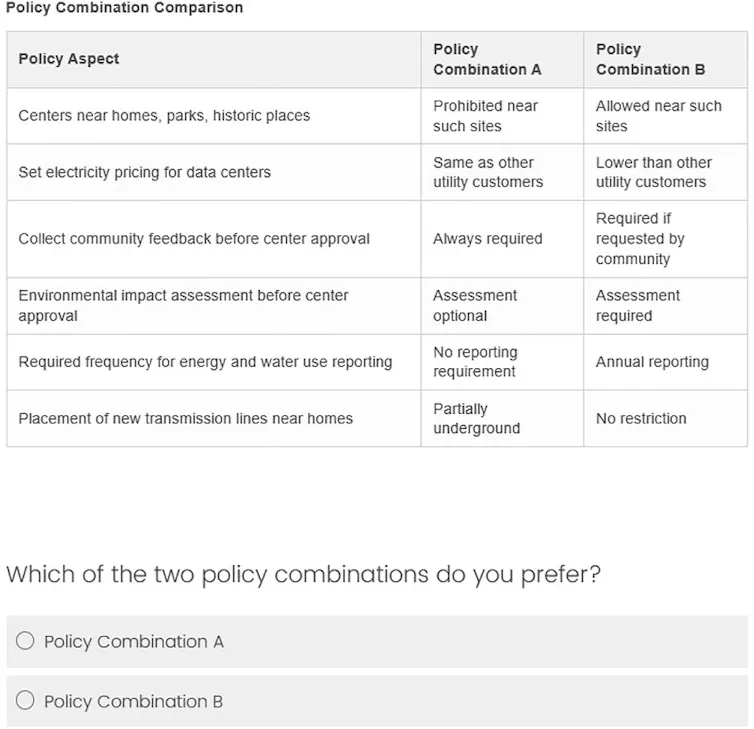
The survey asked residents to compare different combinations of policies regulating data centers. It focused on measures like power line placement, environmental impact assessments, and public review. The goal was to understand which combinations residents preferred. By analyzing these choices, researchers could determine the independent influence of each policy measure.
Visible and Immediate Impacts Matter
Residents strongly supported policies that addressed visible and immediate effects of data centers. They wanted underground power lines and restrictions on building near homes and schools. Regular reporting of energy and water use was also highly valued. These findings show that people care most about tangible, local effects.
Public participation in decision-making was ranked as the second most important policy. Many jurisdictions in Virginia have allowed data centers to be built without public review, leaving residents with little input. This lack of involvement has led to frustration and opposition.
In some areas, like Loudoun County, new rules now require public hearings before data centers are approved. However, federal policies under the Trump administration have moved to reduce public input for air-pollution permits. This creates a mixed regulatory environment.
Complex Issues Need Clearer Explanations
The survey found less support for policies related to complex issues, such as higher electricity rates for data centers. These issues are harder for the public to understand, and residents often lack the technical knowledge to make informed decisions. Clear communication from experts is needed to help people grasp the trade-offs involved.
Infrastructure costs for data centers can raise electricity prices for everyone. In Virginia, wholesale prices have more than tripled since 2020. This has led to proposed rate increases for residential customers, showing the broader economic impact of data center growth.
Growth and Oversight Can Coexist
Despite concerns, nearly half of survey respondents supported data center development. This shows that people are not necessarily against data centers, but want them built with proper oversight. They expect governments to manage negative effects while allowing growth.
The challenge is not just deciding whether to allow data centers, but how to govern their development. Communities need to balance economic benefits with environmental and social impacts. This requires thoughtful policies and active public engagement.
The survey highlights the need for a balanced approach. Data centers can bring economic opportunities, but they must be managed responsibly. Residents want to be involved in the process and see clear benefits from development.