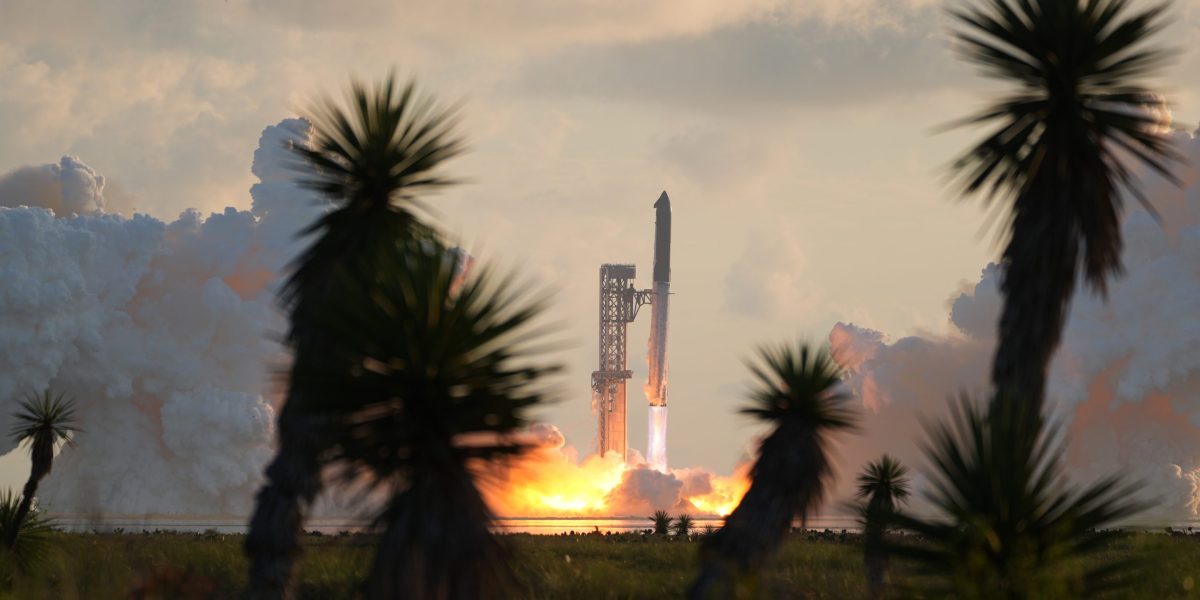
Source: Fortune.com
Summary
SpaceX launched its Starship rocket for the first time, reaching orbit and deploying 26 advanced Starlink satellites, but cut the flight short after three hours. The company aimed for a 10-hour flight to support NASA’s Artemis moon program but decided to return early for safety. One engine failed during ascent, but the mission continued. NASA praised SpaceX for its safe and responsible approach. The flight marked the 14th full-scale launch of Starship from Texas.
Our Reading
The numbers tell one story.
Starship reached orbit but didn’t complete the full 10-hour flight.
One engine failed, but the mission continued.
SpaceX emphasized safety over ambition.
Orbital success is a step toward moon and Mars travel.
Author: Evan Null
SpaceX Launches Starship for First Time
SpaceX successfully launched its Starship rocket for the first time, reaching orbit and deploying 26 advanced Starlink satellites. The mission, however, was cut short after three hours, falling short of the planned 10-hour flight. The company had aimed to demonstrate its readiness for NASA’s Artemis moon program, which includes multiple launches to support lunar missions.
The flight faced challenges when one of the rocket’s engines shut down prematurely. Despite this, mission control decided to continue the flight, and Starship reached the necessary orbit. The spacecraft was expected to complete six laps around Earth before splashing down in the Pacific, but the decision was made to return early for safety reasons.
SpaceX founder Elon Musk has emphasized the importance of safety, noting that any failure over land could harm the company’s reputation. The first-stage booster did not return to the launch site but instead dropped into the Gulf of Mexico. This was part of the plan for the initial test flights.
The mission was the 14th full-scale launch of Starship from Texas in three years. Previous tests had ended in crashes or short flights, but this time, the rocket managed to reach orbit. The next step for SpaceX is to refine the technology and prepare for future launches, including potential orbital landings and reusability.
SpaceX is working to certify Starship for orbital flight, a critical step for future moon and Mars missions. NASA’s Artemis program is a key part of this effort, with plans for multiple landings on the moon in the coming years. Musk has also outlined plans to phase out the Falcon 9 rocket and use Starship for satellite launches and interplanetary travel.