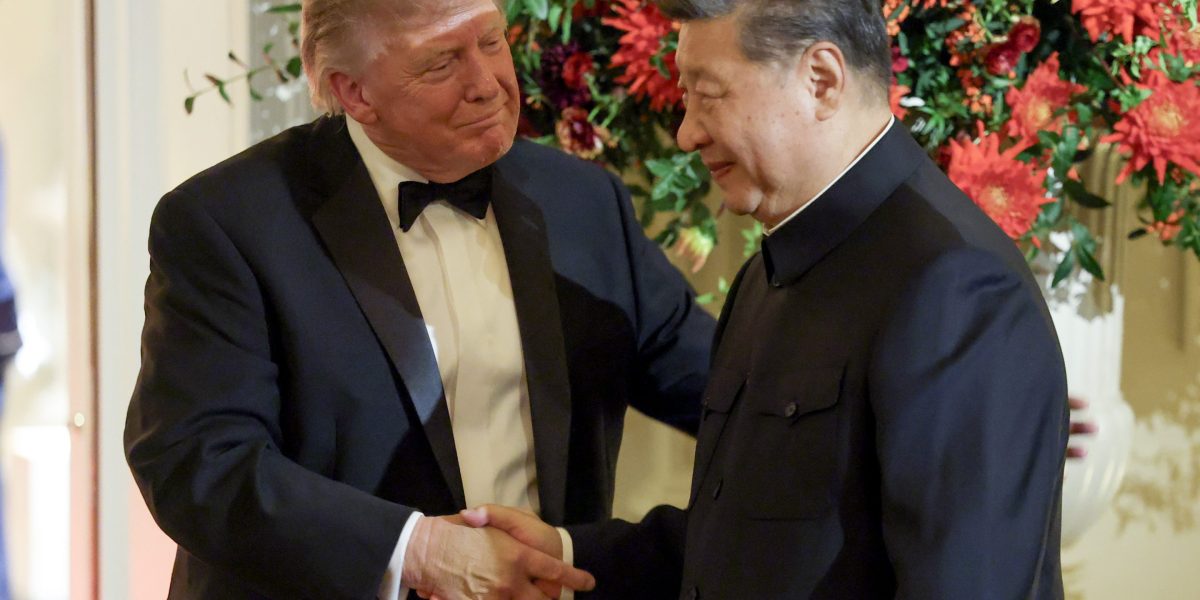
Source: Fortune
Summary
President Donald Trump reportedly offered to sell U.S. weapons to China during a summit with President Xi Jinping, according to U.S. Ambassador to China David Purdue. The White House denied any plans to sell arms to China, while foreign policy experts criticized the suggestion as contradictory to U.S. sanctions and trade restrictions. The remark came amid concerns over China’s military modernization and its ties to Iran. Trump has previously framed arms sales to Taiwan as a “negotiating chip” in dealings with China.
Our Reading
The numbers tell one story.
Trump offered to sell weapons to China during a summit with Xi.
The White House denied the plan, but experts called it contradictory.
China is accused of helping Iran and modernizing its military.
Trump has long treated arms sales as a bargaining tool.
The move risks undermining U.S. alliances and security interests.
Author: Evan Null
Trump’s Arms Deal Proposal
President Donald Trump reportedly suggested selling U.S. weapons to China during a recent summit with President Xi Jinping. The offer was made during a meeting at the White House, according to U.S. Ambassador to China David Purdue, who said Trump asked Xi if he would be interested in purchasing arms. The White House quickly denied any intention to proceed with such a sale, but the suggestion sparked immediate backlash from foreign policy experts.
The move contradicted the Trump administration’s broader strategy of imposing sanctions and trade restrictions on China. Experts argued that selling weapons to China would help modernize its military, which could pose a threat to U.S. national security. The suggestion also came at a time when China was accused of acquiring sensitive parts for the F-35 fighter jet, which could be used to counter U.S. stealth technology.
Trump has long maintained a complex relationship with China, referring to it as a strategic competitor while also expressing personal affinities for leaders like Xi Jinping. This duality has raised concerns among U.S. allies, who fear that Trump’s focus on personal relationships may undermine long-term security interests. Some analysts suggest that Trump views arms sales as a tool for negotiation rather than a strategic decision.
The timing of the offer also raised questions about the U.S. stance on Taiwan. The White House has been withholding a $14 billion arms package for Taiwan, despite the 1979 Taiwan Relations Act, which requires the U.S. to provide defensive weapons to the island. Trump previously called the sale a “very good negotiating chip” with China, suggesting he may be willing to delay or cancel the deal in exchange for concessions from Beijing.
This incident highlights Trump’s preference for transactional diplomacy, where commercial interests often take precedence over long-term geopolitical strategy. Experts argue that this approach risks weakening U.S. alliances and emboldening adversaries, particularly in a time of heightened global tensions.
Ambiguous Strategy and Strategic Risks
Trump’s suggestion of selling weapons to China has been met with confusion and concern from both U.S. officials and foreign policy experts. The White House has denied any plans to proceed with the sale, but the mere suggestion has raised questions about the administration’s overall strategy toward China. Critics argue that such a move would contradict the U.S. government’s efforts to counter China’s growing military and economic influence.
The offer also comes at a time when China is accused of supplying military equipment and intelligence to Iran, further complicating U.S. relations with the Middle East. Trump’s approach has been criticized for prioritizing personal relationships over national security, with some analysts suggesting that his focus on commercial deals may undermine long-term strategic goals.
The potential sale of U.S. weapons to China has also raised concerns about the impact on U.S. alliances, particularly with Taiwan. The White House has been withholding a $14 billion arms package for the island, despite legal obligations under the Taiwan Relations Act. Trump has previously referred to the sale as a “negotiating chip,” suggesting that he may be willing to delay or cancel the deal in exchange for concessions from China.
This incident underscores the broader debate over Trump’s foreign policy approach, which many argue prioritizes short-term gains over long-term stability. While some see his transactional style as a way to achieve quick results, others warn that it could weaken U.S. alliances and embolden adversaries.
The situation highlights the tension between commercial interests and national security, as well as the risks of using arms sales as a bargaining tool in international relations.
Trump’s Diplomatic Style and Global Implications
Trump’s approach to foreign policy has often been characterized by a focus on commercial deals and personal relationships, rather than traditional diplomatic strategies. This has led to a series of controversial decisions, including the recent suggestion of selling U.S. weapons to China. While the White House has denied any intention to proceed with the sale, the mere suggestion has raised concerns about the administration’s overall strategy toward the country.
The move has been criticized by foreign policy experts, who argue that it contradicts the U.S. government’s broader efforts to counter China’s military and economic influence. The suggestion also comes at a time when China is accused of supplying military equipment and intelligence to Iran, further complicating U.S. relations with the Middle East. Trump’s approach has been seen as prioritizing personal relationships over national security, with some analysts suggesting that his focus on commercial deals may undermine long-term strategic goals.
The potential sale of U.S. weapons to China has also raised concerns about the impact on U.S. alliances, particularly with Taiwan. The White House has been withholding a $14 billion arms package for the island, despite legal obligations under the Taiwan Relations Act. Trump has previously referred to the sale as a “negotiating chip,” suggesting that he may be willing to delay or cancel the deal in exchange for concessions from Beijing.
This incident highlights the broader debate over Trump’s foreign policy approach, which many argue prioritizes short-term gains over long-term stability. While some see his transactional style as a way to achieve quick results, others warn that it could weaken U.S. alliances and embolden adversaries.
The situation underscores the tension between commercial interests and national security, as well as the risks of using arms sales as a bargaining tool in international relations.
Strategic Contradictions and National Security Concerns
The suggestion that Trump offered to sell U.S. weapons to China has raised serious concerns about the administration’s strategic priorities. While the White House has denied any intention to proceed with the sale, the mere idea of such a deal has been criticized as contradictory to the U.S. government’s broader efforts to counter China’s military and economic influence. Experts argue that selling weapons to China would help modernize its military, which could pose a direct threat to U.S. national security.
The move also comes at a time when China is accused of supplying military equipment and intelligence to Iran, further complicating U.S. relations with the Middle East. Trump’s approach has been criticized for prioritizing personal relationships over national security, with some analysts suggesting that his focus on commercial deals may undermine long-term strategic goals. This has led to concerns that the administration’s actions could weaken U.S. alliances and embolden adversaries.
The potential sale of U.S. weapons to China has also raised concerns about the impact on U.S. alliances, particularly with Taiwan. The White House has been withholding a $14 billion arms package for the island, despite legal obligations under the Taiwan Relations Act. Trump has previously referred to the sale as a “negotiating chip,” suggesting that he may be willing to delay or cancel the deal in exchange for concessions from Beijing.
This incident highlights the broader debate over Trump’s foreign policy approach, which many argue prioritizes short-term gains over long-term stability. While some see his transactional style as a way to achieve quick results, others warn that it could weaken U.S. alliances and embolden adversaries.
The situation underscores the tension between commercial interests and national security, as well as the risks of using arms sales as a bargaining tool in international relations.
Transaction Over Strategy: Trump’s Foreign Policy Approach
Trump’s recent suggestion of selling U.S. weapons to China has been seen as a clear example of his transactional approach to foreign policy. While the White House has denied any intention to proceed with the sale, the mere idea of such a deal has raised concerns about the administration’s strategic priorities. Experts argue that selling weapons to China would help modernize its military, which could pose a direct threat to U.S. national security.
The move also comes at a time when China is accused of supplying military equipment and intelligence to Iran, further complicating U.S. relations with the Middle East. Trump’s approach has been criticized for prioritizing personal relationships over national security, with some analysts suggesting that his focus on commercial deals may undermine long-term strategic goals. This has led to concerns that the administration’s actions could weaken U.S. alliances and embolden adversaries.
The potential sale of U.S. weapons to China has also raised concerns about the impact on U.S. alliances, particularly with Taiwan. The White House has been withholding a $14 billion arms package for the island, despite legal obligations under the Taiwan Relations Act. Trump has previously referred to the sale as a “negotiating chip,” suggesting that he may be willing to delay or cancel the deal in exchange for concessions from Beijing.
This incident highlights the broader debate over Trump’s foreign policy approach, which many argue prioritizes short-term gains over long-term stability. While some see his transactional style as a way to achieve quick results, others warn that it could weaken U.S. alliances and embolden adversaries.
The situation underscores the tension between commercial interests and national security, as well as the risks of using arms sales as a bargaining tool in international relations.