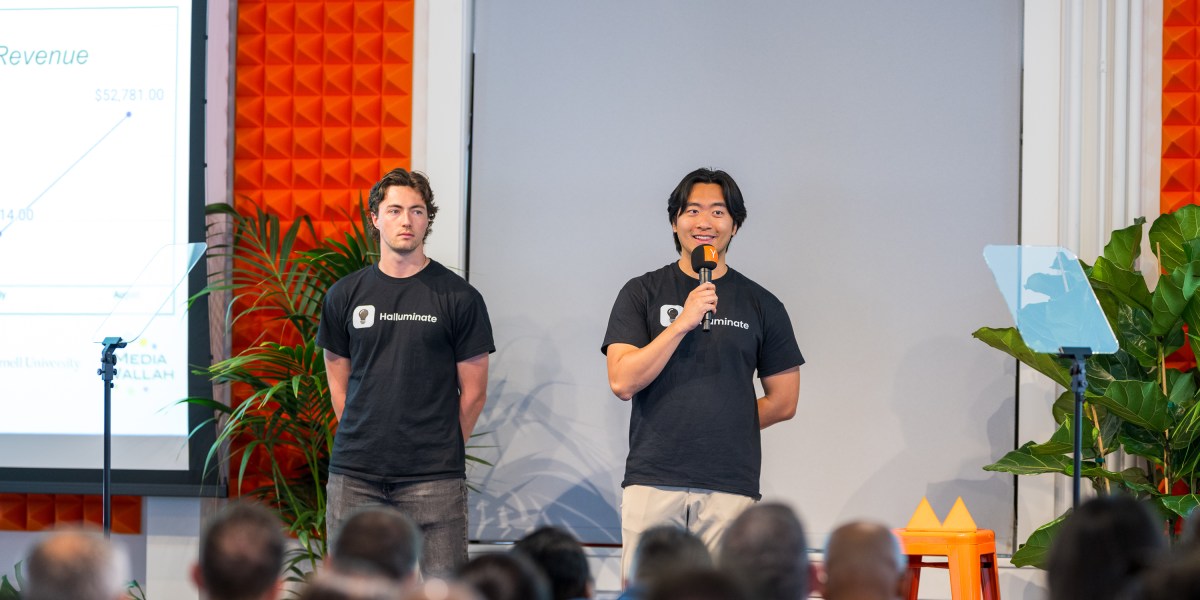
Source: Fortune
Summary
Halluminate, a San Francisco-based startup, raised $30 million in a Series A round led by Oak HC/FT, bringing its total funding to $38.5 million. The company builds AI training environments tailored to financial tasks, aiming to identify model weaknesses and improve performance. Founded in 2024, Halluminate’s CEO, Jerry Wu, said the company focuses on specialized AI training for industries like finance. A recent benchmark showed top AI models scored 51% on complex financial tasks, highlighting the need for better training environments. The company claims to be profitable with a mid-eight-figure annualized revenue run rate and serves top U.S. AI labs.
Our Reading
The numbers tell one story.
Halluminate raised $30 million in a Series A.
CEO Jerry Wu says finance needs specialized AI training.
Models scored 51% on a financial benchmark.
The company claims to be profitable and serves top AI labs.
Specialization is the key to future AI training.
Author: Evan Null
Company Overview
Halluminate is a nine-person startup based in San Francisco. It focuses on building AI training environments for financial work. The company was founded in 2024 and has raised a total of $38.5 million in funding. Its primary goal is to improve AI performance by identifying gaps in model capabilities through simulated financial tasks.
Funding and Investors
Halluminate’s Series A round was led by Oak HC/FT, with additional participation from Y Combinator, Orange Collective, and Heavybit. Individual investors from Anthropic, OpenAI, and Meta also joined the round. The company has raised $30 million in this round, bringing its total funding to $38.5 million.
AI Training Environments
Halluminate creates simulated training environments to improve AI performance. These environments are designed to test models on complex financial tasks, such as due-diligence processes. A recent benchmark showed that top AI models scored an average of 51% on these tasks, indicating significant room for improvement.
CEO’s Vision
CEO Jerry Wu believes that AI training data will become more specialized by industry. He argues that simulating financial work is fundamentally different from simulating other types of work. Wu refers to Halluminate’s systems as “verticalized data research labs” and expects the company to focus on finance, coding, and healthcare.
Future Challenges
Halluminate faces the challenge of continuously increasing the complexity of its training environments to keep up with advancing AI models. Wu calls this pressure the “Moore’s Law of Environments,” estimating that complexity must double every six to eight months. The company aims to maintain its edge by developing increasingly complex and specialized training scenarios.