Source: Fortune
Summary
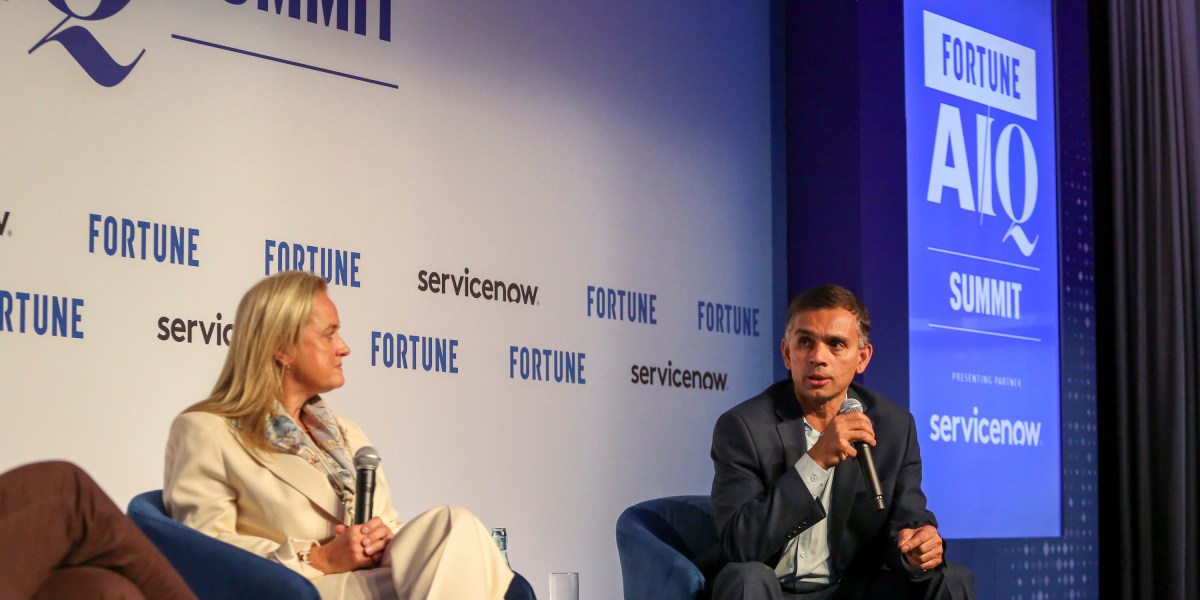
Hari Gopalkrishnan, Bank of America’s chief technology and information officer, warned against rushing to AI as a solution, emphasizing the effectiveness of deterministic models. The bank plans to double its AI budget next year. Gopalkrishnan highlighted that Bank of America uses AI selectively, with a focus on risk and efficiency. S&P Global’s Sally Moore discussed the company’s shift toward AI-driven data solutions, including its acquisition of Kensho. Both executives stressed the importance of aligning technology with client needs and operational goals.
Our Reading
The announcement sounds familiar.
Gopalkrishnan warns against AI as a first response.
Bank of America plans to double AI spending.
Moore highlights S&P’s data-driven AI strategy.
Both executives stress matching tech to need, not trend.
Author: Evan Null
Bank of America: simple tools first
Gopalkrishnan said the bank starts with what clients need and a “process inventory” of the steps behind their requests. It often decides against AI — “plenty of times,” he said. A mobile app or a real-time decision rule can be the better answer.
Every AI project also goes through a review that covers 16 “pillars” of risk, including privacy, bias, workforce impact and intellectual property. “We’re not going to implement a chatbot that only answers to certain accents,” he said.
He said the bank has used AI for more than a decade, starting with fraud models. Its Erica virtual assistant has handled 3.6 billion transactions, he said, and without it the bank would need 11,000 more people to answer the calls.
The caution comes with heavy spending. CEO Brian Moynihan said in September that about 140 AI uses cost $400 million and generate $800 million in benefit, and that the AI expense budget will double next year.
That spending is routed carefully, and Gopalkrishnan said the bank is model-agnostic. An orchestration layer sends simple classification tasks to approved open-weight models running on the bank’s own GPUs, and harder reasoning to proprietary models.
S&P: data as the currency
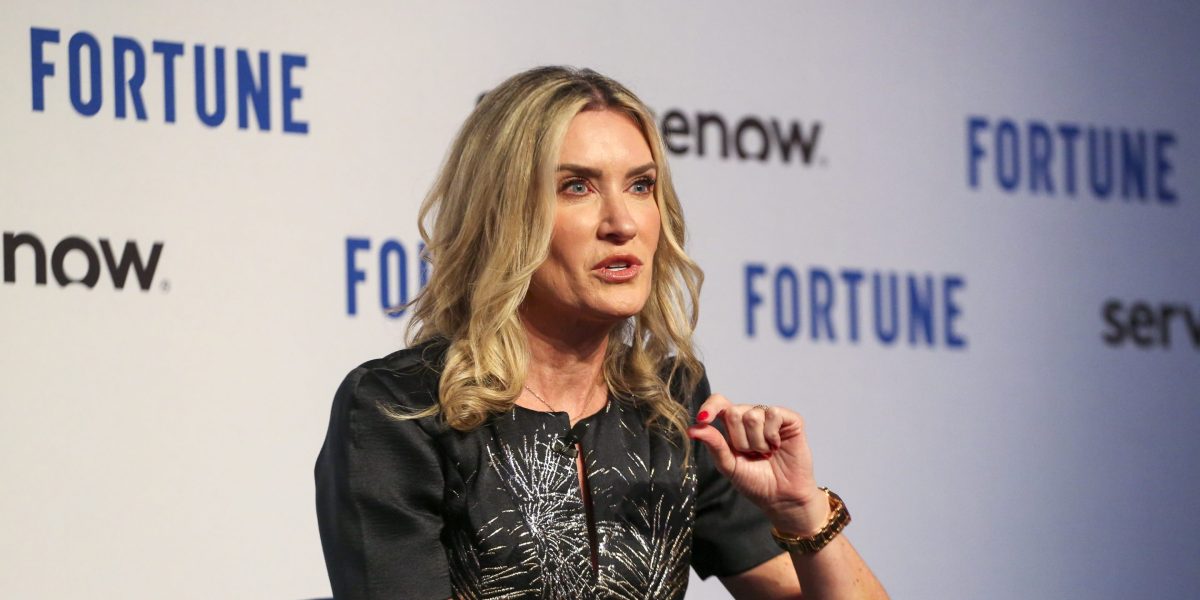
Moore said her 160-year-old company is repositioning itself — aggressively and carefully. S&P is the world’s largest credit rating agency, and one of the largest index providers, and much of its financial data feeds regulated workflows, she said. “Data is the currency within AI,” she said.
She credited an early bet. S&P bought the AI company Kensho in 2018, and that has “given us an advantage,” she said, explaining that S&P has since put Kensho at the center of the business. On July 6, it split Market Intelligence into two units.
About two years ago, S&P also created a chief client office, which Moore leads, to work more closely with clients. It has a labs group and what it calls forward-deployed experts, who work with clients on AI.
S&P serves 60,000 clients at different stages of AI adoption, she said. It works with frontier AI labs, puts its data into large language models and productivity tools, and now builds its own agents.
She gave one example. A tier-one bank with 8,000 bankers was combining S&P content sets in its own platform. S&P helped bring it to production “six times quicker,” she said, and accuracy rose from about 60% when the bank started to 98% afterward.
Where they part ways
Asked whether he ever chooses against AI, Gopalkrishnan said the simplest answer is often the best one. “AI is not always the right answer,” he said.
Moore agreed, and then took the point further. “I think Hari said it really well. It’s not around the right tool. It’s a little bit about reinvention,” she said. “What am I trying to solve for here? And where can this technology take me?”
Inside S&P, that has meant a central transformation office that brings together technologists and, more recently, data operations.
In the closing lightning round, Moore pointed to “embedded intelligence,” which she said “creates an opportunity to go beyond the clients that you serve today.”
Gopalkrishnan had the last word: “I think anticipating your client needs and serving them where they are will differentiate you in otherwise commoditized space.”