Source: BroBible
Summary
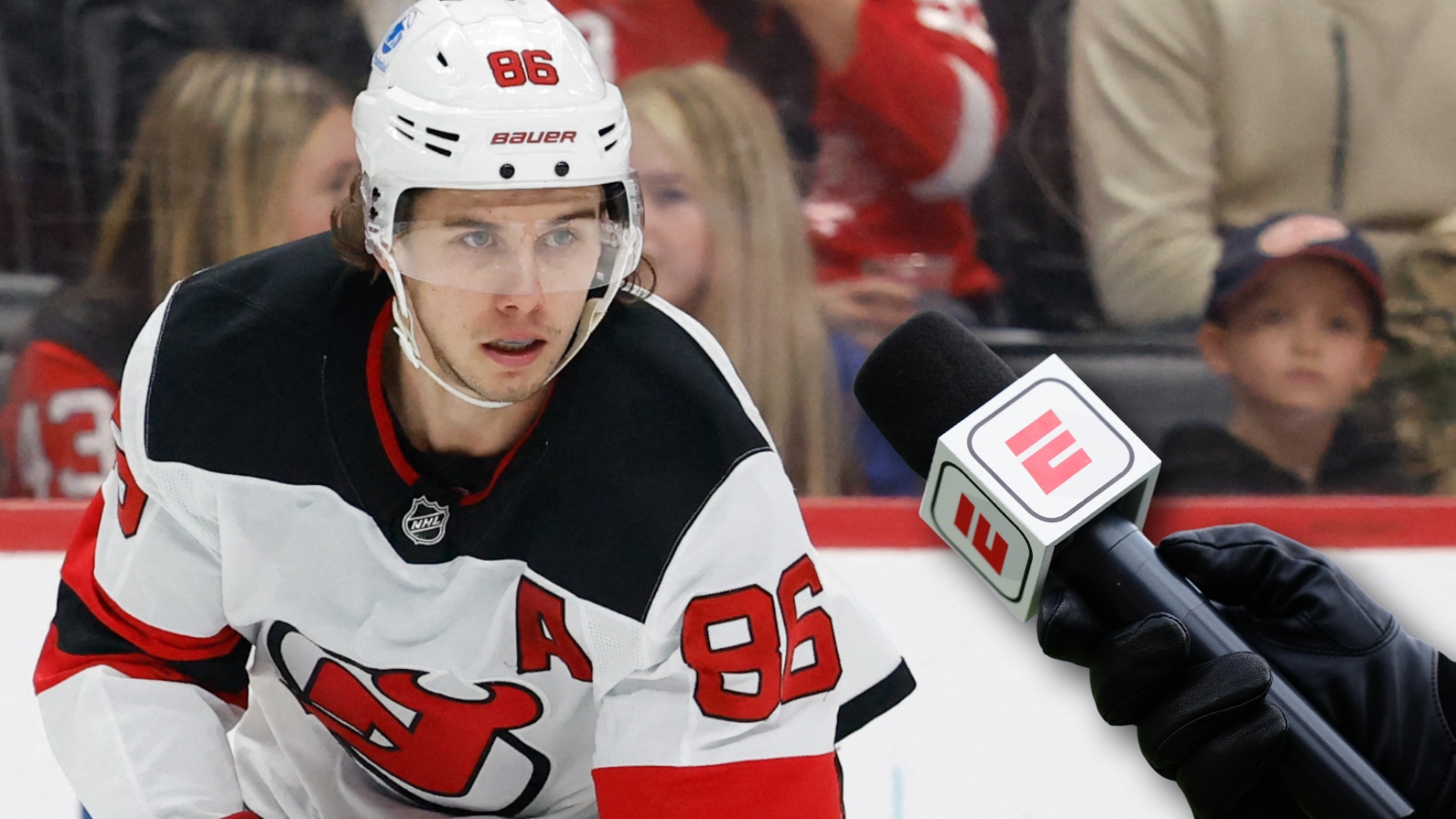
Jake Hughes missed 18 games last season after cutting his hand on broken glass at a Devils team dinner. ESPN reporter AJ Mleczko referenced the injury during an in-game interview, suggesting he should use plastic cutlery. Hughes responded with a neutral reaction, calling the joke “weird mid-game.” The Devils won 3-2 in overtime, with Hughes scoring the game-winning goal. The incident occurred during the team’s season opener against the Flyers.
Our Reading
The routine arrives with confidence.
Hughes was asked about a hand injury during a game.
Mleczko made a joke about plastic cutlery.
He called it “weird mid-game.”
Self-care is now a sports broadcast hazard.
Author: Evan Null
Jack Hughes’ Hand Injury and the Awkward ESPN Interview
Jack Hughes was forced to sit out for over a month last season after a freak accident at a team dinner. The incident involved a broken glass that cut his hand, leading to surgery and 18 games missed. Hughes has since returned to the ice, but the memory of the injury resurfaced during an in-game interview with ESPN reporter AJ Mleczko.
The interview took place during the Devils’ season opener against the Flyers. Mleczko attempted to reference Hughes’ hand injury by joking that he should use plastic cutlery. The comment was met with a lukewarm response from Hughes, who called it “weird mid-game.”
Despite the awkward moment, Hughes delivered in overtime, scoring the game-winning goal to help the Devils secure a 3-2 victory. The incident highlights the unpredictable nature of in-game media interactions, where even the most well-intentioned comments can fall flat.
While fans and analysts debated whether Hughes was too sensitive or if Mleczko’s joke was out of line, the focus quickly shifted back to the game. Hughes’ performance proved that he’s still a key player for the Devils, even after a difficult injury setback.
The incident also underscores the challenges of live sports broadcasting, where reporters often walk a fine line between humor and insensitivity. Injuries, especially those involving unexpected accidents, can become touchy subjects during interviews, making every word count.
ESPN’s Joke and the Pressure of In-Game Interviews
In-game interviews are a staple of sports broadcasting, but they often lack the depth of pre-game or post-game discussions. Reporters are expected to ask questions on the fly, which can lead to awkward or off-topic remarks. In Hughes’ case, the joke about plastic cutlery was clearly a misstep, especially during a game where the Devils were trailing.
Mleczko’s comment was not only out of context but also somewhat nonsensical, as Hughes’ injury was caused by glass, not a knife. The joke didn’t land well, and Hughes’ response made it clear he wasn’t amused. This kind of interaction can be uncomfortable for both the player and the reporter, especially when it happens in the middle of a game.
Despite the awkward moment, Hughes remained focused and delivered a crucial goal in overtime. His ability to bounce back from the incident shows his professionalism and determination. However, it also raises questions about the appropriateness of certain jokes during live broadcasts, especially when they involve recent injuries.
ESPN’s coverage of the game was otherwise routine, with the focus shifting quickly to the final score and Hughes’ heroics. The incident, while brief, serves as a reminder of how delicate the balance can be between humor and respect in sports media.
For fans, the moment was a reminder that even the most seasoned reporters can stumble, and players are not always eager to play along with jokes that reference their personal setbacks. It also highlights the pressure that comes with in-game interviews, where timing and sensitivity are just as important as the content of the questions.
The Role of Humor in Sports Broadcasting
Humor has long been a part of sports broadcasting, used to lighten the mood and engage audiences. However, the line between humor and insensitivity can be thin, especially when it comes to recent injuries or personal setbacks. In Hughes’ case, the joke about plastic cutlery was clearly not well-received, and it sparked a conversation about the appropriateness of such comments during live interviews.
Reporters often rely on quick wit to keep the conversation flowing, but in this instance, the joke fell flat. It was not only out of context but also seemed to miss the mark entirely. The fact that Hughes was still recovering from a hand injury made the comment even more inappropriate, as it could have been seen as trivializing his experience.
While some fans may have found the moment amusing, others felt it was a poor choice of words. The reaction to the clip suggested that many viewers thought Hughes was in the right to respond the way he did. This highlights the importance of context in sports media, where even the most well-intentioned jokes can be misinterpreted.
Despite the awkward moment, the game itself remained the focus, with Hughes ultimately delivering a clutch performance. His ability to handle the situation with professionalism shows that he’s not only a skilled player but also a composed individual who knows how to handle pressure.
The incident also serves as a reminder that in-game interviews can be unpredictable, and reporters must be mindful of the players’ current situations. While humor can be a valuable tool, it must be used with care, especially when dealing with recent injuries or other sensitive topics.
Jack Hughes’ Resilience and the Importance of Focus
Despite the awkward moment with Mleczko, Hughes remained focused on the game and delivered a crucial goal in overtime. His ability to bounce back from the incident shows his resilience and determination, both of which are essential qualities for any professional athlete. Hughes has faced his share of challenges, including a significant injury last season, but he has consistently shown that he can rise to the occasion when it matters most.
The game itself was a testament to Hughes’ importance to the Devils’ lineup. His goal in overtime not only secured a win but also solidified his role as a key player for the team. Fans and analysts alike were quick to acknowledge his performance, highlighting the impact he has on the ice.
While the interaction with Mleczko was brief, it underscored the challenges that come with being a high-profile athlete. Players like Hughes are constantly in the spotlight, and every moment—whether on or off the ice—can be scrutinized. This level of attention can be both a blessing and a burden, depending on how it’s handled.
Hughes’ response to the joke was measured and professional, showing that he understands the importance of maintaining composure under pressure. His ability to focus on the game despite the awkward moment is a testament to his maturity and dedication to his craft.
As the season progresses, Hughes will likely face more challenges, both on and off the ice. However, his performance in the opener and his ability to handle the awkward moment with grace suggest that he’s well-equipped to handle whatever comes next.
Media Interactions and the Pressure on Athletes
Media interactions are an inevitable part of professional sports, and they can be both a source of pressure and a platform for players to express themselves. For athletes like Jack Hughes, these interactions can be especially challenging, as they are constantly under scrutiny. The incident with Mleczko highlights the delicate balance that players must maintain between being open with the media and protecting their personal space.
While some players are comfortable with the spotlight, others prefer to keep their focus on the game. Hughes’ response to the joke suggests that he falls into the latter category, preferring to avoid unnecessary attention and keep his energy directed toward the ice. This approach is not uncommon among elite athletes, who often prioritize their performance over media engagement.
Reporters, on the other hand, are expected to ask questions and push for reactions, even in the middle of a game. This can lead to situations where players are caught off guard, as was the case with Hughes. The challenge for reporters is to ask thoughtful, relevant questions without coming across as intrusive or insensitive.
For fans, the incident serves as a reminder that even the most experienced players can be caught off guard by unexpected questions. It also highlights the importance of context in sports media, where timing and tone can make a significant difference in how a comment is received.
Ultimately, the interaction between Hughes and Mleczko was a brief moment in an otherwise routine game. However, it underscores the complex relationship between athletes and the media, where every word and reaction can be scrutinized. As the season continues, it will be interesting to see how Hughes handles future media interactions and how the press adapts to his style of engagement.