Source: Fortune
Summary
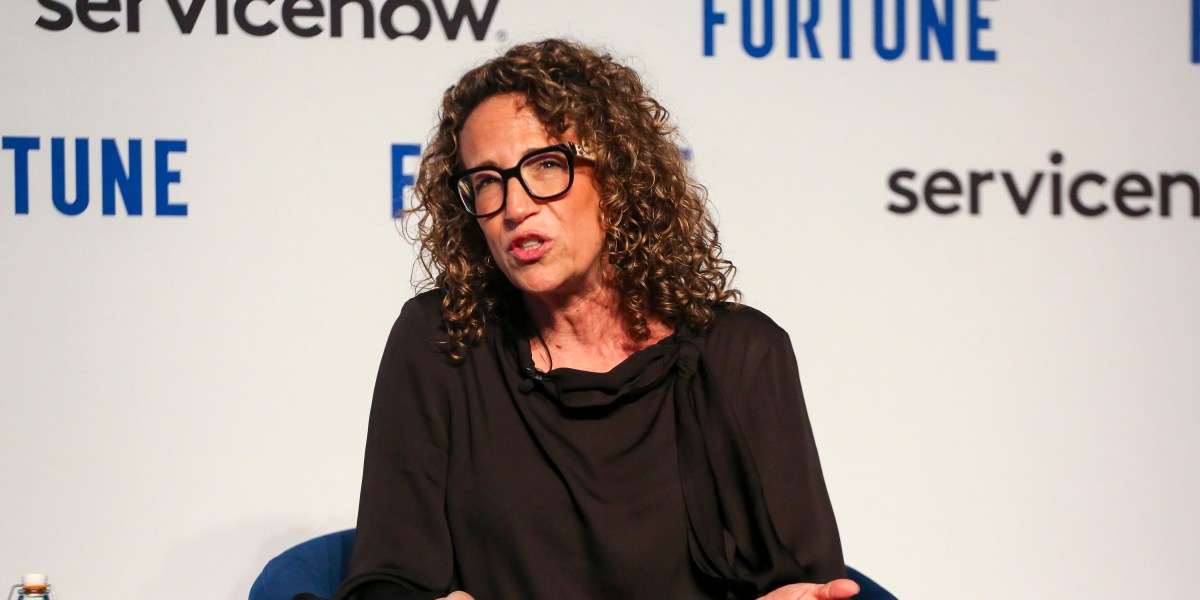
At the Fortune AIQ Summit, futurist Amy Webb criticized Fortune 500 companies for being late to adopt artificial intelligence, noting that many investments lack clear strategies. She said companies often create orphaned AI projects and rely on third parties for proprietary tools, leading to employee frustration. Webb compared AI integration to relying on navigation tools in a taxi, where users lack understanding. Runway’s COO, Michelle Kwon, described a company that uses AI in every part of its operations, with employees building internal tools that boost productivity. Runway avoids building non-core systems, focusing on responsible AI use. Executives from Peloton and M7 Innovations also weighed in on AI risks, liability, and employee burnout.
Our Reading
The announcement sounds familiar.
Fortune 500 companies are late to AI.
Investments lack strategy.
Orphaned projects and third-party reliance are common.
Employees build their own tools, leading to inefficiency.
AI is not a productivity proxy without proper use.
Author: Evan Null
Why gains don’t add up
Webb said that companies often define ROI in terms of the bottom line, not real productivity. She contrasted this with Runway, which has a clear AI strategy. A friend at a large company bypassed security to build an AI project, leading to a $200 million investment. Webb blamed poor leadership and fear-driven decisions. Many companies lack strong planning and rely on FOMO. This pattern is common in corporate AI adoption.
Runway’s counterpoint
Runway’s COO, Michelle Kwon, described a company built around AI. Employees write code and build internal apps, leading to new products. Runway uses AI in every part of its business but buys non-core tools. Kwon emphasized that AI should be a core part of work, not just a tool. She warned that AI output without thought is not productive. Employees can build anything, leading to burnout, but Runway celebrates wins and gives time off to all.
Risk and liability
Webb shared a story about an AI project that spammed 1,000 people. She warned against anthropomorphizing AI and urged leaders to give security teams more leeway. She also warned about upcoming connected devices with little planning. Webb said AI on boards is useless if directors don’t understand the data. She compared it to cycling sensors—ignoring the data makes you liable. Executives must understand what AI is showing them.
AI and employee burnout
Peloton’s CTO, Francis Shanahan, said employees are overwhelmed by the ability to build anything. He noted rising burnout. Kwon said Runway celebrates wins and gives the whole company a day off. She said AI agents can work tirelessly, but humans need rest. The panel discussed the balance between AI empowerment and employee well-being. Companies must manage both to avoid overwork and underutilization.
AI’s future and corporate readiness
Webb said AI is not a new trend but a long-term shift. Companies are still behind in planning and strategy. She warned that many are investing without clear goals, leading to wasted resources. Runway’s approach shows a more integrated and responsible use of AI. Executives must move beyond fear and FOMO to build real AI strategies. The future of AI will depend on how well companies adapt and integrate it into their operations.