Source: The Points Guy
Summary
Ponant Explorations operates 13 vessels, mostly divided into four classes: Polar Exploration, Ponant Explorers, Sisterships, and sailing ships. The fleet includes icebreakers, expedition ships, and traditional sailboats. Each class has distinct features and destinations. The Polar Exploration class includes Le Commandant Charcot, built for extreme polar travel. The Ponant Explorers class focuses on tropical and subtropical routes. Sisterships serve polar and warm-water expeditions. Sailing ships offer classic nautical experiences. The company emphasizes luxury, space, and staff-to-passenger ratios.
Our Reading
The escape is carefully planned.
Ponant Explorers sail to the Maldives and Papua New Guinea. Sisterships travel to Antarctica and the Arctic. Le Commandant Charcot reaches the North Pole. Sailing ships offer Caribbean and Mediterranean cruises. Blue Eye lounges and balconies are standard.
Every ship is a version of the same design, with slight variations. Luxury is measured in space and staff. Expeditions require booking well in advance. Comfort is curated for remote destinations.
Travelers seek escape, but it’s structured with timelines and itineraries. The most extreme trips are the most predictable.
Expedition cruising is less about discovery and more about access.
Author: Evan Null
An introduction to Ponant ships
Ponant operates one of the largest fleets of small ships in the cruise world, with 13 vessels that mostly are designed to carry 184 to 264 passengers. But it wasn’t always so big.
Founded in France in 1988, the company spent most of its first decade operating with just one tiny vessel, the 32-passenger sailing ship Le Ponant. For another decade after that, it only added a handful of additional small vessels. It wasn’t until 2010 that Ponant began growing quickly, with a rapid expansion that initially saw it add four larger, nearly identical vessels known as the Sisterships in five years.
Starting just three years later, Ponant began rolling out a second big class of six ships, Ponant Explorers, over a three-year period.
The introduction of these two new classes of ships — 10 ships in all — turned Ponant into one of the biggest brands in the world focused on upscale, small-ship sailings, including expedition-style cruises to some of the most remote and hard-to-reach places.
Polar Exploration Class
Le Commandant Charcot is, quite simply, the toughest passenger ship ever built for expedition cruising — the type of cruising that involves traveling to the most remote and hard-to-reach places in the world.
A full-blown icebreaker of the sort that until recently only governments operated, it’s a 245-passenger expedition vessel capable of doing things that no other expedition ship currently afloat can do.
What’s more, that’ll probably be the case for years to come. No other company will likely spend the enormous amount of money it took to build Le Commandant Charcot — reportedly $430 million for a ship with just 123 staterooms.
Built specifically to cut through the thick multiyear ice that is found across parts of the polar ice cap, Le Commandant Charcot was notably designed with never-before-seen-in-a-passenger-ship redundancies in operating systems, emergency equipment, food storage and fuel storage that would allow it to survive long periods away from resupply and rescue.
The Ponant Explorers Class
These six yacht-like ships were specifically designed to travel to tropical and subtropical destinations, from the Maldives to Papua New Guinea.
Loaded with outdoor space, they each feature an innovative hydraulic marina at the back, allowing for watery playtime in warm locales (kayaks and paddleboards are available), and one of the most unusual lounges ever found at sea. Dubbed Blue Eye, the latter attraction is a curvy space below the waterline with two oversize viewing portals shaped like whale eyes that let you gaze into the deep blue sea.
The Blue Eye, notably, is a fully immersive experience, with hull-mounted hydrophones bringing in the sound of the surrounding ocean.
Named after French explorers, the Ponant Explorers were designed both for adventurous expedition cruising in remote areas and more traditional cruising. When expedition cruising, they sail with a team made up of experts in the places they are visiting and offer landings by Zodiac boats for exploring. More traditional cruises bring a choice of shore tours, some included and others for an additional cost.
The Sisterships Class
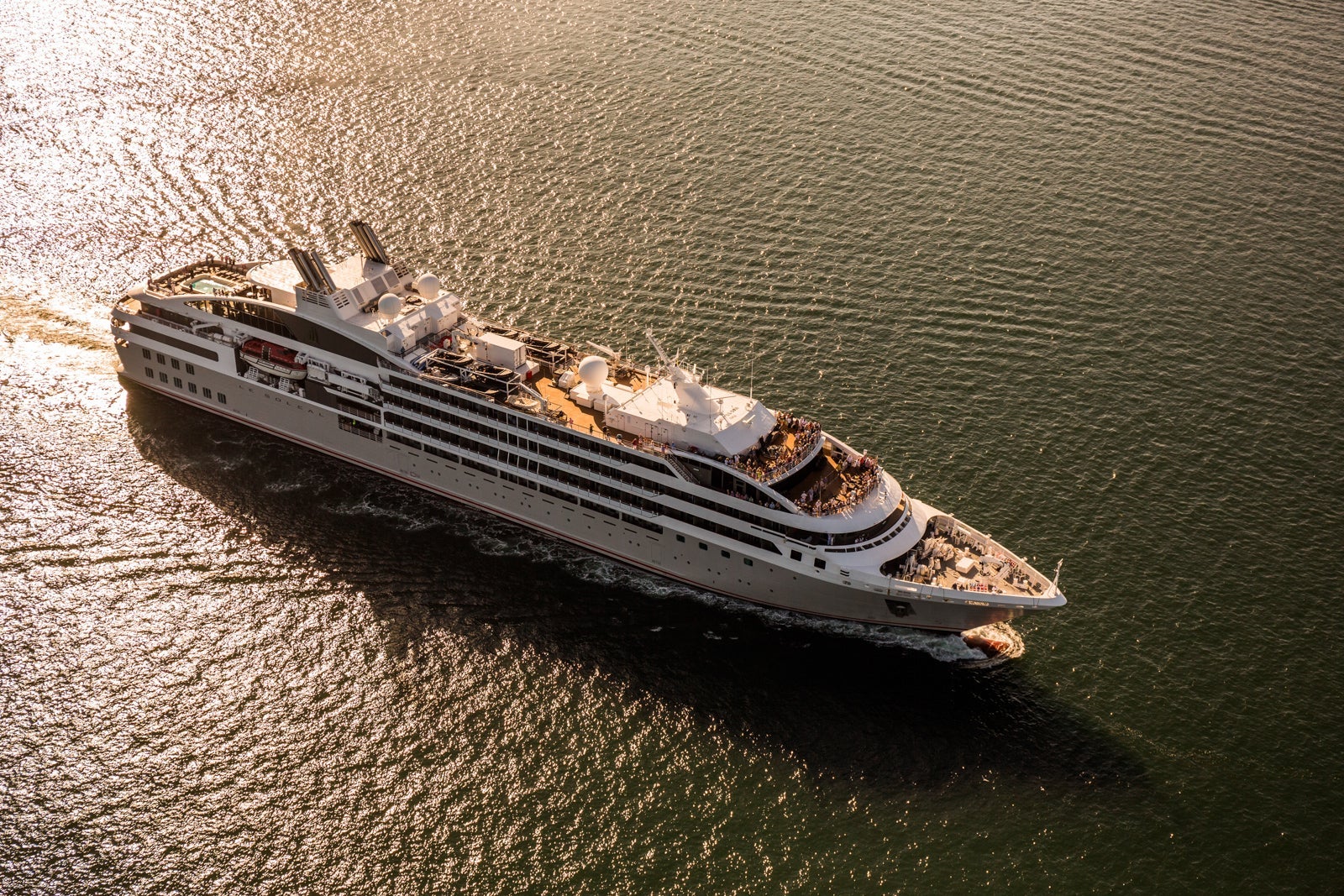
Launched between 2010 and 2015, these four versatile sister ships were at the core of the Ponant fleet until the arrival of the Ponant Explorers, and they remain the vessels that Ponant uses for some of its most ambitious itineraries.
Built extra tough to sail into the world’s polar regions, they are the ships you’ll likely be on if you pick a Ponant voyage to Antarctica or the Arctic (unless your sailing involves a trip on Le Commandant Charcot, the line’s even hardier icebreaker). But while they often spend large portions of the year sailing in polar regions, they can sometimes be found in warmer waters, too.
One of the vessels, Le Soleal, has in recent years been spending a considerable amount of time sailing along the remote Kimberley coast of Australia, for instance, and the ships pop up everywhere from Northern Europe to eastern Canada.
At nearly 11,000 gross tons, these vessels are larger than the Ponant Explorers, though not by enough to be really noticeable. They hold 264 passengers at maximum occupancy, fewer than is typical at other upscale lines.
The Sailing Ships
Le Ponant and Spirit of Ponant are the Ponant ships you book when you’re looking for a sailing adventure.
Much smaller than the other vessels in the Ponant fleet, with room for 32 passengers and 12 passengers, respectively, they’re both sailing ships that will let you explore classic sailing destinations from the Caribbean to the Mediterranean.
Le Ponant, dating back to 1991, is the brand’s original vessel. It offers the same sort of intimate sailing adventures that originally put the brand on the cruise world map.
Completely revamped in 2021, the three-masted, 16-cabin vessel has the feel of a large private yacht, with expansive common areas on its top deck that offer views to the horizon.