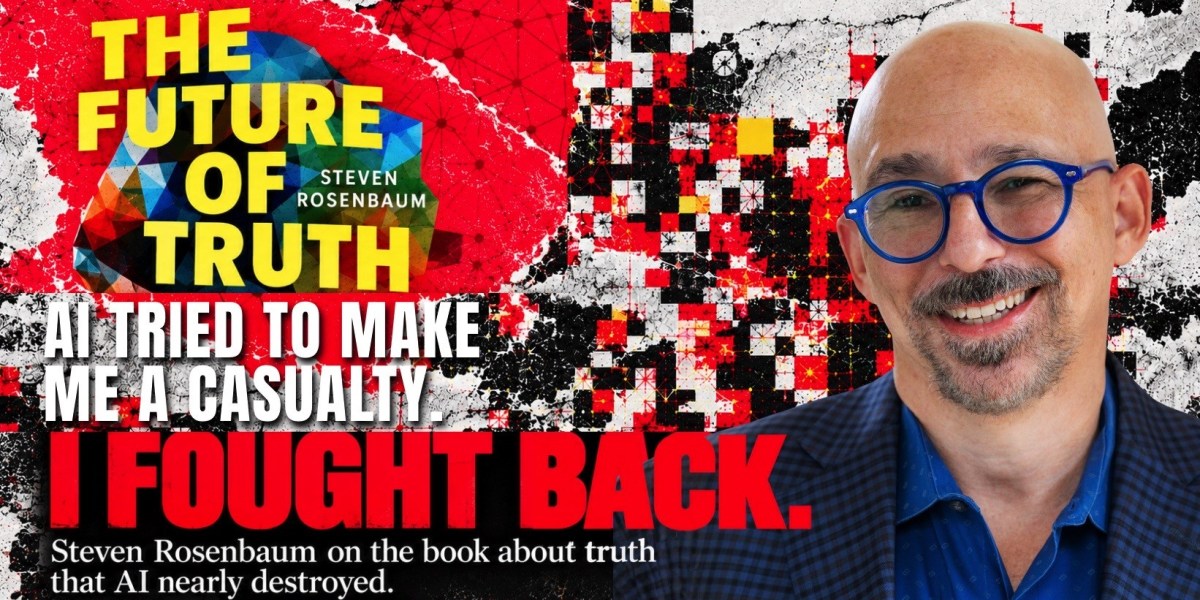
Source: Fortune.com
Summary
Author Steven Rosenbaum’s book “The Future of Truth: How AI Reshapes Reality” faced scrutiny after a New York Times article alleged it contained AI-generated quotes. Rosenbaum acknowledged errors, including misattributed statements, and worked with his publisher to revise the book. The revised edition, “Truth 2.0,” includes an author’s note detailing the issues and corrections. Rosenbaum discusses the challenges of using AI in research and the broader implications of AI-generated misinformation. He emphasizes the need for transparency and human oversight in AI use.
Our Reading
The numbers tell one story.
Rosenbaum’s book faced accusations of AI-generated quotes, leading to public scrutiny.
Errors were found in 26 quotes, which were corrected in the revised edition.
AI’s role in generating believable fictions challenges traditional fact-checking.
The business model rewards speed and confidence over accuracy, shifting responsibility to users.
Author: Evan Null
Author’s Background and Career
Steven Rosenbaum has a long history in media and technology. He created MTV News: UnFiltered, a show that gave viewers control over content, years before YouTube existed. He wrote “Curation Nation,” a book that addressed the challenges of content overload, and directed the documentary “7 Days In September,” which captured the aftermath of 9/11 through the lens of everyday people. His early career included a stint as a magician, which influenced his understanding of what people believe and are amazed by.
The Book’s Development and AI Use
“The Future of Truth” was a four-year project that began before the rise of advanced AI tools like ChatGPT and Claude. Rosenbaum conducted traditional research, relying on academic papers, books, and interviews with experts. He used AI to organize research, summarize documents, and refine language, and he disclosed this in the book’s acknowledgments. Despite this, the book faced accusations of AI-generated content, leading to a public crisis.
The Crisis and Revisions
After a New York Times article accused the book of containing AI-generated quotes, Rosenbaum worked with his publisher, BenBella Books, to revise the text. Two human fact-checkers reviewed the manuscript and found 26 problematic quotes, which were corrected or removed. The revised edition, “Truth 2.0,” includes an author’s note detailing the errors and the steps taken to fix them. Rosenbaum also removed all blurbs and the foreword from the new edition.
The Broader Implications of AI-Generated Content
Rosenbaum’s experience highlights the growing problem of AI-generated misinformation. Examples include an AI-generated quote attributed to Naomi Klein and fabricated citations in biomedical research. These errors are not the result of malicious intent but of AI systems that prioritize fluency and confidence over accuracy. The business model of AI companies rewards speed and engagement, often at the expense of truth.
The Revised Edition and Future Outlook
The revised edition of “The Future of Truth” includes a new chapter on the impact of AI-generated fabrications on law, medicine, and research. Rosenbaum argues that AI tools can be useful if used responsibly, with human judgment and transparency. He rejects the idea of abandoning AI, instead advocating for better verification processes and public accountability. The book serves as both a personal reflection and a warning about the challenges of navigating a world increasingly shaped by AI.