Source: Fox News
Summary
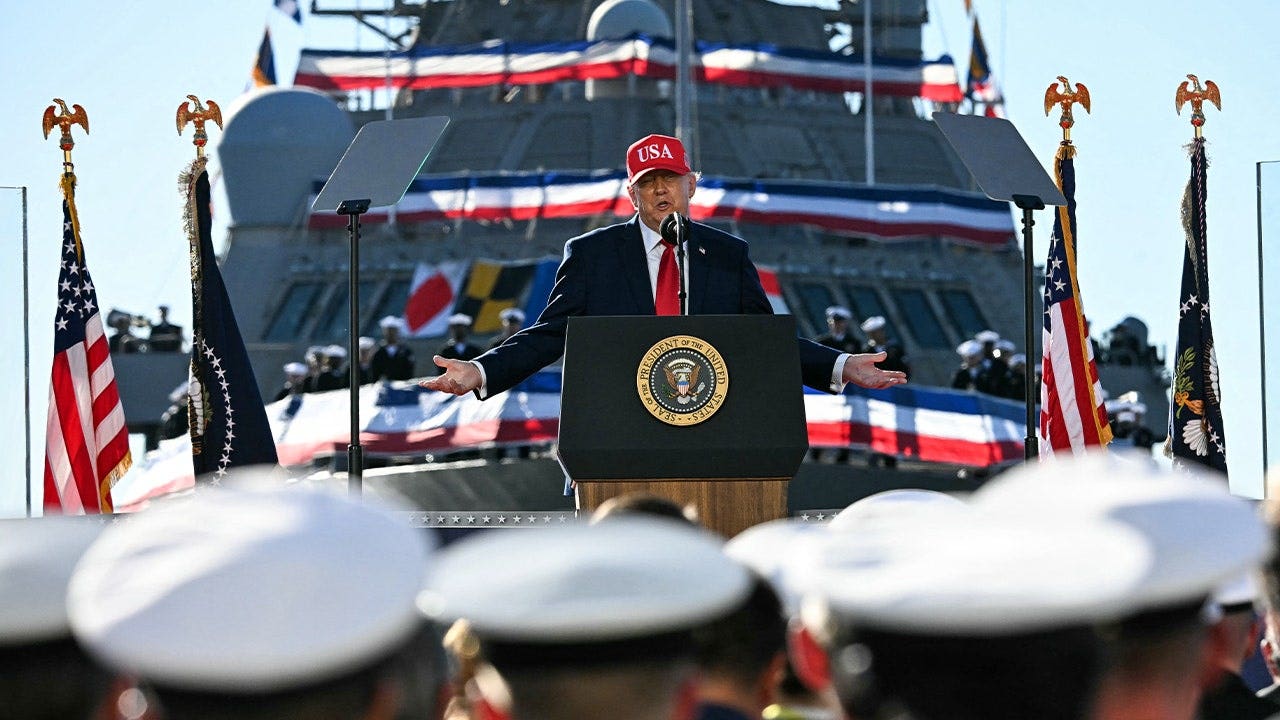
President Donald Trump announced the U.S. government will take a 40% stake in a new Baltimore shipyard to increase submarine production. The $6.6 billion project involves Anduril, which will build the Arsenal-2 shipyard. The government’s stake will be in a subsidiary, not the company itself. Details about the arrangement, including rights and returns, have not been released. The project aims to address a U.S. submarine production shortfall and counter China’s growing naval capabilities. Anduril will invest $3.7 billion, while the Navy could spend up to $2.9 billion on the output.
Our Reading
As expected, the matter has reached another stage.
Trump announces government stake in shipyard.
Anduril says stake is in subsidiary, not company.
Details remain unclear, but the arrangement is part of a larger plan.
The government gets 40 percent, but the work is done by a private company.
Author: Evan Null
Submarine Production and National Security
The U.S. government’s decision to take a 40% stake in the new Baltimore shipyard highlights the growing intersection of national security and private enterprise. This move is part of a broader effort to boost submarine production, which has been lagging behind the Navy’s goals. The project is intended to address a significant shortfall in the production of Virginia-class attack submarines, a critical component of the U.S. naval strategy.
The shipyard, operated by Anduril, is designed to increase production capacity by 15%, helping the Navy meet its long-term goals. However, the exact terms of the government’s investment remain undisclosed, raising questions about the financial structure and potential returns. Despite this, the project is seen as a key step in countering China’s expanding naval capabilities, which have outpaced U.S. production in recent years.
The government’s involvement in the shipyard is not unique, as the Trump administration has taken similar steps in other strategic industries. This includes equity arrangements with companies like Intel and MP Materials, reflecting a broader trend of government intervention in sectors deemed vital to national security. The 40% stake in the shipyard is a significant move, emphasizing the administration’s commitment to bolstering the defense industrial base.
The project’s financial structure is complex, with Anduril investing $3.7 billion of its own capital while the Navy could spend up to $2.9 billion on the resulting output. This arrangement underscores the collaborative nature of the effort, with both private and public sectors playing a role in expanding submarine production. However, the lack of transparency around the government’s stake and its potential returns has left many details unresolved.
Despite the uncertainty, the project is expected to create thousands of jobs and significantly boost the submarine industrial base. The Arsenal-2 shipyard, once operational, will add millions of labor hours annually, contributing to the overall goal of increasing Virginia-class submarine production. This initiative is part of a larger strategy to ensure the U.S. maintains a competitive edge in naval capabilities, particularly in the face of China’s rapid expansion in shipbuilding and naval power.