Source: Fortune.com
Summary
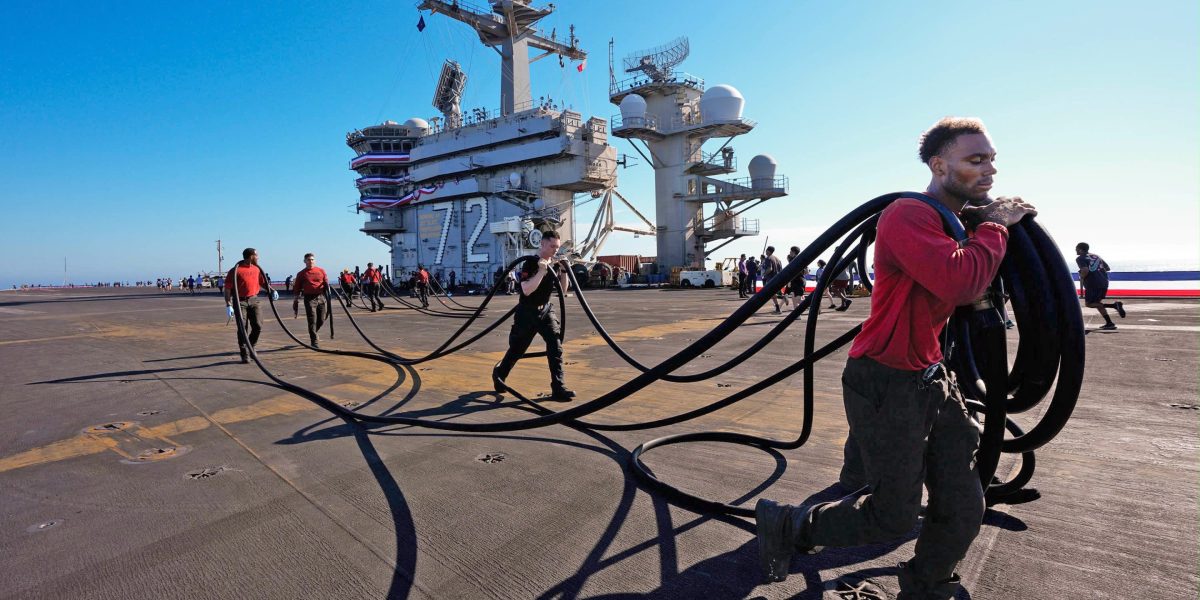
The USS Abraham Lincoln returned to San Diego after a 265-day deployment in the Iran war, during which crew members reported deteriorating conditions. Defense Secretary Pete Hegseth awarded the crew the Presidential Unit Citation, calling it a symbol of resilience. The Navy initially downplayed issues, but later acknowledged some supply and mental health challenges. The ship completed 3,693 combat missions, including sinking 64 Iranian warships. Another carrier, the USS George Washington, took over in the Middle East in August.
Our Reading
The numbers tell one story.
The Lincoln endured 265 days at sea, the longest in recent memory.
Crew conditions were bad enough to draw national attention.
The Navy downplayed problems, then later admitted some issues.
The citation is a way to celebrate, not to fix.
Author: Evan Null
The Navy initially downplayed problems on the carrier
The USS Abraham Lincoln drew national attention after reports of stress, poor mental health, and supply shortages during its Iran war mission. The Navy initially downplayed any problems, and President Trump called the deployment “not nearly long enough.” The carrier had left San Diego in November and arrived in the Middle East in January. U.S. and Israeli forces launched airstrikes against Iran on Feb. 28. Navy leaders eventually acknowledged there were some issues aboard.
Long deployments can tax service members
Extended naval deployments can wear on service members who are away from home for long periods and increase strain on the ship and its equipment. The Navy told lawmakers that eight sailors attempted suicide during the record-setting deployment, though experts say that number is low in a strike group of 6,000 sailors over 10 months. According to the citation that Hegseth read to the crew, the Lincoln and its strike group executed 3,693 combat missions, delivered 1.37 million pounds of ordnance, launched 450 Tomahawk cruise missiles, shot down 77 one-way attack drones, sank 64 Iranian warships, destroyed 21 anti-ship cruise missiles and defended against four fast-attack craft and explosive-carrying ships.
The Lincoln’s record-breaking deployment
The Lincoln, which set a record for days in between ports of call, is the second carrier to endure an unusually long deployment to support the war against Iran and to receive the Presidential Unit Citation afterward. Hegseth in May met the crew of the USS Gerald R. Ford during its return from a 326-day deployment — the longest for an aircraft carrier in the past 50 years and a record in the post-Vietnam War era. Another carrier, the usually Asia-based USS George Washington, relieved the Lincoln in the Middle East in August.
Presidential recognition amid controversy
Defense Secretary Pete Hegseth flew to the Lincoln to present the Presidential Unit Citation, the highest honor for a unit, and pushed back against criticism that the ship had become a symbol of dysfunction. He emphasized the resilience of the crew and the importance of finishing the mission. Hegseth also cited President Trump’s pride in the crew’s performance, despite the challenges they faced. The Navy later acknowledged some supply and mental health issues, though it maintained that conditions were adequate.
Extended missions and their impact
Long deployments can strain both personnel and equipment. The Lincoln’s 265-day mission was the longest in recent memory and led to reports of stress, supply shortages, and mental health concerns. The Navy initially dismissed these claims but later acknowledged some issues. Despite the challenges, the crew completed a large number of combat missions, including sinking numerous Iranian vessels. The recognition from the Pentagon and the White House was meant to highlight the crew’s accomplishments, even as the mission raised questions about the sustainability of such long deployments.