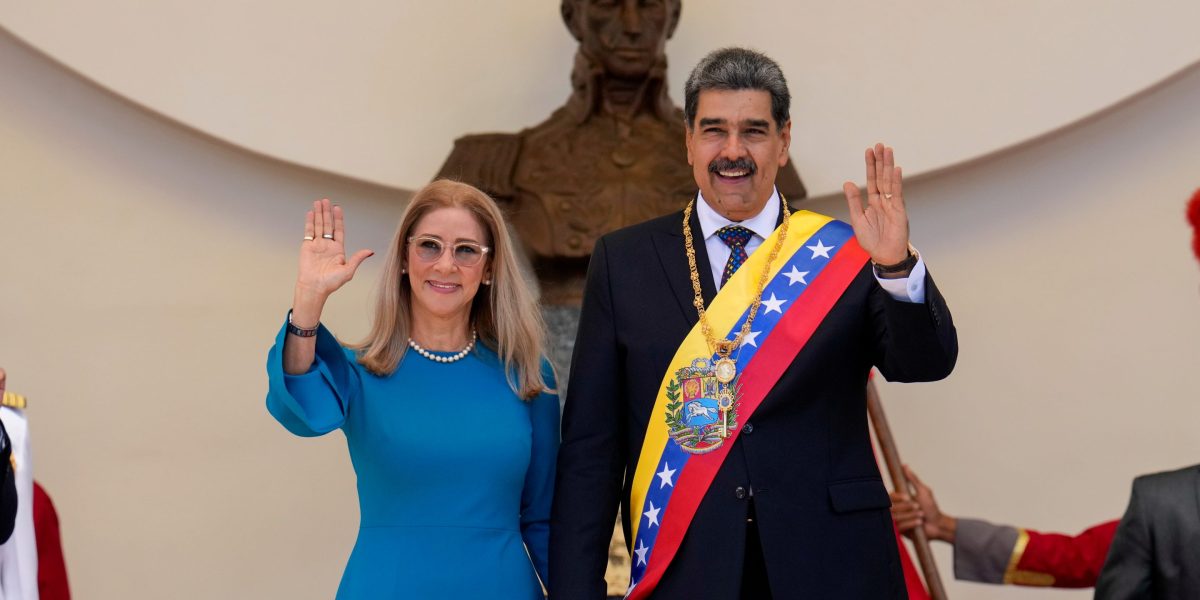
Source: Fortune.com
Summary
The U.S. has charged former Venezuelan President Nicolás Maduro with torture and other crimes, adding to existing drug trafficking charges. Maduro and his wife, Cilia Flores, are in New York jail following a U.S. military raid. Both have pleaded not guilty. Flores’ lawyers argue she should be released due to health issues, while prosecutors say she poses a flight risk. The case, first filed years ago, includes allegations of cocaine conspiracy. Maduro’s legal team claims diplomatic immunity. The U.S. government called the raid a “surgical law enforcement operation.”
Our Reading
The numbers tell one story.
Maduro faces new charges, same old legal battle.
Flores’ health issues fuel bail requests.
Prosecutors reject release, cite risk.
Legal claims and counterclaims unfold in court.
The case reflects a long-running geopolitical tug-of-war.
Author: Evan Null
Maduro’s Legal Battle Intensifies
Former Venezuelan President Nicolás Maduro has been hit with new U.S. charges, including torture, in addition to existing drug trafficking allegations. The indictment adds to the legal pressure on Maduro, who was already facing life imprisonment if convicted on earlier charges.
Maduro and his wife, Cilia Flores, have been in New York jail since January after a U.S. military raid. Both have pleaded not guilty to the charges, which include conspiracy to import cocaine into the U.S.
Flores’ legal team has argued that she should be released due to health issues, including heart problems and weight loss. They claim she has been treated poorly in jail and needs medical care that is not available there.
Prosecutors have opposed the bail request, claiming Flores poses a risk of flight and danger to the public. They also noted that she has received medical attention when needed.
The case has drawn attention to the broader tensions between the U.S. and Venezuela, with the Trump administration defending the raid as a “surgical law enforcement operation.”
Health Issues Fuel Legal Arguments
Cilia Flores’ legal team has emphasized her deteriorating health as a reason to grant her bail. They claim she has lost 25 pounds and is experiencing symptoms that may indicate a heart attack.
Flores’ lawyers have also said she suffered injuries during the U.S. military operation that led to her capture. They allege she was thrown against a wall or dresser, causing permanent scarring.
The legal team argues that Flores is not a flight risk because she is “intent on supporting her husband with her constant presence.” They have asked for house arrest instead of jail.
Prosecutors, however, have rejected these claims, stating that Flores would be a danger to the public if released. They have also noted that she has been taken to a hospital when medical care was needed.
The case highlights the intersection of legal and medical arguments in high-profile international cases.
Legal Immunity and Diplomatic Tensions
Maduro’s legal team has argued that he and his wife have diplomatic immunity as the leader and first lady of a foreign country. This claim is central to their request for the case to be dismissed.
However, U.S. authorities have not recognized this immunity, proceeding with the charges. The legal battle reflects the complex relationship between the U.S. and Venezuela.
Maduro has called his capture a “kidnapping” and claimed to be a “prisoner of war.” The U.S. government, under the Trump administration, defended the raid as a “surgical law enforcement operation.”
The case has drawn international attention, with many viewing it as part of a broader geopolitical struggle. Legal arguments continue to shape the narrative around Maduro’s detention.
The situation underscores the challenges of enforcing international law in politically charged cases.
Maduro’s Political Legacy Under Scrutiny
Maduro’s time as Venezuela’s president, from 2013 until his capture in January, has come under renewed scrutiny. The new charges add to the list of allegations against him, including human rights abuses.
The indictment highlights the U.S. government’s continued focus on Maduro’s alleged crimes, both in terms of drug trafficking and human rights violations. This has intensified the pressure on him as he faces potential long-term imprisonment.
Maduro’s legal team has consistently denied the charges, arguing that the case is politically motivated. They have also raised concerns about the treatment of their clients during detention.
The case has become a focal point for debates about international law, sovereignty, and the role of the U.S. in foreign affairs. Legal arguments continue to shape the narrative around Maduro’s future.
The situation reflects the broader tensions between the U.S. and Venezuela, with legal proceedings playing a central role in the ongoing conflict.
International Reactions and Legal Implications
The U.S. charges against Maduro have drawn reactions from international observers, many of whom view the case as part of a broader effort to hold leaders accountable for their actions.
Human rights organizations have called for transparency in the legal process, emphasizing the need for fair treatment of all parties involved. They have also highlighted concerns about the conditions of detention for Maduro and his wife.
Legal experts have noted that the case sets a precedent for how international courts handle similar cases involving high-profile political figures. The outcome could influence future legal strategies in similar situations.
Despite the legal challenges, Maduro’s supporters continue to defend him, arguing that the charges are part of a larger political campaign against him. They have also criticized the U.S. government for its role in his capture.
The case remains a focal point for discussions about the intersection of law, politics, and international relations. Legal proceedings continue to shape the narrative around Maduro’s future.