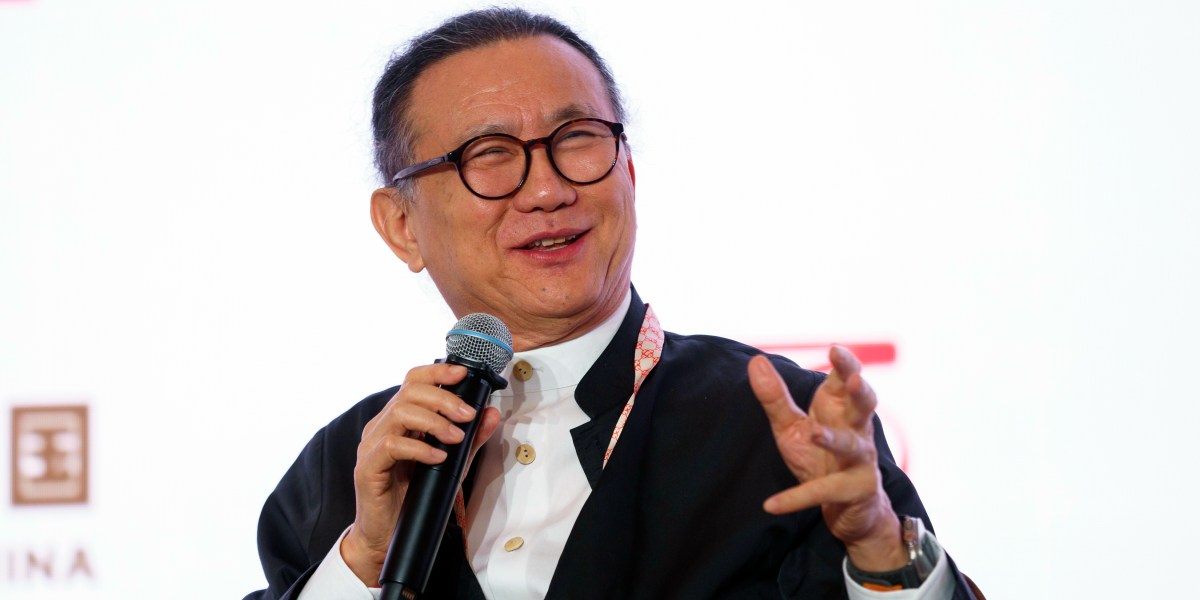
Source: Fortune
Summary
Thai real estate developer Amata Corporation plans to make Laos its “largest focus,” according to CEO Vikrom Kromadit. He cited Laos’s land bank and green energy resources, including its status as the “battery of Southeast Asia.” Amata expanded into Laos in 2022 with the Amata City Namor project, which spans 31.5 square kilometers. The company aims to develop up to 200 square kilometers in Laos. Kromadit also noted that Laos’s energy surplus and proximity to China make it an attractive location for industrial growth.
Our Reading
The announcement sounds familiar.
Amata expands into new markets with confidence.
Laos offers land and energy, not just for Amata, but for Chinese manufacturers.
Kromadit’s focus on land and energy mirrors past moves in Thailand and Vietnam.
Laos’s energy surplus is real, but local access remains limited.
Author: Evan Null
Amata’s New Focus on Laos
Amata Corporation, a Thai real estate developer, has declared Laos as its “largest focus” in the coming years. CEO Vikrom Kromadit told Fortune that Laos’s land bank and green energy resources make it an attractive market. The company has already started developing Amata City Namor, a 31.5 square kilometer project near the China-Laos Railway. Amata’s long-term vision for Laos could reach 200 square kilometers, according to the company.
Historical Expansion
Amata has built its success in Thailand and Vietnam, where it developed industrial parks and cities. The company entered Vietnam in 1994 and has since expanded across multiple locations. Its CEO, Kromadit, has a history of identifying growth opportunities in Southeast Asia. He founded V&K Enterprise in 1975 before co-founding the Bang Pakong Industrial Estate in 1988 and establishing Amata Corporation in 1989.
Laos’s Energy and Industrial Potential
Laos, the only landlocked country in Southeast Asia, has a significant energy surplus due to its hydroelectric dams. The country exports about 80% of its electricity to neighboring nations. Kromadit highlighted this as a key factor in Amata’s decision to expand into Laos. He also noted that Laos’s proximity to China and its role in “China plus one” supply chains make it an appealing destination for manufacturers looking to diversify.
Challenges in Laos
Despite its energy potential, Laos faces challenges in distributing electricity to local communities. Most cross-border transmission lines bypass local areas, leading to frequent blackouts. Kromadit acknowledged this, but emphasized the country’s natural advantages for industrial development. He also pointed to China’s investment in Laos, which reached $18 billion in 2025, as a sign of the region’s economic potential.
Future Plans and Ambitions
Amata currently operates in 12 locations across Thailand, Vietnam, and Laos, hosting over 1,500 factories. The company has also considered expansion into other Southeast Asian markets, but Kromadit said it has enough land to keep him busy for years. He mentioned that Amata has around 700 square kilometers of land on hand, which he described as “big enough to make me busy until I go to heaven.”