Source: Fox News
Summary
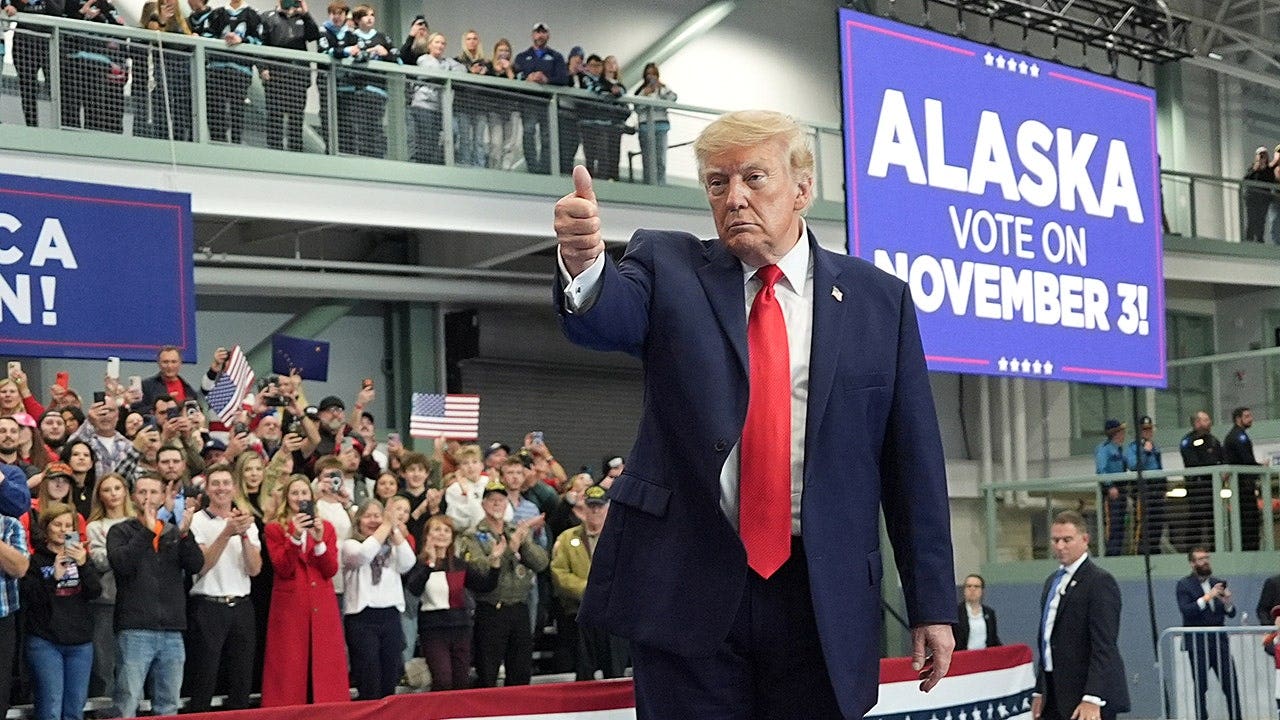
President Donald Trump said federal authorities are investigating Dan Sullivan, an independent challenger with the same name as Republican Sen. Dan Sullivan of Alaska. Trump called the second Sullivan a “hoax” by Democrats to split votes. He claimed the real Sullivan won the primary, while the other Sullivan received only two points. Trump also endorsed GOP gubernatorial candidate Bernadette Wilson and criticized her Republican opponent, Dave Bronson, for not dropping out. He defended his stance on the Iran war, saying increased gas prices are worth preventing Iran from obtaining a nuclear weapon.
Our Reading
As expected, the matter has reached another stage.
Trump mentions federal authorities without naming them.
He calls the second Sullivan a fraud, not a person.
He praises the real Sullivan, not the one who ran.
It’s a repeat of the same name, the same argument, the same stage.
Author: Evan Null
Who Is Dan Sullivan?
There is a Dan Sullivan who is a sitting U.S. Senator from Alaska. There is another Dan Sullivan who is an independent candidate in the same race. Both have the same name, but different backgrounds and political affiliations.
The real Dan Sullivan is a Republican who has held office for years. The other Dan Sullivan is a relative newcomer to politics, with no prior experience in government or public service.
Trump refers to the real Sullivan as “the real Dan Sullivan,” implying that the other is an imposter or a fraud.
The confusion over the two Dan Sullivans has led to questions about the integrity of the Alaska Senate race and the role of the Democratic Party in the process.
The situation highlights the challenges of name duplication in political races and the potential for voter confusion.
Trump’s Comments on the Race
Trump claimed that the second Dan Sullivan was a “hoax” by Democrats, suggesting that the party was trying to steal votes from the real Sullivan.
He argued that the second Sullivan had no political experience and that his name was chosen to confuse voters.
Trump also suggested that the second Sullivan tried to change his middle initial to match the real Sullivan’s, which he called a “disgrace.”
Despite these claims, the second Sullivan advanced in the race, setting up a strange and confusing ballot for voters.
Trump’s comments reflect his tendency to question the legitimacy of opponents and to frame political challenges as conspiracies.
Trump’s Endorsement of Bernadette Wilson
Trump endorsed Bernadette Wilson, a Republican candidate for governor of Alaska, and criticized other GOP candidates who remained in the race after she won the primary.
He called on Dave Bronson, a Republican challenger, to drop out, saying he had lost the primary by “substantial numbers.”
Trump argued that having three Republicans in the race against one Democrat was not favorable, despite Wilson’s primary victory.
His comments suggest a preference for a unified Republican front, even if it means endorsing candidates who may not be the most qualified.
Trump’s involvement in Alaska politics is limited, but his endorsement carries weight and can influence the outcome of the race.
Trump’s Comments on the Iran War
Trump defended his administration’s decision to strike Iran, claiming that the war was necessary to prevent the country from obtaining a nuclear weapon.
He argued that the cost of higher gas prices was a “small price to pay” for this goal.
Trump also claimed that the war would end soon and that oil prices would drop, bringing gas prices back to levels seen in Iowa.
He warned that if Iran had a nuclear weapon, it could lead to “turmoil” and even attacks on U.S. cities, including Alaska.
His statements reflect a consistent narrative of military strength and a belief in the necessity of his foreign policy decisions.
The Role of the Democratic Party
Trump accused the Democratic Party of trying to sabotage the Republican candidate by creating confusion in the race.
He suggested that the presence of the second Dan Sullivan was part of a broader Democratic strategy to weaken the Republican ticket.
Despite these claims, the second Sullivan advanced in the race, which may have been a result of the primary process rather than a coordinated effort by Democrats.
Trump’s accusations highlight the ongoing tensions between the two major political parties and the ways in which each side tries to influence the outcome of elections.
The situation in Alaska serves as an example of how political strategies can become entangled in real-world complications and unintended consequences.