Source: Fox News
Summary
A four-legged robot dog, a handheld drone-knocking weapon, and a new interceptor were among the technologies showcased at the U.S. Army’s annual conference in Washington, D.C. The displays highlighted the military’s push to adapt to rapidly evolving threats. Eric Brock, CEO of Ondas, described the development of new weapons as a “cat and mouse game.” The Army is reorganizing around autonomous systems, with a new command focused on unmanned warfare. The Pentagon is shifting from $225 million to $55 billion on drones as cheap attacks overwhelm defenses. The Army is expanding drone and counter-drone marketplaces to speed up procurement.
Our Reading
As expected, the matter has reached another stage.
A robot dog walked the floor of a military conference.
A handheld device promised to stop drones without firing.
New interceptors were built for faster, deadlier drones.
The same systems are being sold to allies in days, not months.
Author: Evan Null
Robot Dogs and Drone Killers
A four-legged robot dog prowled the floor of the Army’s largest annual conference in Washington, D.C., this week. The event showcased new technologies as the military races to keep up with evolving threats. A handheld weapon promised to knock drones from the sky without firing a shot. New interceptors were built to chase down faster, deadlier versions of drones. The displays offered a glimpse of a battlefield changing at a pace that is forcing the U.S. military and defense industry to keep up.
Technology and the Cat and Mouse Game
Eric Brock, CEO of Ondas, told Fox News Digital that the development of new weapons is a “cat and mouse game.” The Army is reorganizing around autonomous systems, with a new command focused on unmanned warfare. The Pentagon is shifting from $225 million to $55 billion on drones as cheap attacks overwhelm defenses. The Army is expanding drone and counter-drone marketplaces to speed up procurement. The event highlighted the military’s push to adapt to rapidly changing threats.
The Race for Autonomy
The Army’s new autonomous systems command is part of a wider Pentagon effort to organize around unmanned warfare. War Secretary Pete Hegseth said the department is working toward a four-star-led Autonomous Warfare Command. The Army is reorganizing around the reality of drone threats, with a new Futures and Autonomous Systems Command tasked with accelerating capabilities across formations. At AUSA, the service also expanded drone and counter-drone marketplaces designed to allow the U.S. and its allies to purchase pre-approved systems in days rather than months.
Interceptors and Electronic Warfare
Ondas demonstrated a four-legged robotic system called Scout, designed to move ahead of troops into dangerous areas. The company also showcased a handheld Dronebuster, which uses electronic warfare to jam or spoof communications. The system uses onboard guidance to pursue a detected threat and is designed to be deployed in numbers when multiple drones are approaching. No single weapon can address the growing range of unmanned threats, requiring a layered approach to counter-drone warfare.
The Challenge of Mass Production
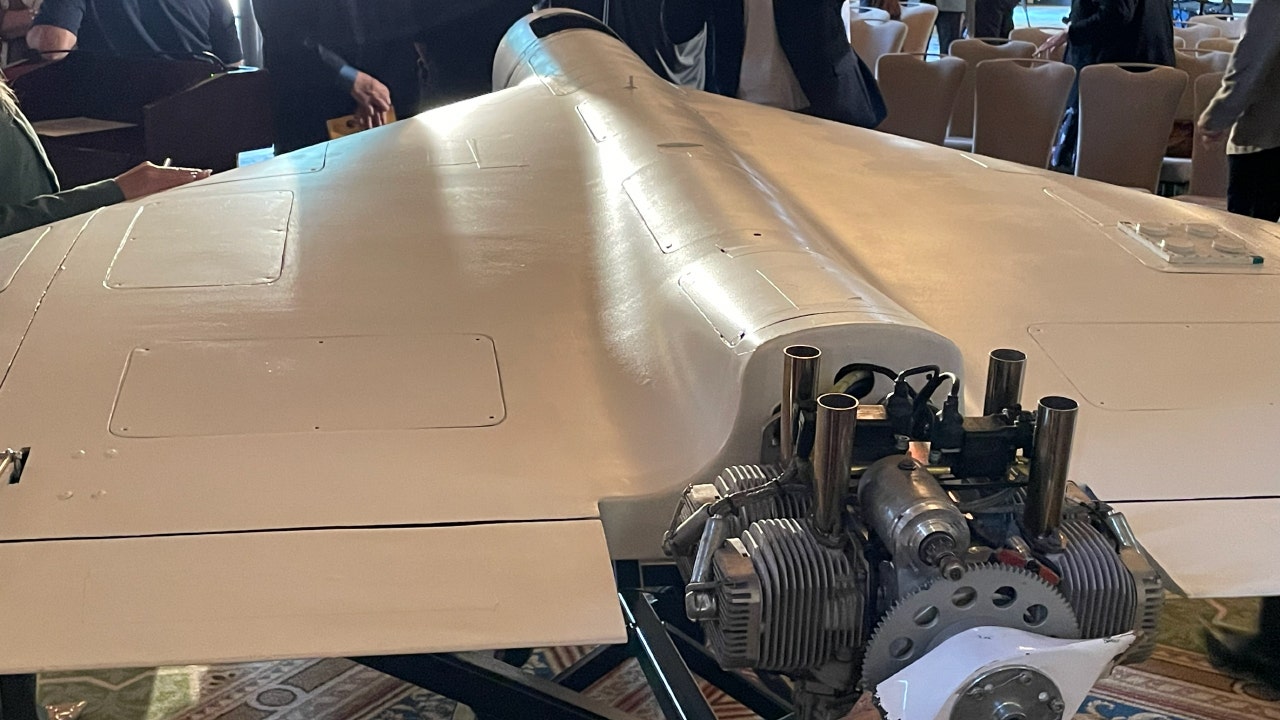
Brock pointed to Ukraine, where defenders have developed increasingly effective ways to counter the Shahed-type drones Russia has used in attacks. Russia and its suppliers have worked to make those weapons faster and harder to stop. The challenge is moving beyond individual drones and interceptors. Ondas has partnered with Palantir on software aimed at connecting sensors, drones, and command systems. The company is focused on producing autonomous weapons and defenses in the numbers a future conflict could demand.