Source: Fortune.com
Summary
A former Trump Organization executive described Donald Trump’s negotiation style as driven by ego and a refusal to compromise. Trump’s business and presidential deals have had mixed results, with some successes but many failures. Experts say he often exaggerated his abilities and used legal tactics to avoid paying obligations. Despite this, Trump continues to promote himself as a master dealmaker. His record includes failed negotiations on issues like Iran, Ukraine, and trade, as well as costly projects like the Lincoln Memorial pool. Critics argue his approach has been more about show than substance.
Our Reading
The numbers tell one story.
Trump’s deals often fail to meet his own promises.
He claims victories that don’t hold.
His ego blocks compromise.
The image of a master negotiator crumbles under scrutiny.
The original dealmaker’s playbook is full of smoke and mirrors.
Author: Evan Null
Trump’s Negotiation Style: A History of Ego and Legal Tactics
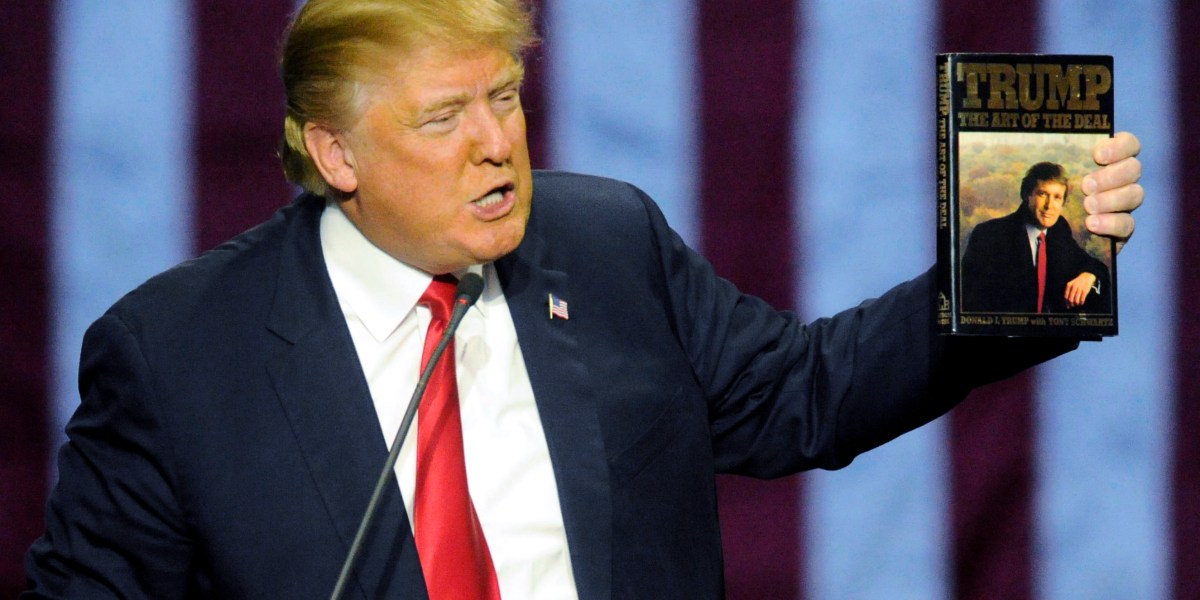
Donald Trump’s approach to negotiation has long been defined by his ego and a willingness to use legal strategies to avoid paying what he owes. From his early days in real estate to his presidency, Trump has consistently claimed to be a master dealmaker, even when the results don’t back that up. His style often involves high-pressure tactics, public posturing, and a refusal to make concessions. This approach has led to both successes and failures, but it has also left a trail of lawsuits and unresolved disputes.
Trump’s negotiation tactics have been shaped by his business background, where he often used legal threats to avoid paying bills or settling debts. This practice continued into his presidency, with numerous lawsuits against media outlets, financial institutions, and others. His legal team has been instrumental in defending his positions, even when the outcomes are not in his favor. This has created a pattern of using the legal system as a tool for leverage rather than a means of resolving disputes fairly.
Experts say that Trump’s negotiation style is rooted in a desire to always come out on top, even if it means sacrificing long-term relationships or practical outcomes. He often refuses to compromise, believing that his way is the only way. This has led to a reputation for being difficult to work with, as seen in the accounts of former employees and business partners. Many have described his behavior as erratic and unpredictable, making it hard to anticipate his next move.
Despite his claims of being a skilled negotiator, Trump’s record shows a pattern of failed deals and unfulfilled promises. His attempts to negotiate peace in the Middle East, for example, have not led to lasting solutions. Similarly, his trade policies have resulted in tariffs that hurt American consumers and sparked trade wars with allies. These outcomes have led many to question whether his negotiation skills are as strong as he claims.
Trump’s legacy as a dealmaker is complicated by the fact that his success often depends on his ability to control the narrative. He has used media appearances, public statements, and legal challenges to shape how his deals are perceived. This has allowed him to maintain an image of strength and expertise, even when the facts don’t support it. As a result, his negotiation style remains a subject of debate, with critics arguing that it is more about show than substance.
The Role of Ego in Trump’s Negotiation Strategy
Trump’s negotiation style is deeply influenced by his ego, which drives him to always seek the upper hand. He believes that his ability to negotiate is unmatched, and he often refuses to acknowledge when he is at a disadvantage. This mindset has led to a pattern of making bold claims and then struggling to deliver on them. His public statements often emphasize his own success, even when the results are mixed or negative.
This ego-driven approach has also led to a reluctance to compromise. Trump is known for his refusal to back down, even when it means prolonging disputes or losing potential deals. This has created a reputation for being difficult to negotiate with, as seen in the accounts of those who have worked with him. Many have described his behavior as unpredictable and inflexible, making it hard to reach mutually beneficial agreements.
His focus on ego has also led to a tendency to take credit for successes that may not be entirely his own. This is evident in his claims about the Abraham Accords and the Iran ceasefire, both of which were negotiated by others but attributed to him. This pattern of taking credit for others’ work has reinforced his image as a dealmaker, even when the facts don’t support it.
Trump’s ego-driven approach has also influenced his use of legal tactics. He often uses lawsuits as a way to pressure opponents into concessions, even if the legal basis for the case is weak. This has allowed him to avoid paying what he owes and to maintain control over negotiations. However, it has also led to a reputation for being litigious and difficult to work with, which has had long-term consequences for his business and political career.
Overall, Trump’s negotiation style is defined by a combination of ego, legal tactics, and a refusal to compromise. This has allowed him to maintain a strong public image as a master dealmaker, but it has also led to a pattern of failed deals and unresolved disputes. As a result, his negotiation style remains a subject of debate, with critics arguing that it is more about show than substance.
Trump’s Legal Tactics and Their Impact on Negotiations
Trump’s approach to negotiation has often involved the use of legal tactics to gain an advantage. He has a history of using lawsuits to pressure opponents into making concessions, even when the legal basis for the case is weak. This has allowed him to avoid paying what he owes and to maintain control over negotiations. However, it has also led to a reputation for being litigious and difficult to work with, which has had long-term consequences for his business and political career.
His legal team has been instrumental in defending his positions, even when the outcomes are not in his favor. This has created a pattern of using the legal system as a tool for leverage rather than a means of resolving disputes fairly. This approach has allowed Trump to maintain an image of strength and expertise, even when the facts don’t support it.
Trump’s use of legal tactics has also extended into his presidency, with numerous lawsuits against media outlets, financial institutions, and others. This has created a pattern of using the legal system to control the narrative and avoid accountability. As a result, his negotiation style remains a subject of debate, with critics arguing that it is more about show than substance.
Despite the challenges, Trump continues to use legal tactics as a key part of his negotiation strategy. He believes that the legal system can be manipulated to his advantage, and he has shown a willingness to go to court to achieve his goals. This has allowed him to maintain control over negotiations, even when the outcomes are not in his favor.
Overall, Trump’s use of legal tactics has had a significant impact on his negotiation style, shaping how he approaches deals and disputes. It has allowed him to maintain an image of strength and expertise, but it has also led to a pattern of failed deals and unresolved disputes. As a result, his negotiation style remains a subject of debate, with critics arguing that it is more about show than substance.
Trump’s Legacy as a Dealmaker: Successes and Failures
Trump’s legacy as a dealmaker is a mix of successes and failures, with some deals standing out as clear victories and others as clear losses. His ability to negotiate has been a key part of his public image, and he has often used this to bolster his political career. However, the reality of his negotiation record is more complicated, with many deals failing to meet his own promises.
One of the most notable successes in Trump’s negotiation career was the Abraham Accords, which brought together Israel, the United Arab Emirates, and Bahrain. This deal was seen as a major diplomatic achievement and was widely credited to Trump. However, the long-term impact of the agreement has been limited, as the broader Middle East peace process has not progressed as expected.
Another key success was the U.S.-China trade deal, which aimed to reduce the trade deficit and address intellectual property concerns. While this deal was seen as a major victory for Trump, the long-term effects have been mixed, with ongoing tensions and disputes between the two countries. This has led to questions about whether the deal was as successful as claimed.
On the other hand, Trump’s attempts to negotiate peace in the Middle East, such as the Iran ceasefire, have not held up over time. These deals often failed to achieve the long-term stability that Trump promised, leading to criticism of his negotiation skills. Similarly, his trade policies, including the use of tariffs, have had negative consequences for American consumers and have sparked trade wars with allies.
Overall, Trump’s legacy as a dealmaker is a complex mix of successes and failures. While he has achieved some notable victories, many of his deals have not lived up to his promises. This has led to a broader debate about his negotiation skills and the effectiveness of his approach. As a result, his legacy as a dealmaker remains a subject of discussion and scrutiny.
The Influence of Media and Public Perception on Trump’s Negotiation Image
Trump’s public image as a master dealmaker has been heavily influenced by media coverage and public perception. He has used his platform to promote his negotiation skills, often highlighting deals that are seen as successes while downplaying or ignoring the failures. This has allowed him to maintain a strong image as a skilled negotiator, even when the facts don’t fully support it.
His media appearances, particularly on shows like “The Apprentice,” have played a key role in shaping this image. These appearances allowed him to present himself as a powerful and successful businessman, reinforcing his reputation as a dealmaker. This image has been further amplified by his political career, where he has continued to promote his negotiation skills as a key part of his leadership.
However, this image is not always backed by the reality of his negotiation record. Many of the deals he has claimed to have negotiated have been criticized for their lack of long-term success or for failing to meet his own promises. This has led to a growing skepticism about his negotiation skills, with critics arguing that his public image is more about show than substance.
Despite this, Trump continues to use media and public relations as a key part of his negotiation strategy. He often uses press conferences and public statements to shape the narrative around his deals, emphasizing his successes while downplaying the challenges. This has allowed him to maintain a strong public image, even when the facts don’t fully support it.
Overall, the influence of media and public perception has played a significant role in shaping Trump’s image as a dealmaker. While he has used these tools to promote his negotiation skills, the reality of his record is more complex, with many deals failing to live up to his promises. As a result, his negotiation image remains a subject of debate and scrutiny.