Source: Fortune
Summary
Global stocks faced pressure as oil prices rose to $108 per barrel. Asian markets showed mixed results, while European markets declined. U.S. futures rose after a tech-led selloff on Friday, suggesting traders believe the downturn was exaggerated. Chris Beauchamp of IG noted that the S&P 500 was at a record high just two weeks ago, and the recent decline may be a healthy rotation rather than a sign of deeper trouble.
Our Reading
The numbers tell one story.
Oil hits $108, tech futures rise, Europe falls.
Markets rotate, but the fear lingers.
Yields drop slightly, but the crisis narrative remains.
AI costs are rising, and returns must match.
Author: Evan Null
Crisis? What crisis? The 10-year takes a chill pill.
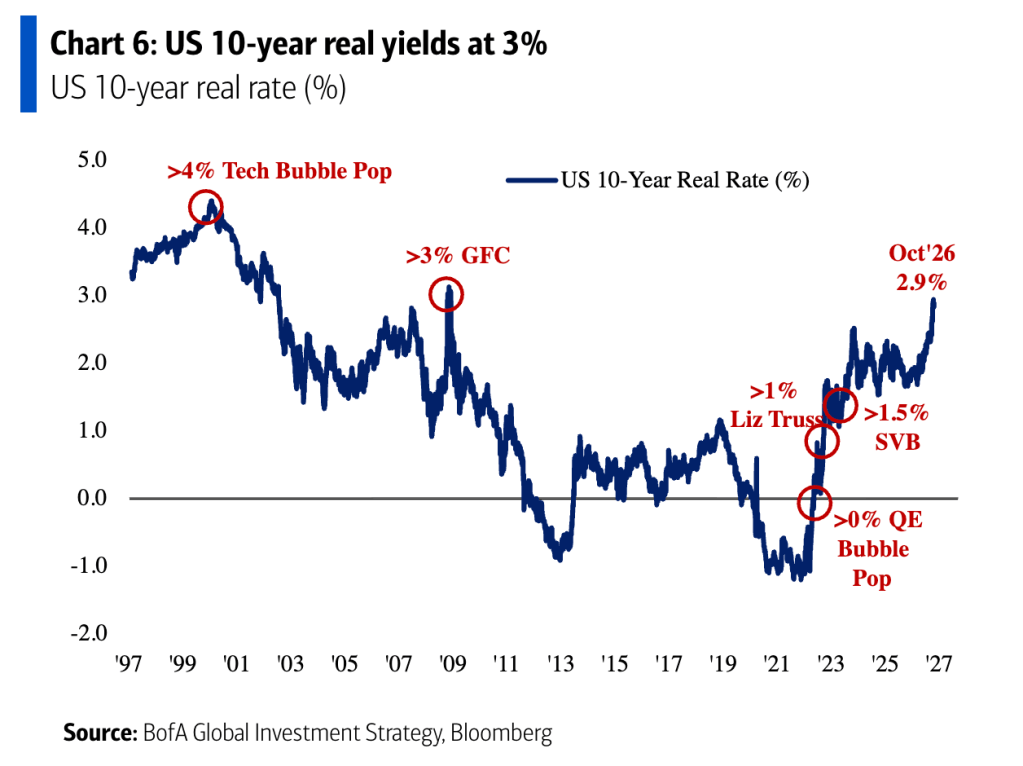
The yield on the 10-year Treasury dropped to 5.08% from a recent peak of 5.3%. This suggests some relief in the bond market, though the recent spike had raised concerns about a potential repeat of the Great Financial Crisis. The market had been pricing in extreme risk, according to Bank of America.
The drop in yields indicates a slight shift in investor sentiment, but the underlying volatility remains. The bond market’s reaction to recent events shows that while the immediate panic has eased, long-term concerns about economic stability persist.
Investors are watching closely as the yield on the 10-year Treasury continues to fluctuate. The recent drop may signal a temporary reprieve, but the broader economic picture remains uncertain.
The 10-year Treasury is a key indicator of market confidence. Its movement can influence everything from corporate borrowing costs to consumer spending. A continued decline could signal a more stable economic outlook.
Despite the recent drop, the market remains sensitive to any signs of further instability. The 10-year Treasury’s performance will likely continue to be a focal point for investors and analysts alike.
Hyperscalers’ cost of capital has more than doubled since 2023, hurting the profitability of AI
The cost of capital for tech companies has increased significantly, making it more expensive to fund AI development. Bank of America’s Savita Subramanian noted that the weighted average cost of capital for hyperscalers has risen from 4% in 2023 to 10% today.
This increase in borrowing costs has created a higher threshold for profitability in AI projects. Companies must now achieve a 10% return on investment to justify their spending.
Subramanian highlighted that the economics of AI investment are now more tightly tied to the cost of capital. If returns fall below this threshold, investment may slow down.
The shift in capital costs is influencing how tech companies approach AI development. With higher costs, the focus is on maximizing returns and managing risk more carefully.
The situation is being closely monitored by investors and executives, who are adjusting their strategies to account for the rising cost of capital and its impact on AI profitability.
Crisis? What crisis? The 10-year takes a chill pill.
The 10-year Treasury yield has eased slightly, suggesting some relief in the bond market. However, the recent spike had raised fears of a financial crisis similar to the one in 2008. The market had been pricing in extreme risk, according to Bank of America.
Despite the slight drop, the underlying concerns about economic stability remain. Investors are still cautious, and the bond market remains sensitive to any new developments.
The 10-year Treasury is a key indicator of market confidence. Its movement can influence everything from corporate borrowing costs to consumer spending. A continued decline could signal a more stable economic outlook.
The recent drop in yields may signal a temporary reprieve, but the broader economic picture remains uncertain. The bond market’s reaction to recent events shows that while the immediate panic has eased, long-term concerns persist.
Investors are watching closely as the yield on the 10-year Treasury continues to fluctuate. The recent drop may signal a slight shift in sentiment, but the market remains volatile and unpredictable.
Hyperscalers’ cost of capital has more than doubled since 2023, hurting the profitability of AI
The cost of capital for tech companies has increased significantly, making it more expensive to fund AI development. Bank of America’s Savita Subramanian noted that the weighted average cost of capital for hyperscalers has risen from 4% in 2023 to 10% today.
This increase in borrowing costs has created a higher threshold for profitability in AI projects. Companies must now achieve a 10% return on investment to justify their spending.
Subramanian highlighted that the economics of AI investment are now more tightly tied to the cost of capital. If returns fall below this threshold, investment may slow down.
The shift in capital costs is influencing how tech companies approach AI development. With higher costs, the focus is on maximizing returns and managing risk more carefully.
The situation is being closely monitored by investors and executives, who are adjusting their strategies to account for the rising cost of capital and its impact on AI profitability.
Factoid: Today is the 39th anniversary of Black Monday
Today marks the 39th anniversary of Black Monday, when the Dow Jones fell 22.6% in a single day. The event remains a stark reminder of the volatility that can occur in financial markets.
Traders and investors often look back at historical events like Black Monday to understand how markets react to extreme conditions. It serves as a cautionary tale about the risks of market downturns.
The anniversary comes at a time when markets are showing signs of recovery, but the memory of past crashes still lingers. Investors remain cautious, aware that volatility can return at any moment.
Historical events like Black Monday are often referenced in discussions about market stability. They provide context for understanding current market behavior and potential risks.
The anniversary highlights the importance of preparedness and risk management in investing. While markets may recover, the lessons from past crashes remain relevant for today’s investors.