Source: Fortune
Summary
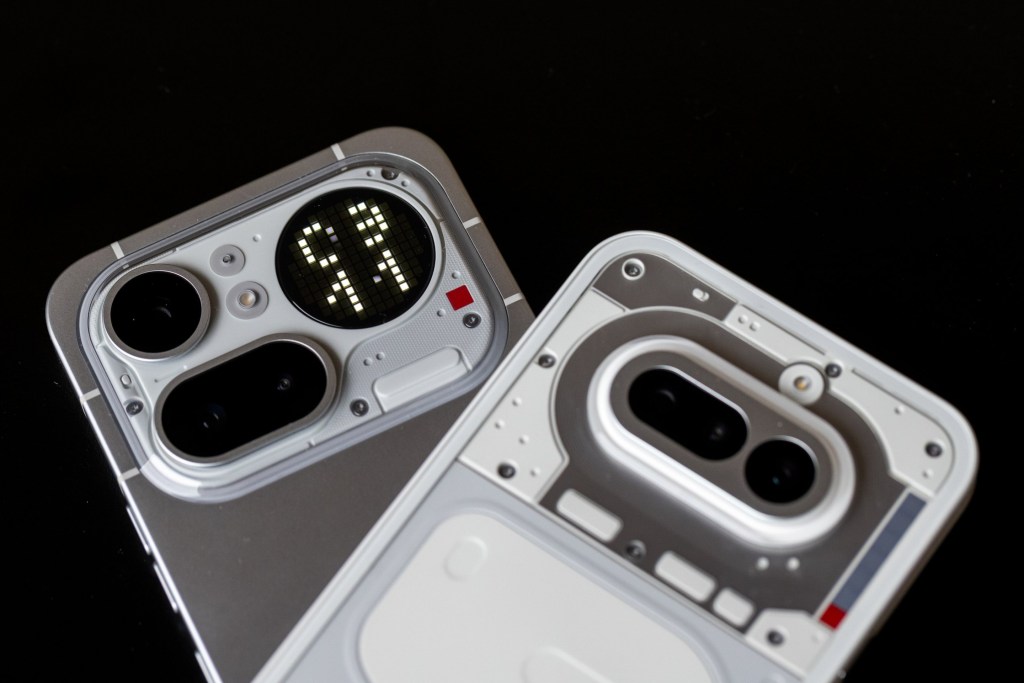
Charlie Smith, chief brand officer at Nothing, argues that smartphone design and marketing have become stagnant, copying Apple’s minimalism. Nothing, valued at $1.3 billion, is pursuing a “retro futuristic” design with transparent casings. Smith, formerly at LVMH and Nike, believes formulaic marketing lacks creativity. He emphasizes community building, risk-taking, and authenticity. Nothing faces challenges as smartphone shipments fell 20% in 2026, with Apple and Samsung dominating the market.
Our Reading
The numbers tell one story.
Nothing’s design is bold, but its market share is tiny.
Smith wants to break the mold, but Apple and Samsung still lead.
Marketing is getting formulaic, but Smith pushes for risk.
Authenticity is the new differentiator, but it’s hard to scale.
Author: Evan Null
Rejecing the marketing formula
Brand building has gotten harder as marketing chiefs face growing pressure to prove their value. More than half (56%) of marketing chiefs say their CFO is pushing harder for evidence of marketing’s financial impact, according to Duke University’s 2026 CMO Survey of more than 300 marketing leaders. Of those, seven in 10 say they’ve doubled down on short-term results and sharper performance tracking as a result.
Formulaic marketing rewards whatever delivers measurable results quickly, such as clicks and sales, over the slower work of building a brand. That pushes marketers toward ideas that have worked before, which is why, Smith says, so many ads look alike. Playing it safe can also cost more.
Smith has seen the cost of that shift firsthand. From 2015 to 2018, he ran Nike’s account for Europe, the Middle East, and Africa while working at the ad agency R/GA. Back then, he says, Nike did not stick to a fixed schedule of campaigns. It reacted to cultural events as they happened and let local teams shape the message instead of running the same ads globally.
Later, Smith says, Nike started “focusing more on performance marketing, data, and its direct-to-consumer business.” This meant ads were judged more heavily on immediate sales and, as a result, “a lot of that magic and creativity was lost,” he adds.
What really cuts through, Smith says, is “extreme risk taking and boldness.” He constantly challenges his team with one question: “What’s the opposite of what we would be expected to do here?” When Apple scheduled its launch the day before Nothing’s in March, Nothing graffitied over Apple’s invitation and Pei posted it online.
Inviting customers into the boardroom
Smith encourages staff outside of the marketing function to come forward with ideas. “Good ideas come from everywhere, and it’s about the leadership embracing them,” he says. Customer insights are also welcomed. Every year, Noting’s fan community elects a community board observer, a volunteer who attends the company’s quarterly board meetings and presents customers’ views on products and launches to its directors.
Nothing shortlists the candidates, and the community votes on its forum. They have previously helped design one of its phones. Without the marketing budgets of Apple or Samsung, Nothing is spending on smaller, local projects aimed at its core customers. In July, it launched the Club Nothing Fund, which gives four independent creators or music collectives $10,000 each to stage a nightlife event.
When planning these collaborations, Smith emphasizes the importance of authenticity. He says: “Are you genuinely adding something to this culture, or are you just taking from it?” Smith believes that in a market where every phone looks the same, the bigger risk is being boring.
Smith concedes that such questions are easier to ask at a comparatively small company, where creative risk is already part of the culture. Having control of the entire brand, including the website and store design, also helps, as ideas are less likely to be watered down as they pass between departments.
Nothing’s approach is a direct contrast to the formulaic strategies of larger competitors. While Apple and Samsung rely on proven methods, Nothing is experimenting with new ways to connect with consumers.
Showing the humans behind the product
As AI-generated content spreads, audiences have become harder to impress. A-third (30%) of Gen-Z described brands that used AI in the advertising as “inauthentic,” according to an IAB survey. “We’ve lost our sense of wonder,” he says.
AI skepticism has made it more important to show the people behind the product, according to Smith. At Nothing’s March launch at Central Saint Martins, the London art school, more than 300 students met the company’s industrial design team and tried the products.
At Loewe, Smith showed how its products were made, filming craftspeople at work and asking content creators to post rough, unpolished TikToks that went “against the codes of luxury,” where everything has to be “perfect and glossy.” “Some of the best-performing content on digital channels is the most human and analog,” he says.
Formulaic marketing promises certainty. Smith is betting that in a market where every phone looks the same, the bigger risk is being boring. He believes that authenticity and human connection are the keys to standing out in a crowded market.
Nothing’s strategy is not just about design but also about building a brand that resonates with customers on a deeper level. By focusing on community, creativity, and authenticity, Smith is trying to redefine what it means to be a tech brand in the 21st century.