Source: Fortune
Summary
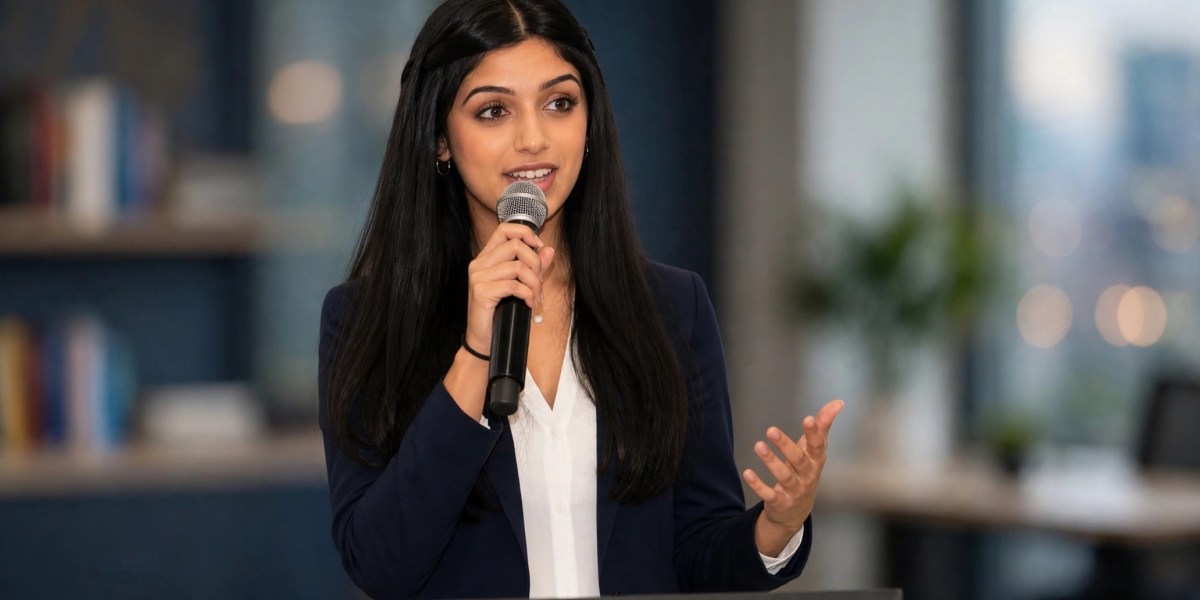
Navya Tuteja, a 17-year-old student at Thomas Jefferson High School, created Raaha, a platform connecting neurodivergent job seekers with suitable roles. The tool uses a quiz to assess job fit and has over 1,000 users and 20,000 listings. Tuteja, who avoids AI for schoolwork, built the platform herself, using it for design tasks. Her school blocks AI tools, which she says helped her develop independent thinking. She also created Legible, a tool to simplify special-education documents, and is advocating for AI transparency standards.
Our Reading
The numbers tell one story.
Tuteja built a platform with 1,000 users and 20,000 job listings while in high school.
Her school blocks AI tools, which she says helped her think independently.
She uses AI for design tasks but avoids it for schoolwork.
Her parents, both high-level professionals, support her work but emphasize hard work over shortcuts.
Author: Evan Null
The exception to a bad year for teenagers
Tuteja’s grades stand out right now for a reason unrelated to college admissions. The OECD’s PISA 2025 results, released this month, show reading and math scores at record lows across nearly all participating countries. Across OECD nations, reading is down 28 points since 2015 and math is down 22, and roughly 29% of 15-year-olds now score as low performers in all three core subjects tested. American 15-year-olds posted their lowest reading scores in about 25 years. Researchers studying the decline have pointed to screens, shrinking attention spans, and generative AI.
Tuteja doesn’t dispute that theory. She just says she was structurally protected from the worst of it, and the protection wasn’t her idea. Her school’s WiFi blocks ChatGPT, Claude, and similar tools outright. “It made me use it in school way less,” she said. “So I guess, as annoying as it was, it was still good, in a way.”
She doesn’t think generative AI is inherently the problem, though she worries a bit that it’s making people dumber. “People just don’t know how to use it properly,” she said. Not being able to reach for it during the school day forced her to do exam-relevant thinking on her own, a habit she kept after hours, when the ban no longer applied and she had a company to build.
Her school’s restrictions forced her to think for herself, even as AI use among students rose. National data suggests how much of an outlier that makes her. RAND polling found the share of students regularly using AI for homework rose from 48% to 62% between May and December 2025, even as two-thirds of those students said the technology was hurting their critical thinking.
She’s an exception in a year where teenagers are struggling. But her success isn’t just about avoiding AI—it’s about using it wisely and thinking independently.
Where she draws her own line
Tuteja is president of her school’s AI club, and she now applies voluntarily the discipline the ban once imposed. She wrote Raaha’s underlying algorithm herself and used AI for the more mechanical parts of the build, mainly cleaning up the website’s design. Day to day, she uses it to draft emails or make sense of messy information when she’s short on time. Schoolwork gets none of it. “I try to do all my learning myself, especially for stuff I have exams for,” she said.
National data suggests how much of an outlier that makes her. RAND polling found the share of students regularly using AI for homework rose from 48% to 62% between May and December 2025, even as two-thirds of those students said the technology was hurting their critical thinking. A study published in Science of more than 95,000 undergraduates found that daily AI users were nearly four times as likely as monthly users to say they’d used it to cheat, 26% versus 7%.
Tuteja’s approach is rare. Most students rely on AI for homework, even as they acknowledge it’s harming their critical thinking. She’s one of the few who uses it selectively, avoiding it for schoolwork and using it only for design tasks.
Her school’s restrictions forced her to think for herself, even as AI use among students rose. National data suggests how much of an outlier that makes her. RAND polling found the share of students regularly using AI for homework rose from 48% to 62% between May and December 2025, even as two-thirds of those students said the technology was hurting their critical thinking.
She’s an exception in a year where teenagers are struggling. But her success isn’t just about avoiding AI—it’s about using it wisely and thinking independently.
Owning up to the AI in the name
Tuteja put “AI” directly into Raaha’s branding, yet she still hesitates when asked which specific tools she used to build it. “People are going to have a different impression,” she said. Tell people you used AI to build something, she explained, “they’re going to be like, ‘Oh, you didn’t do it, it was all AI.’ People don’t think you had any thought behind it.”
That instinct matches recent survey data on AI disclosure. A 2026 Atlassian study of roughly 1,000 U.S. knowledge workers found that colleagues who disclosed AI use were rated far lazier than those who didn’t, even when the work was identical. A KPMG and University of Melbourne survey of more than 48,000 people across 47 countries found 57% had hidden their AI use or passed off AI output as their own, mostly out of fear of looking less competent.
“I think it’s good to own up to it if you’re using it right,” Tuteja said. “If you’re very transparent about what you use it for, and you actually didn’t use it to create your whole company, then I don’t think there’s any reason to be embarrassed.” She thinks the taboo persists because outsiders have no way to check, summing up the criticism as: “You just pay for the $200 Claude plan and it can do everything for you… There’s no way to know.”
Her hesitation reflects a broader fear: that using AI could make people think you’re not contributing. But she believes transparency is the right approach, as long as it’s done correctly. Her parents, both high-level professionals, recognize this anxiety from their own jobs.
Her story shows the tension between using AI and being seen as competent. It’s a challenge many professionals face, and one she’s navigating carefully.
A household living the experiment
A few days after our first conversation, Tuteja’s parents joined a video call, sitting side by side. They wanted to weigh in on a question I had raised with their daughter: what the right balance looks like between restricting AI in school and letting kids loose with it. They’re navigating this tension at home in real time, with a daughter who runs an AI company and leads an AI club.
Deepti and Rohit Tuteja moved from Delhi to the U.S. about 17 years ago, first to Atlanta, where Navya was born, then to Richmond, the New York–New Jersey area, back to Atlanta, and finally to Northern Virginia for work. Deepti holds a double master’s degree from India and completed a Harvard program while working full-time as head of data and risk at E-Trade. She now leads data management oversight for TD Bank across the U.S. and sits on the board of a Harvard-affiliated venture capital fund, where she reviews startup pitches professionally, though she said she has stayed out of advising her daughter’s company in that capacity.
Rohit trained as a lawyer in India, moved into privacy and cybersecurity consulting at Deloitte, and now runs cybersecurity governance, risk, and compliance for Sentara Health, a Virginia hospital and insurance network. Navya is an only child. “All our attention has been on this,” Rohit said. “A lot of pressure. She didn’t like it.” Of the two parents, he describes himself as the more “chilled” one. Both described a kid who needed almost no supervision long before any of this started.
“For the past at least six years, we have never had a chance where we had to wake her up,” Deepti said. Their daughter’s independence and drive are evident, but so is the pressure that comes with it. They support her work but emphasize the value of hard work over shortcuts.
Their story reflects the broader challenge of balancing AI use with personal development. While their daughter thrives, the pressure to succeed is real, and the line between support and burden is thin.
A second project, and a harder question about the ban
Partway through the conversation, Rohit mentioned that Navya has been working with local state senators. She built a separate tool called Legible, which translates special-education paperwork, such as IEPs and 504 plans, into plain language for families who find the bureaucratic versions hard to parse, especially those newer to the American school system. She built it after noticing that when AI tools summarize disability information from state databases, they often drop the sourcing a parent would actually need.
That led her to develop a proposed transparency standard she calls Traceable Accessibility, which she has pitched to local state senators and discussed with the U.S. Department of Education as a possible listed resource. Reaching out to lawmakers, she said, was entirely her own idea—the same instinct that landed her in my inbox.
Asked whether she wished AI were more regulated, Tuteja didn’t hesitate: “I think a hundred percent.” But pressed on the school ban, she took the opposite position from the one her own story seems to support. “I don’t think banning it is the solution,” she said. “I think you have to regulate it in the right way. So that’s what I’ve been trying to do right now.”
Rohit said the family has coached her against shortcuts from the start. “We try to coach her, at least build that cultural value as well, that you’re not getting anywhere by cheating,” he said. “Hard work is the only way.” That’s the tension at the heart of her story. The ban worked on her by taking the choice away. Her own view is that taking the choice away is the wrong long-term fix, and that the real work lies in regulation and in teaching people to make that choice themselves.
Her parents, both high-level professionals, recognize the disclosure anxiety her story describes. They support her work but emphasize the value of hard work over shortcuts. Their daughter’s success is a testament to her drive, but also to the pressure that comes with it.