Source: FOX News
Summary
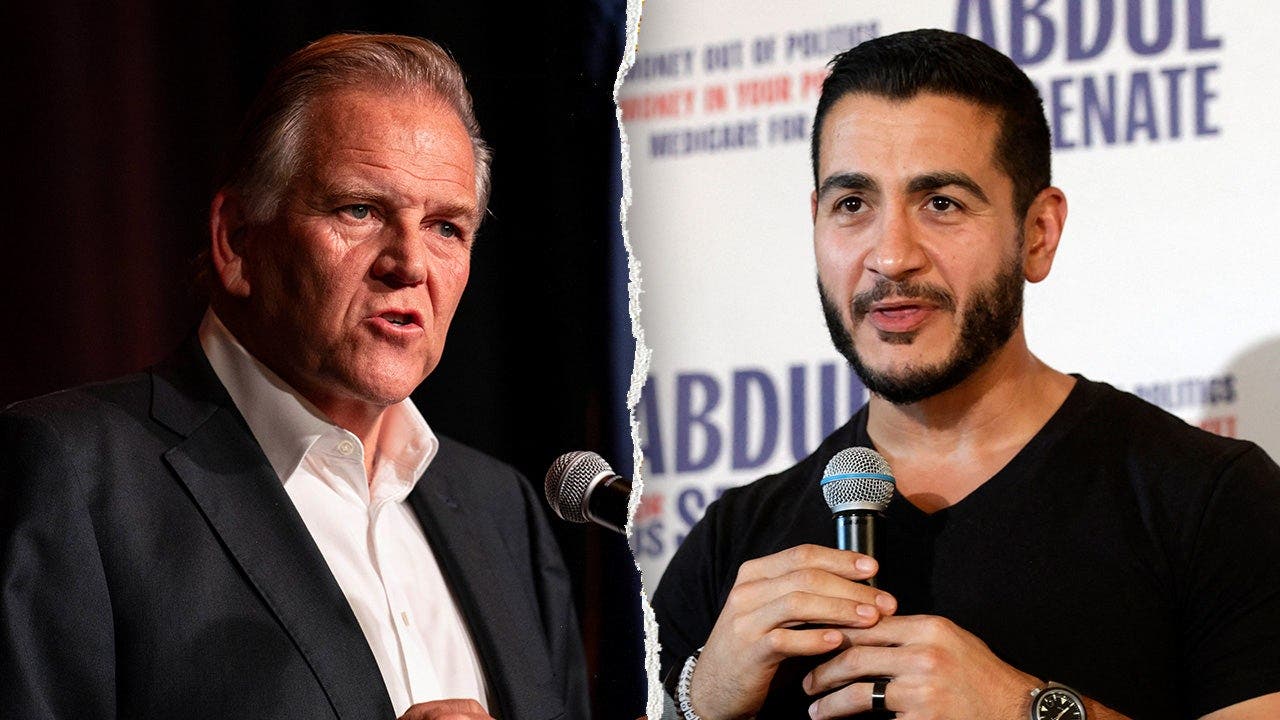
Republican Mike Rogers is urging Jewish and other Democratic voters to support him in Michigan’s Senate race, as he seeks to unseat incumbent Democrat Gary Peters. Rogers is targeting disaffected Democrats, particularly Jewish voters, who are critical of Abdul El-Sayed’s stance on Israel and his association with controversial figure Hasan Piker. El-Sayed, who would be the first Muslim senator if elected, has faced backlash for his comments on Israel and has been accused of anti-Jewish rhetoric. Some Jewish leaders are circulating an open letter supporting Rogers, while others remain loyal to El-Sayed. The race is seen as critical for control of the Senate.
Our Reading
As expected, the matter has reached another stage.
Rogers meets with rabbis, promising to protect Jewish interests.
El-Sayed speaks to synagogues, denying antisemitism.
Jewish voters split, some switching to Republicans, others staying with Democrats.
Both sides perform their roles, as if the script was written long ago.
Author: Evan Null
Key Moments in the Race
Mike Rogers, a former congressman and FBI agent, is making a second Senate bid in Michigan, where he narrowly lost two years ago. He is now targeting Jewish and other Democratic voters who are disillusioned with Abdul El-Sayed, the Democratic nominee. Rogers’ campaign has focused on appealing to Jewish voters, who are concerned about El-Sayed’s criticism of Israel and his association with Hasan Piker, a controversial online figure.
El-Sayed, an epidemiologist and former Wayne County health director, is running on a progressive platform, including support for Medicare-for-all and the abolition of ICE. He has also been vocal in his criticism of Israel’s actions in Gaza, calling the Israeli military “bloodthirsty” and accusing its leadership of genocide. These comments have led to backlash from some Jewish voters and leaders in Michigan.
Rogers has formed a coalition called “Democrats for Mike,” which includes Jewish leaders like Rabbi Asher Lopatin. Lopatin has criticized El-Sayed for associating with Piker, whom he calls an antisemite. Lopatin and other Jewish voters are urging their peers to support Rogers, arguing that El-Sayed’s rhetoric is dangerous and anti-Jewish.
Some Jewish leaders, however, remain loyal to El-Sayed. Joan Lowenstein, a leader in the Michigan Democratic Jewish Caucus, has rejected the open letter supporting Rogers, stating that the group will not advocate for voting for a Republican. Despite this, some Jewish voters are considering switching their support to Rogers, citing concerns about El-Sayed’s positions on Israel and the Jewish community.
The race is seen as a critical one for the Senate majority, with both candidates emphasizing the importance of the election. Rogers argues that Jewish voters are being targeted by El-Sayed’s rhetoric, while El-Sayed maintains that he stands in solidarity with the Jewish community and condemns antisemitism.
Political Dynamics and Voter Concerns
The race in Michigan has become a focal point for broader political tensions, particularly around the role of Jewish voters and their alignment with progressive candidates. Rogers’ campaign has capitalized on the concerns of Jewish voters who feel that El-Sayed’s positions on Israel and his association with Piker are harmful to their community. These voters, many of whom have traditionally supported Democrats, are now considering switching their support to Rogers, despite his Republican affiliation.
El-Sayed, on the other hand, has maintained that his criticism of Israel is not antisemitic and that he is committed to protecting Jewish safety. He has spoken to Jewish leaders and attended religious events, including a Seder, to demonstrate his support for the community. However, some Jewish voters remain skeptical of his stance, believing that his rhetoric could embolden antisemitism.
The situation highlights the challenges of navigating political identity in a polarized environment. Jewish voters in Michigan are caught between their traditional Democratic leanings and their concerns about El-Sayed’s positions on Israel. Some are choosing to support Rogers, while others remain loyal to El-Sayed, despite their disagreements with his views.
Rogers’ campaign has positioned itself as a moderate alternative, appealing to voters who feel that the Democratic Party has moved too far to the left. He has emphasized the importance of protecting Jewish interests and has argued that El-Sayed’s rhetoric is dangerous. This strategy has resonated with some Jewish voters, who are now considering crossing party lines to support him.
The race is being closely watched as a potential indicator of how Jewish voters will respond to progressive candidates in the future. With the Senate majority at stake, both candidates are working to secure the support of this key demographic, highlighting the importance of Jewish voters in the broader political landscape.
Key Figures and Their Roles
Mike Rogers, a former congressman and FBI agent, is leading the Republican campaign in Michigan’s Senate race. He has positioned himself as a moderate candidate who appeals to Jewish and other Democratic voters who are disillusioned with the current Democratic nominee, Abdul El-Sayed. Rogers has formed a coalition called “Democrats for Mike,” which includes Jewish leaders like Rabbi Asher Lopatin, who has criticized El-Sayed for his association with Hasan Piker, a controversial online figure.
Abdul El-Sayed, the Democratic nominee, is an epidemiologist and former Wayne County health director. He is running on a progressive platform, including support for Medicare-for-all and the abolition of ICE. El-Sayed has faced criticism for his comments on Israel, which some Jewish voters and leaders have interpreted as antisemitic. He has denied these accusations, stating that he stands in solidarity with the Jewish community and condemns antisemitism.
Rabbi Asher Lopatin, a Jewish leader in suburban Detroit, has been a vocal supporter of Rogers. He has criticized El-Sayed for his association with Piker, whom he calls an antisemite. Lopatin has argued that El-Sayed’s rhetoric is harmful to the Jewish community and has encouraged Jewish voters to support Rogers. His involvement has helped to galvanize support for Rogers among Jewish voters.
Joan Lowenstein, a leader in the Michigan Democratic Jewish Caucus, has rejected the open letter supporting Rogers, stating that the group will not advocate for voting for a Republican. However, she acknowledges that some Jewish voters feel that El-Sayed’s positions on Israel are problematic and that they may consider supporting Rogers. This internal division within the Jewish community highlights the complexity of the race.
Other Jewish voters, like Roslyn Schindler, have expressed support for El-Sayed, arguing that he is not antisemitic and that his comments on Israel are not intended to harm the Jewish community. Schindler, whose parents were Holocaust survivors, has met with El-Sayed and attended religious events with him, which she believes demonstrates his commitment to Jewish safety.
Impact on the Broader Political Landscape
The Michigan Senate race has become a microcosm of the broader political tensions in the United States, particularly around the role of Jewish voters and their alignment with progressive candidates. The race has highlighted the challenges of navigating political identity in a polarized environment, as Jewish voters are caught between their traditional Democratic leanings and their concerns about the positions of progressive candidates on Israel.
Rogers’ campaign has capitalized on the concerns of Jewish voters who feel that El-Sayed’s rhetoric is dangerous and anti-Jewish. By forming a coalition of Jewish leaders and appealing to disaffected Democrats, Rogers has positioned himself as a moderate alternative who can protect Jewish interests. This strategy has resonated with some Jewish voters, who are now considering switching their support to him despite his Republican affiliation.
El-Sayed, on the other hand, has maintained that his criticism of Israel is not antisemitic and that he is committed to protecting Jewish safety. He has spoken to Jewish leaders and attended religious events, including a Seder, to demonstrate his support for the community. However, some Jewish voters remain skeptical of his stance, believing that his rhetoric could embolden antisemitism.
The race has also highlighted the importance of Jewish voters in the broader political landscape. With the Senate majority at stake, both candidates are working to secure the support of this key demographic. The situation underscores the challenges of navigating political identity in a polarized environment, as Jewish voters are forced to weigh their traditional Democratic leanings against their concerns about progressive candidates.
As the race continues, the outcome could have significant implications for the future of Jewish voters in national politics. The support of Jewish voters in Michigan could determine the balance of power in the Senate, making this race one of the most closely watched in the country.