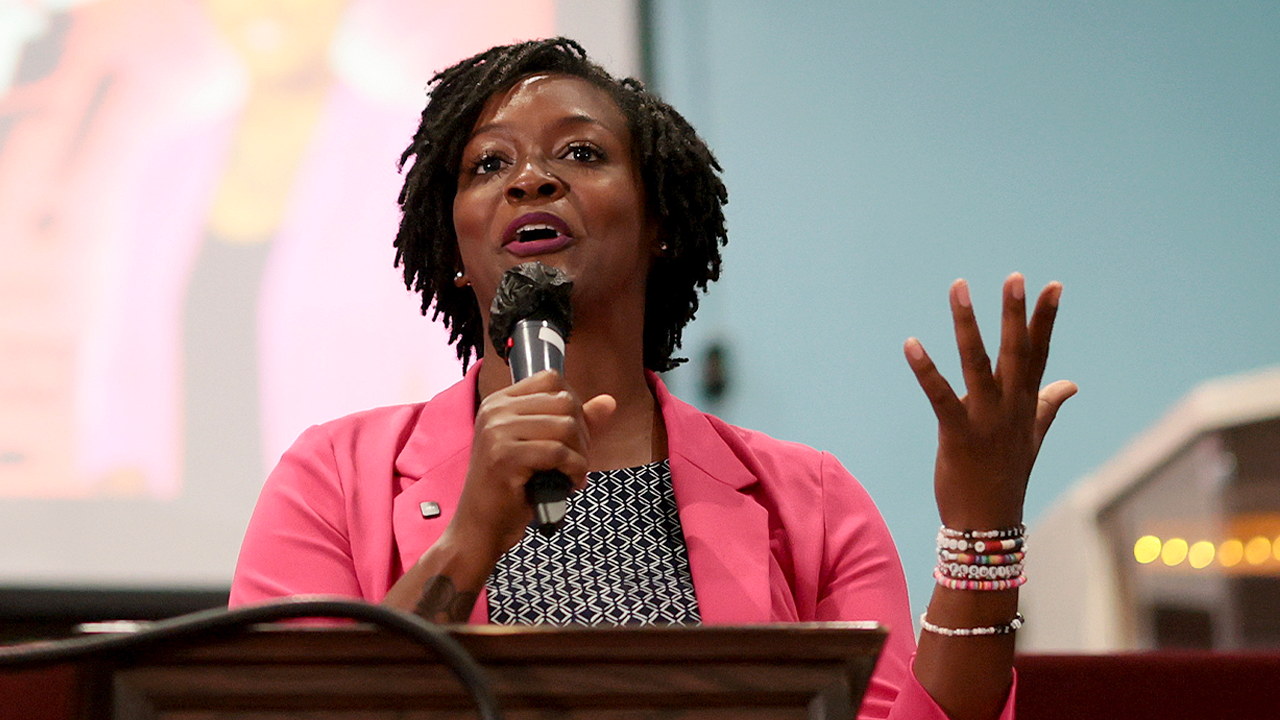
Source: Fox News
Summary
Fox News reports that Florida Democratic Senate nominee Angie Nixon has resurfaced clips where she supports abolishing the Electoral College, embracing ranked-choice voting, and allowing same-day voter registration. These comments are being used by Republicans as Nixon campaigns in the general election. Nixon also rejected nonparty voters in Democratic primaries, echoing arguments for the Electoral College. The RNC criticized her views, calling them a threat to election security. Nixon, a member of the Democratic Socialists of America, defeated Alexander Vindman in the primary and will face Republican Sen. Ashley Moody in November.
Our Reading
As expected, the matter has reached another stage.
Nixon speaks on podcast about abolishing the electoral college.
She supports ranked-choice voting and same-day registration.
Republicans use her past comments to attack her campaign.
She calls Florida governor a fascist, as the race moves forward.
Author: Evan Null
Resurfaced Clips and Political Strategy
Resurfaced clips of Florida Democratic Senate nominee Angie Nixon have become a focal point in her campaign. These clips, which show her supporting the abolition of the Electoral College, have been used by Republicans to challenge her candidacy. Nixon’s past statements on election reform are now part of the broader political narrative as she moves into the general election.
The clips were shared on a podcast and during an online Q&A session, where Nixon expressed her views on election systems. Her comments on abolishing the Electoral College and supporting ranked-choice voting have been highlighted by opponents as evidence of her radical positions.
Nixon also addressed the topic of same-day voter registration, a policy that is not currently in place in Florida. Her advocacy for such measures has been criticized by Republicans, who argue that it undermines election integrity.
These statements have been used by the RNC to frame Nixon as a threat to American election security. The RNC has accused her of wanting to dismantle the current system, which they say is a sacred pillar of the nation.
As Nixon continues her campaign, these past comments will likely remain a central part of the political discourse. The focus on her views on election reform has become a key element in the race against Republican Sen. Ashley Moody.
Republican Response and Election Security
The Republican National Committee has responded to Nixon’s past statements by labeling her as a threat to election security. They argue that her positions on abolishing the Electoral College and supporting ranked-choice voting are radical and dangerous. This response is part of a broader strategy to frame her as an outsider to the traditional election system.
The RNC’s criticism of Nixon is not just about her policies but also about her alignment with the Democratic Socialists of America. This association has been used to further distance her from mainstream Democratic values, despite her recent primary victory.
Republicans have also focused on Nixon’s criticism of Florida’s election laws, particularly those enacted under Governor Ron DeSantis. They argue that her opposition to these laws shows a lack of respect for election integrity and a desire to undermine the system.
The RNC’s messaging has been consistent in portraying Nixon as an extremist who wants to change the rules of the game. This narrative is intended to rally support among voters who are concerned about election security and the integrity of the democratic process.
As the race moves forward, the Republican strategy will likely continue to focus on Nixon’s past statements and her alignment with more radical elements of the Democratic Party. This approach is designed to create a clear contrast between her and her opponent, Ashley Moody.
Nixon’s Political Background and Rise
Angie Nixon, a Florida state representative and member of the Democratic Socialists of America, has gained national attention after defeating Alexander Vindman in the Democratic primary for the U.S. Senate. Her victory was seen as a surprise, as she was not the establishment’s preferred candidate. This win has positioned her as a key figure in the race against Republican Sen. Ashley Moody.
Nixon’s political background is rooted in grassroots activism and progressive policies. She has been a vocal critic of the Republican-led changes to Florida’s election laws, particularly those that restrict mail-in voting and require voter identification. Her stance on these issues has made her a target for Republican attacks.
Her rise to prominence in the Democratic Party has been fueled by her alignment with the Democratic Socialists of America, a group known for its more radical positions on social and economic issues. This association has made her a polarizing figure in the political landscape.
Despite her lack of national recognition before the primary, Nixon has quickly become a central figure in the Senate race. Her campaign has been bolstered by her ability to connect with voters who are frustrated with the status quo and are looking for change.
As she moves into the general election, Nixon’s political background and her alignment with the Democratic Socialists of America will continue to shape the narrative around her candidacy. Her campaign will need to balance her progressive views with the broader appeal needed to win in a competitive race.
Public Opinion and Voter ID Requirements
Public opinion on voter ID requirements has been mixed, with a significant portion of voters supporting the implementation of photo identification for both registration and voting. A recent Fox News poll found that 83% of registered voters supported requiring photo ID to register, while 77% backed it for voting. These numbers show a strong level of public support across party lines.
Despite this support, the Senate has struggled to pass a national voter ID law, with some Republicans opposing it. The Save America Act, which aimed to require voter ID nationwide, faced resistance from some GOP senators, highlighting the internal divisions within the party on this issue.
Nixon’s opposition to voter ID requirements has been a point of contention in her campaign. She has criticized these measures as barriers to voting and has argued that they disproportionately affect certain groups. This stance has been used by Republicans to frame her as out of touch with the majority of voters.
The debate over voter ID laws reflects broader concerns about election integrity and access. While some see these laws as necessary to prevent fraud, others view them as an unnecessary burden on voters. This divide has become a key issue in the Senate race, with both candidates taking strong positions on the matter.
As the election approaches, the debate over voter ID requirements will likely remain a central issue. The outcome of this debate could have a significant impact on the race, as both candidates seek to appeal to voters who are concerned about the integrity of the electoral process.
Political Rhetoric and the Role of Media
The media has played a significant role in amplifying Nixon’s past statements, particularly those related to the Electoral College and election reform. These statements, which were made in the past, have been resurfaced and used by opponents to shape the narrative around her candidacy. This highlights the power of media in influencing public perception.
Republicans have taken advantage of the media’s focus on Nixon’s past comments to paint her as an extremist. By emphasizing her support for abolishing the Electoral College and ranked-choice voting, they aim to create a clear contrast between her and their candidate, Ashley Moody. This strategy is designed to appeal to voters who are concerned about election security.
The media’s role in shaping the narrative around Nixon’s campaign has also been influenced by the broader political climate. The focus on election integrity and the debate over voter ID requirements have created a backdrop in which her past statements are viewed through a specific lens. This has allowed opponents to frame her as a threat to the current system.
As the race continues, the media will likely remain a key factor in shaping public opinion. The way in which Nixon’s past statements are presented and interpreted will have a significant impact on her campaign. This underscores the importance of media in the political process.
The interplay between media coverage and political rhetoric has become a defining feature of the race. As both candidates seek to influence public opinion, the media will continue to play a central role in shaping the narrative around the election. This dynamic will likely remain a key element of the campaign as it moves forward.