Source: Fox News
Summary
Massachusetts Democrats re-elected incumbents in key primaries, with Sen. Ed Markey defeating Rep. Seth Moulton, who had called for the party to “pass the torch.” Markey’s win was seen as a victory for the progressive wing. In the 6th Congressional District, former Biden aide Dan Koh won the open seat. Republicans failed to nominate candidates in four districts and only submitted write-ins for state offices. Democrats maintained dominance, with no significant anti-incumbent movement.
Our Reading
As expected, the matter has reached another stage.
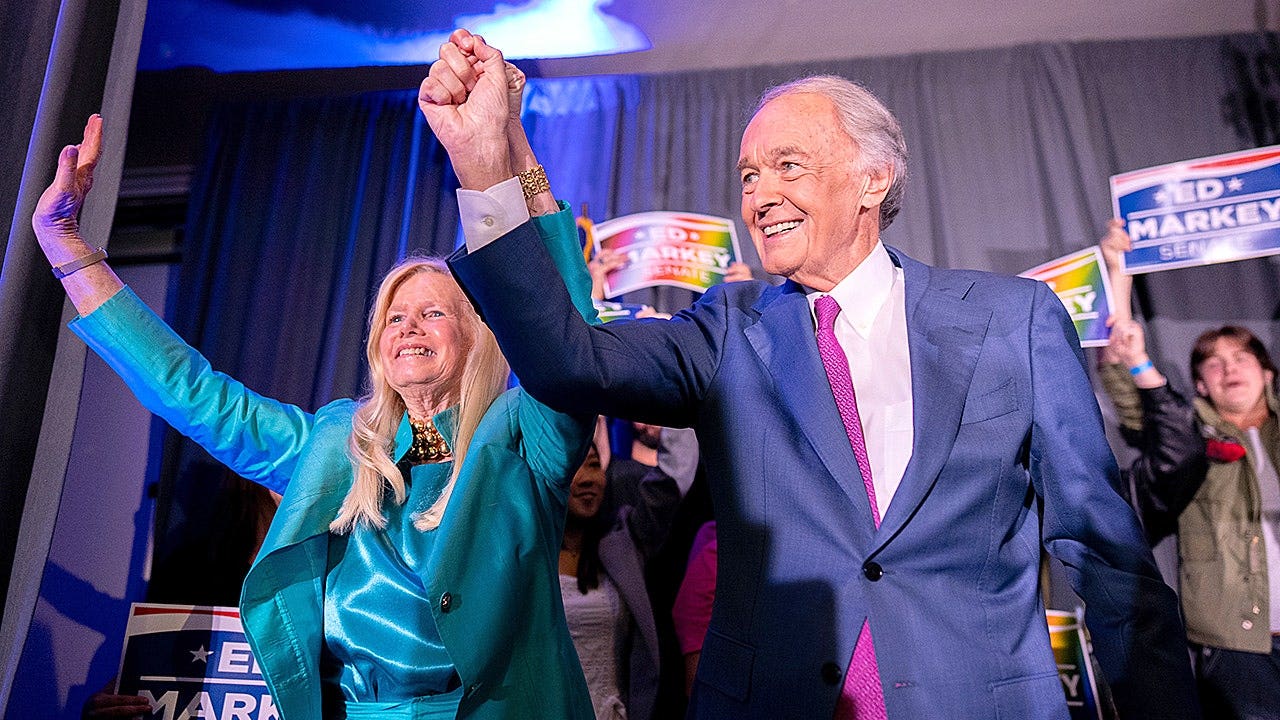
Sen. Ed Markey, 80, beats Rep. Seth Moulton, 47, in a generational fight.
Incumbents win across the board, with no major upsets.
Republicans fail to field candidates in four districts, leaving Democrats unchallenged.
Another win for the old guard, as the party seems to prefer experience over change.
Author: Evan Null
Massachusetts Democrats and the Culture of Incumbency
Massachusetts Democrats have long been known for their strong support of incumbents, and Tuesday’s primaries were no different. The results showed that voters in the deep-blue state continue to favor established figures over new challengers, even when those challengers argue for a shift in leadership.
Ed Markey, a 50-year veteran of Congress, defeated Seth Moulton, who had positioned himself as a younger, more moderate alternative. Moulton’s campaign focused on the idea of passing the torch, but the voters did not seem to share that urgency.
The race for the 6th Congressional District also reflected this trend. Dan Koh, a former Biden aide, won the open seat, which had no incumbent to challenge. His victory was seen as a continuation of the party’s preference for experienced, establishment-backed candidates.
Republicans, meanwhile, struggled to field candidates in several districts, highlighting the stark contrast in political energy between the two parties in Massachusetts. The lack of GOP nominees left many Democratic incumbents unopposed in the general election.
The results underscored the deep-rooted nature of the Democratic dominance in the state. While there were no major upsets, the pattern of supporting the status quo remained clear.
Progressives and the Battle for the Soul of the Party
The race between Markey and Moulton was more than just a generational contest—it was a battle over the direction of the Democratic Party. Moulton positioned himself as a moderate, while Markey leaned into his progressive credentials.
Despite facing criticism for his support of transgender athletes, Markey’s long-standing reputation as a progressive advocate helped him secure the nomination. His win signaled that, at least in Massachusetts, the party still values experience over ideological change.
The victory also came amid broader debates within the Democratic Party about its future. With the 2024 election cycle approaching, the question of whether to embrace younger, more radical voices or stick with the old guard remains unresolved.
Markey’s win was seen as a win for the party’s more traditional, establishment wing. His campaign emphasized decades of service, a stark contrast to Moulton’s push for a new generation of leadership.
The outcome suggests that, for now, the Democratic Party in Massachusetts is more comfortable with the familiar than the new, even when the new comes with a promise of change.
Republican Challenges and the Absence of Competition
Republicans in Massachusetts faced a difficult night, with several districts left without nominees. The failure to field candidates in the 1st, 2nd, 5th, and 7th districts left Democrats unchallenged in those areas.
In the 7th District, Rep. Ayanna Pressley ran unopposed, a sign of the party’s struggle to mount a credible challenge in a deeply Democratic state. The lack of Republican candidates in key races made it clear that the party was not in a position to make significant gains.
Despite these challenges, Republicans did manage to nominate candidates in five of the state’s nine districts. The 6th District, however, stood out as a key battleground between Dan Koh and Republican Micah Quinney Jones.
The absence of strong GOP candidates in most districts highlighted the overwhelming Democratic advantage in Massachusetts. With no real competition, many Democratic incumbents will likely face little resistance in the general election.
The results reinforced the idea that, for now, the Republican Party is struggling to find a foothold in the state, and the Democratic Party remains the dominant force.
The Role of the Biden Administration in Shaping the Race
Dan Koh’s victory in the 6th Congressional District was heavily influenced by his ties to the Biden administration. As a former White House aide, Koh had the backing of high-profile figures like Biden, Harris, and Buttigieg, which gave him a significant advantage over his opponents.
The support from the Biden team was seen as a strategic move to strengthen the Democratic presence in the district. Koh’s campaign emphasized his experience in government and his commitment to the policies of the Biden administration.
His victory was celebrated by Democratic leaders, who saw it as a sign that the party’s establishment is still in control. The backing of the administration helped Koh secure the nomination, even in a competitive race.
The influence of the Biden administration in shaping the outcome of the primary highlights the power of the party’s leadership in determining who gets to run and win. It also shows how the Democratic Party is still closely tied to its national figures.
For now, the influence of the Biden administration continues to shape the political landscape in Massachusetts, reinforcing the party’s existing power structures.
The Broader Implications for the Democratic Party
The results of the Massachusetts primaries have broader implications for the Democratic Party as it looks ahead to the 2024 election. The continued support for incumbents like Markey and the preference for experienced candidates suggest that the party may not be ready to embrace a new generation of leaders.
At the same time, the lack of strong opposition from Republicans in the state highlights the challenges the party faces in maintaining its dominance. With no real competition, the Democratic Party may not be forced to adapt or change its strategies.
The race between Markey and Moulton also reflects the ongoing tension within the party between its progressive and more moderate wings. While Moulton represented a push for change, the voters ultimately chose the status quo.
As the party moves forward, the question remains whether it will continue to favor the old guard or if it will eventually embrace a new wave of leadership. For now, the results in Massachusetts suggest that the old guard still holds the upper hand.
The outcome of the primaries serves as a reminder that, in a deeply Democratic state, the party’s internal dynamics are as important as the external challenges it faces. The future of the party may depend on how it balances these competing forces.