Source: Fortune
Summary
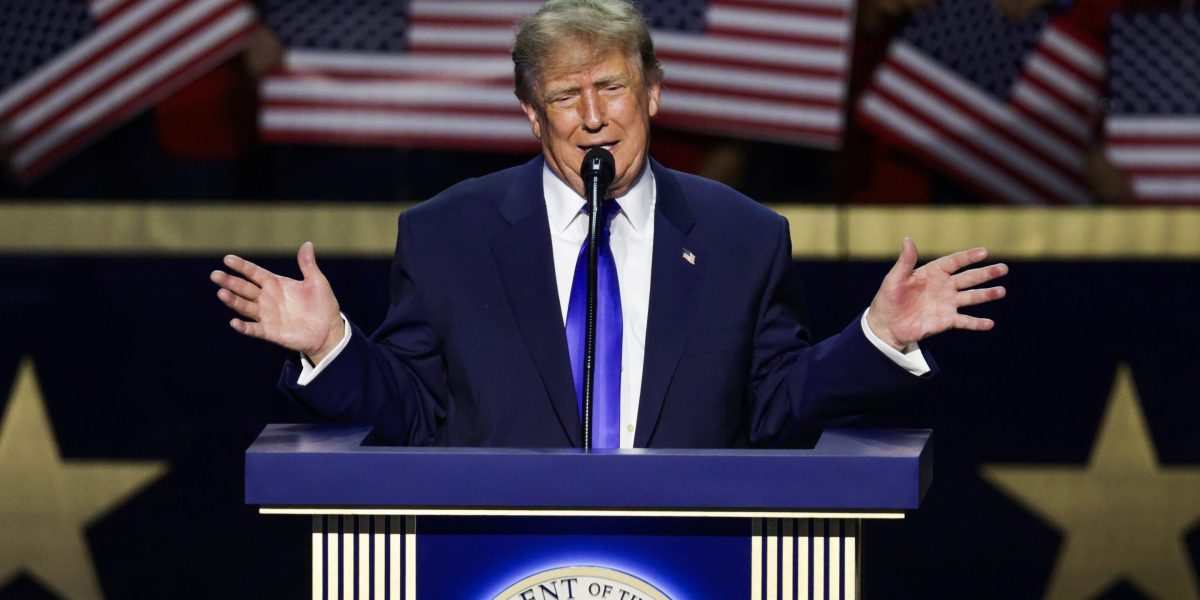
President Donald Trump pledged a $5,000 check to every American if Republicans win the 2026 midterms, calling it the “Trump Dividend.” The plan, which would cost over $1 trillion, is tied to an election outcome rather than economic conditions. Vice President JD Vance later suggested it might not apply to the wealthy. A lawyer said the plan is likely legal, as it would pay all citizens regardless of voting behavior. Trump’s previous cash promises, including the DOGE program and tariff rebates, failed to deliver on their claims. The new pledge is seen as a response to political challenges stemming from those earlier initiatives.
Our Reading
The announcement sounds familiar.
Trump promises $5,000 checks to all Americans if Republicans win.
The plan is tied to an election, not an economy.
DOGE and tariff rebates failed to deliver.
Vance walks back the promise, but the lawyer says it’s legal.
The numbers tell one story.
Author: Evan Null
You get a check, and you get a check
Trump’s promise to send checks to people’s houses might bring up a few memories from years ago, when Trump signed the CARES Act on March 27, 2020, sending $1,200 to eligible adults and $500 per child, with income-based phaseouts. That December, he signed a second round of $600 checks into law. (At first, he demanded Congress raise the number to $2,000—and while the Democratic-led House agreed, Senate Republicans blocked it.) Combined with a third round of stimulus checks under President Joe Biden, the three pandemic rounds totaled more than $814 billion. Whatever the politics, the underlying emergency of a virus that shut down the global economy wasn’t something Trump had built.
But Trump’s second term is full of cash promises that trace back to two programs Trump created—and then had trouble delivering on. The first was DOGE. In February 2025, Trump backed a “DOGE dividend” that would return 20% of the department’s claimed savings to citizens, an amount its promoters pegged near $5,000 per household. But the savings didn’t hold up: A GAO audit found DOGE couldn’t verify 96% of its claimed grant savings and had counted $1.7 billion from a contract that was never actually canceled. DOGE shut down July 4, 2025 and no dividend ever went out.
The second was tariffs. Starting in July 2025, Trump floated a $2,000 “tariff rebate” funded by tariff revenue, even as his own Treasury secretary said on air he hadn’t discussed the details with the president. By November, betting markets had the odds of a real payout at 1% to 2%. Meanwhile, the tariffs themselves became a drag rather than a windfall: They’re a live factor in the toilet-paper price and shortage fears hitting household budgets, and economists cited say they’ve helped fuel an affordability problem now weighing on Trump’s own midterm pitch.
So in reality, Trump’s midterm elections promise—that $5,000 dividend—is nothing more than a fix for a political problem that Trump’s prior “give people money” promise (and the tariffs behind it) helped create.
Trump’s promises don’t stop there: He also promised money back through the tax code. During the 2024 campaign he pledged to end taxes on tips, overtime pay, and Social Security benefits. Those pledges only partly survived Congress: The “One Big Beautiful Bill” he signed in July 2025 created temporary deductions for tipped and overtime income through 2028, not the full exemptions promised, and Social Security benefits are still taxed on the returns filers submitted this year. Independent estimates put the full package at $3.6 trillion to $6.6 trillion in added deficits over a decade if fully enacted.
Few governments tie cash payments to elections
Governments elsewhere have sent broad cash payments before, but rarely tied to their own reelection. Hong Kong gave every adult resident HK$10,000 in 2020 to offset protest-related and pandemic damage, while Japan sent residents a flat 100,000 yen payment that same year, just as Singapore ran a tiered payout based on income. None of those were contingent on a specific party winning an upcoming vote. Legal experts likened it to a bribe to vote a certain way, similar a move it likened to Elon Musk’s million-dollar giveaways to voters in last year’s Wisconsin Supreme Court race.
Congress still holds the power of the purse, and no bill exists—yet. Republican Sen. Bernie Moreno of Ohio wrote he’d have one ready “immediately after the November 3rd election.”