Source: Fortune
Summary
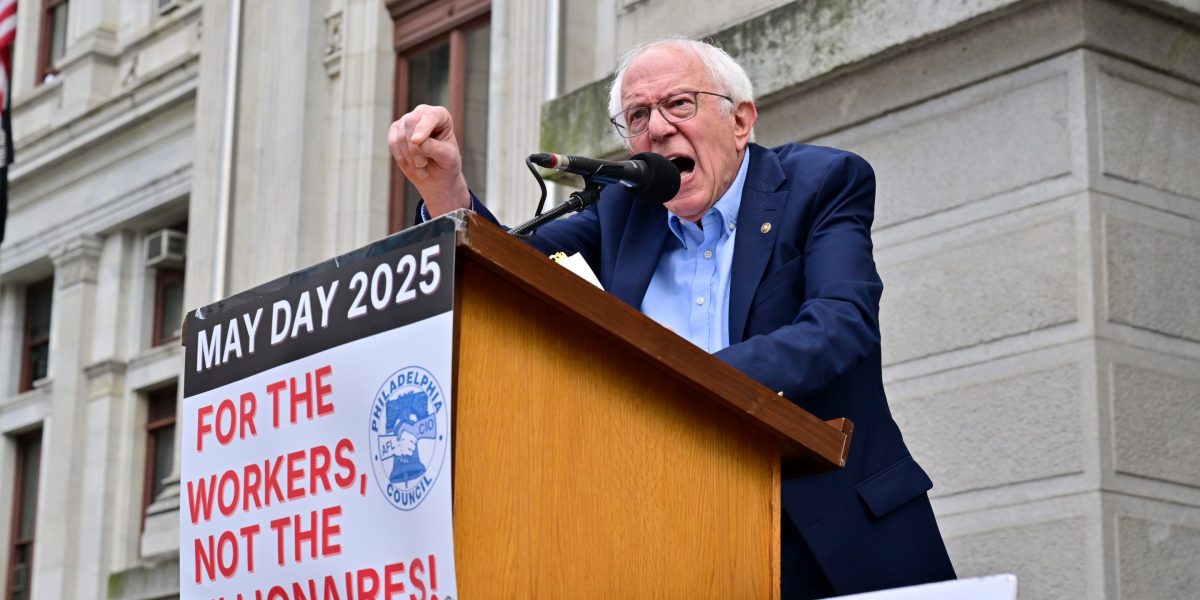
Bernie Sanders and Rep. Mark Takano reintroduced the Thirty-Two Hour Workweek Act, aiming to reduce the standard workweek for nonexempt employees from 40 to 32 hours. The bill would gradually lower the overtime threshold over four years, requiring employers to pay overtime for hours beyond 32. It also proposes daily overtime rules, with double pay after 12 hours. Sanders argued that AI-driven productivity gains should benefit workers, not just corporate leaders. A 2026 study suggested AI could allow 35 million U.S. workers to shift to a 32-hour week. Critics, like Sen. Bill Cassidy, warned of potential business costs and price increases.
Our Reading
The numbers tell one story.
Sanders and Takano push for a 32-hour workweek, citing AI’s impact on labor.
The bill would raise overtime costs for employers, who could still require longer hours.
Historical labor struggles over work hours resurface in the AI era.
The proposal faces skepticism from lawmakers who fear economic consequences.
Author: Evan Null
A century-old fight over workers’ time
Eugene V. Debs, a socialist labor leader, advocated for shorter work hours in the late 1800s, calling it a matter of dignity. His push for an eight-hour workday came during a time when many Americans worked 12-hour shifts. In 1926, Ford Motor Company introduced a 40-hour workweek, setting a precedent that eventually became law with the Fair Labor Standards Act in 1938.
Since then, the 40-hour workweek has remained the standard, even as productivity has surged. From 1979 to 2026, net productivity rose 90%, while typical worker pay increased only 33%, according to the Economic Policy Institute. Advocates for shorter workweeks argue that this gap highlights the need for reform.
Recent studies suggest that reducing work hours can improve worker well-being without harming productivity. A six-country study found that employees who cut their hours reported better health, job satisfaction, and work ability. Sanders sees this as a chance to reallocate efficiency gains to workers, not just corporate profits.
Still, moving from voluntary trials to a federal standard is a major challenge. Critics, like Sen. Bill Cassidy, warn that the added labor costs could raise prices and hurt small businesses. The bill’s fate will depend on how lawmakers balance worker benefits against economic concerns.
Sanders insists the 32-hour workweek is not radical, but a necessary step to reduce stress and ensure AI benefits all Americans. His proposal echoes a long-standing labor movement, now reimagined for the AI age.
AI and the future of work
Sanders has long advocated for responsible AI use, including calls for a pause on AI development. He sees the technology as a tool that could reduce workloads, not just replace workers. His latest bill aligns with this vision, aiming to ensure that AI-driven productivity gains translate into more free time for workers.
The Thirty-Two Hour Workweek Act is not the first of its kind. Takano introduced a similar bill in 2021, and Sanders has supported similar proposals in the past. The idea of reducing work hours has gained traction as more companies experiment with four-day workweeks, though these remain voluntary.
Proponents argue that shorter hours can lead to better work-life balance, lower turnover, and increased productivity. But the transition to a federal standard would require significant changes in labor law and employer practices. It also raises questions about how AI will shape the workforce in the coming years.
As AI continues to evolve, the debate over work hours is likely to intensify. Sanders and his allies see the 32-hour workweek as a way to ensure that technological progress benefits workers, not just corporations. Whether this vision becomes reality will depend on political will and economic feasibility.
The bill’s success will also hinge on public support and the ability of lawmakers to navigate the complex relationship between labor, technology, and economic growth.
The political landscape
The Thirty-Two Hour Workweek Act faces a tough road in Congress. While Sanders and Takano have the backing of progressive lawmakers, the bill is unlikely to gain traction in a divided Congress. The Senate’s Health, Education, Labor, and Pensions (HELP) Committee, chaired by Sen. Bill Cassidy, is a key hurdle.
Cassidy has expressed concerns about the potential economic impact of the bill, arguing that it could lead to higher prices and job losses. His opposition reflects broader skepticism about the feasibility of reducing work hours on a national scale.
Despite these challenges, Sanders remains undeterred. He has consistently framed the issue as a matter of fairness, arguing that workers deserve a share of the productivity gains driven by technology. His rhetoric resonates with many Americans who feel the pressures of long work hours and rising costs.
The bill’s reintroduction highlights the ongoing tension between labor rights and corporate interests. As AI reshapes the economy, the question of how to balance efficiency with worker well-being will remain a central issue in American politics.
Whether the 32-hour workweek becomes a reality depends on the ability of lawmakers to find common ground and address the concerns of both workers and businesses.
Public reaction and support
Public support for shorter workweeks has grown in recent years, especially as more companies experiment with four-day workweeks. Employees report higher job satisfaction, better mental health, and improved work-life balance. These positive outcomes have fueled calls for broader policy changes, including federal legislation.
However, not everyone is convinced. Critics argue that reducing work hours could lead to lower wages, reduced benefits, and increased pressure on businesses to maintain productivity with fewer workers. These concerns are particularly relevant in industries with tight profit margins.
Advocates counter that the benefits of shorter hours outweigh the risks. They point to studies showing that employees who work fewer hours are often more productive and engaged. This suggests that the 32-hour workweek could be a win-win for both workers and employers.
Public opinion remains divided, with many Americans unsure about the long-term effects of such a policy. While some see it as a step toward a more balanced and humane work culture, others fear it could lead to job losses and economic instability.
As the debate continues, the success of the Thirty-Two Hour Workweek Act will depend on its ability to address these concerns and demonstrate tangible benefits for workers and businesses alike.
The role of AI in shaping the future of work
AI is rapidly transforming the workforce, with many companies using the technology to increase efficiency and reduce costs. This shift has raised concerns about job displacement and the potential for greater income inequality. Sanders argues that AI should be used to benefit workers, not just corporate leaders.
His vision for a 32-hour workweek is part of a broader effort to ensure that technological progress serves the public good. By reducing work hours, he believes that workers can enjoy more free time while still maintaining their livelihoods. This approach aligns with the idea of a universal basic income, where technology helps support workers rather than replace them.
However, the implementation of such policies remains uncertain. The success of AI-driven productivity gains will depend on how they are distributed across the economy. If the benefits are concentrated among a small group of corporations and wealthy individuals, the gap between workers and executives could widen further.
Sanders and his allies are pushing for a different outcome, one where AI is used to create more opportunities for workers rather than fewer. This vision requires not only policy changes but also a shift in how society views the relationship between technology, labor, and economic growth.
As AI continues to evolve, the question of how to balance innovation with worker well-being will remain a central issue in American politics and public discourse. The Thirty-Two Hour Workweek Act is just one part of this larger conversation, but it highlights the growing demand for a more equitable and sustainable approach to work in the digital age.