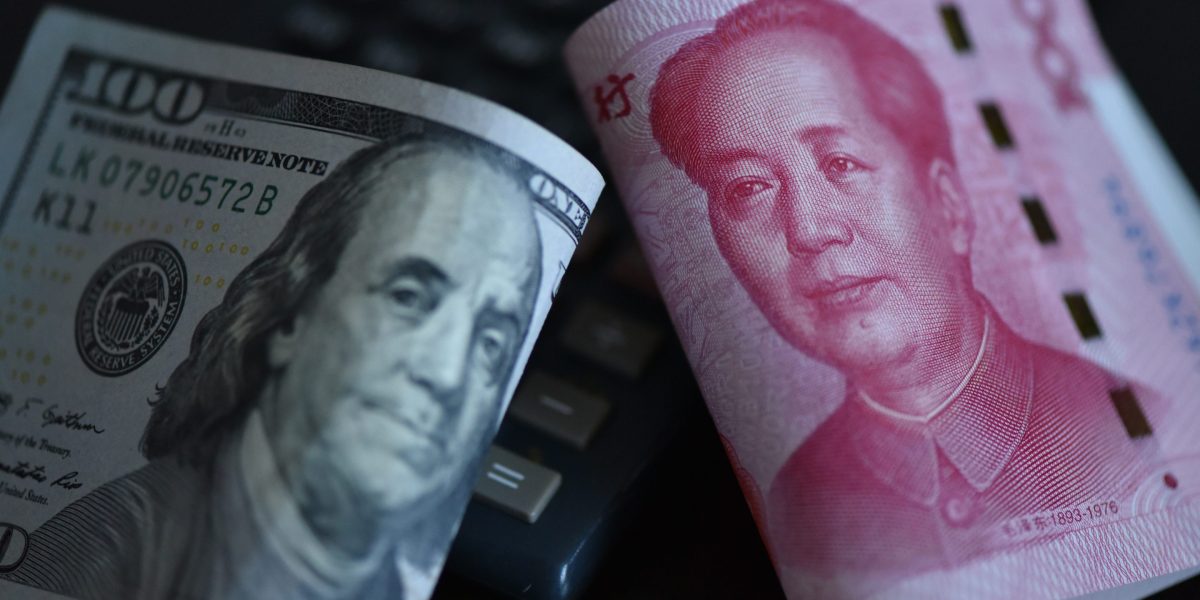
Source: Fortune.com
Summary
Saudi Arabia has exited China’s mBridge digital payment platform, according to the Financial Times. The Saudi Central Bank (SAMA) completed a proof of concept in May 2025 and is no longer a participating member. The move comes after the Bank for International Settlements (BIS) left the project in 2024. mBridge, launched in 2021, allows central banks to use digital currencies for direct blockchain transactions. Despite Saudi Arabia’s exit, the platform has seen a significant increase in transactions, reaching over $55 billion in 2026.
Our Reading
The numbers tell one story.
Saudi Arabia left mBridge after completing a proof of concept.
BIS also exited the project last year, citing no political reasons.
mBridge still grew, with transactions up 2,500-fold since 2022.
The dollar’s dominance faces pressure, but not from mBridge alone.
Author: Evan Null
Saudi Arabia’s Exit from mBridge
Saudi Arabia quietly dropped out of China’s mBridge digital payment platform, which Beijing has promoted as an alternative to the dollar-dominated SWIFT system. The Financial Times reported the move, citing sources. The Saudi Central Bank (SAMA) had participated in mBridge as an observing member in 2023 and later joined efforts to create a proof of concept in 2024. SAMA completed the proof of concept on May 13, 2025, and then exited the platform.
The move follows the Bank for International Settlements (BIS) leaving mBridge in October 2024, a decision the BIS said was not politically motivated. However, some analysts believe U.S. pressure may have played a role. Saudi Arabia’s initial participation in mBridge was seen as a major win for the project, as the oil-producing nation is central to the petrodollar system, which has long been tied to the U.S. dollar.
The petrodollar system, established in 1974, has made the U.S. dollar the dominant currency in global trade. However, the dollar has faced challenges, especially after U.S. sanctions on Russia in 2022. Other countries have sought to reduce their reliance on the dollar, with some, like Saudi Arabia, exploring the use of the yuan for oil sales. This shift could weaken the dollar’s dominance over time.
Despite Saudi Arabia’s exit, mBridge has continued to grow. A report from the Atlantic Council found that transactions on the platform surged to over $55 billion in 2026, a 2,500-fold increase since 2022. While mBridge may not directly challenge the dollar, it could gradually erode its dominance by promoting alternative digital payment systems.
China has also been expanding its currency swap agreements and promoting yuan-based transactions with key trade partners. This strategy aims to reduce the dollar’s global influence and position the yuan as a more viable alternative. However, the dollar remains deeply entrenched in global commerce, especially in oil and other critical sectors.