Source: Fortune.com
Summary
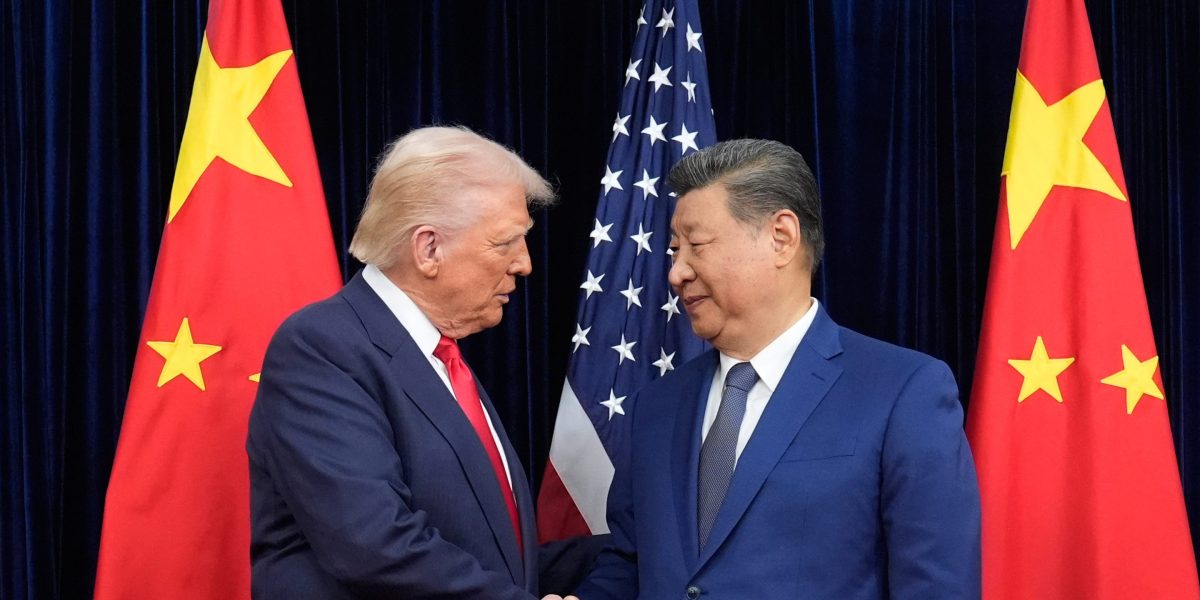
Alibaba unveiled a new AI chip, the Zhenwu V900, claiming it is the most powerful in China, with three times the performance of its previous model. The company also announced plans for an AI model with five to 10 trillion parameters. The announcement comes ahead of a U.S.-China summit where AI development is a key topic. Alibaba’s CEO, Eddie Wu, emphasized the company’s efforts to meet rising AI demand, despite global data center supply chain challenges. Analysts note that China’s AI progress is driven by self-reliance and alternative chip solutions.
Our Reading
The numbers tell one story.
Alibaba claims a new AI chip is the most powerful in China.
It plans to build AI models with up to 10 trillion parameters.
Global supply chain issues slow infrastructure growth.
China’s AI push reflects a broader self-reliance strategy.
Author: Evan Null
Alibaba’s AI Chip Announcement
Alibaba introduced the Zhenwu V900, calling it the most powerful AI chip in China. The chip offers three times the performance of its predecessor, the Zhenwu M890. This development highlights the company’s focus on improving AI capabilities for both internal use and cloud clients. The new chip is designed to support advanced AI model training and inference, which are critical for delivering efficient AI services.
AI Model Expansion
Alibaba plans to train an AI model with five to 10 trillion parameters, a significant step toward matching the most advanced models from the U.S. The company’s current Qwen3.8-Max model has 2.4 trillion parameters, showing steady progress. This expansion underscores Alibaba’s ambition to compete globally in AI, despite U.S. export restrictions that limit access to cutting-edge technologies.
Global AI Competition
Chinese AI companies like Moonshot are also making strides, with models such as Kimi K3 featuring 2.8 trillion parameters. These developments are giving China more leverage in its upcoming talks with the U.S. as it pushes for self-reliance in AI and chipmaking. Analysts suggest that China’s focus on alternative solutions is helping it maintain momentum in the AI race.
Infrastructure Challenges
Alibaba’s CEO, Eddie Wu, acknowledged global shortages in AI data center infrastructure, which are slowing the company’s ability to scale. Despite this, Alibaba is expanding its data centers, aiming for over 20 gigawatts of computing power by 2032. This reflects the growing demand for AI and the challenges of meeting it amid supply chain constraints.
China’s AI Strategy
China’s AI advancements are part of a broader push for self-reliance, especially as U.S. export restrictions limit access to advanced chips and tools. Companies like Huawei are also developing their own chip technologies to challenge global leaders like Nvidia. Analysts note that while China has made progress in chip design, the ability to advance chip foundries will be key to narrowing the gap with the U.S.