Source: Fox News
Summary
Trump officials claim Iran is mistaken in thinking rising prices and the midterm elections will weaken Trump’s position in negotiations to end the seven-month conflict. The administration says economic pressure will push Iran toward a deal, despite no breakthrough after three hours of talks. State Department spokesperson Tommy Pigott said the president holds all the cards. Gas prices in the U.S. reached a record high, with AAA citing Strait of Hormuz volatility and high oil prices. Secretary of State Marco Rubio argued that allowing Iran to obtain a nuclear weapon would be more costly. Trump addressed the U.N. General Assembly, presenting Iran with a choice between a deal or further U.S. action. A U.S. official said discussions with Iran remained positive but not rushed. Iran proposed a seven-day plan to restore passage through the Strait of Hormuz, with mediators calling the talks positive but early.
Our Reading
As expected, the matter has reached another stage.
Trump officials say Iran is miscalculating.
Gas prices rise as talks with Iran continue.
Rubio argues that the cost of inaction is higher.
Trump insists he is not running for re-election.
Iran offers a seven-day plan to restore Strait of Hormuz access.
Author: Evan Null
Trump’s Confidence in Negotiations
Trump officials are confident that Iran is miscalculating its strategy. They believe that rising prices and the midterm elections will not weaken Trump’s position in negotiations. The administration projects confidence that economic pressure will push Iran toward a deal. Despite three hours of talks this week, no breakthrough was announced. State Department spokesperson Tommy Pigott told Fox News Digital that the president holds all the cards.
Rising Gas Prices and Economic Pressure
Americans are facing a mounting cost at home. The national average for regular gasoline reached $4.49 per gallon, up from $3.16 a year ago. AAA cited volatility in the Strait of Hormuz and high crude oil prices as factors. Secretary of State Marco Rubio acknowledged these costs but argued that allowing Iran to obtain a nuclear weapon would carry a far greater price. He emphasized the long-term consequences for future generations.
Trump’s Stakes in the U.N. Address
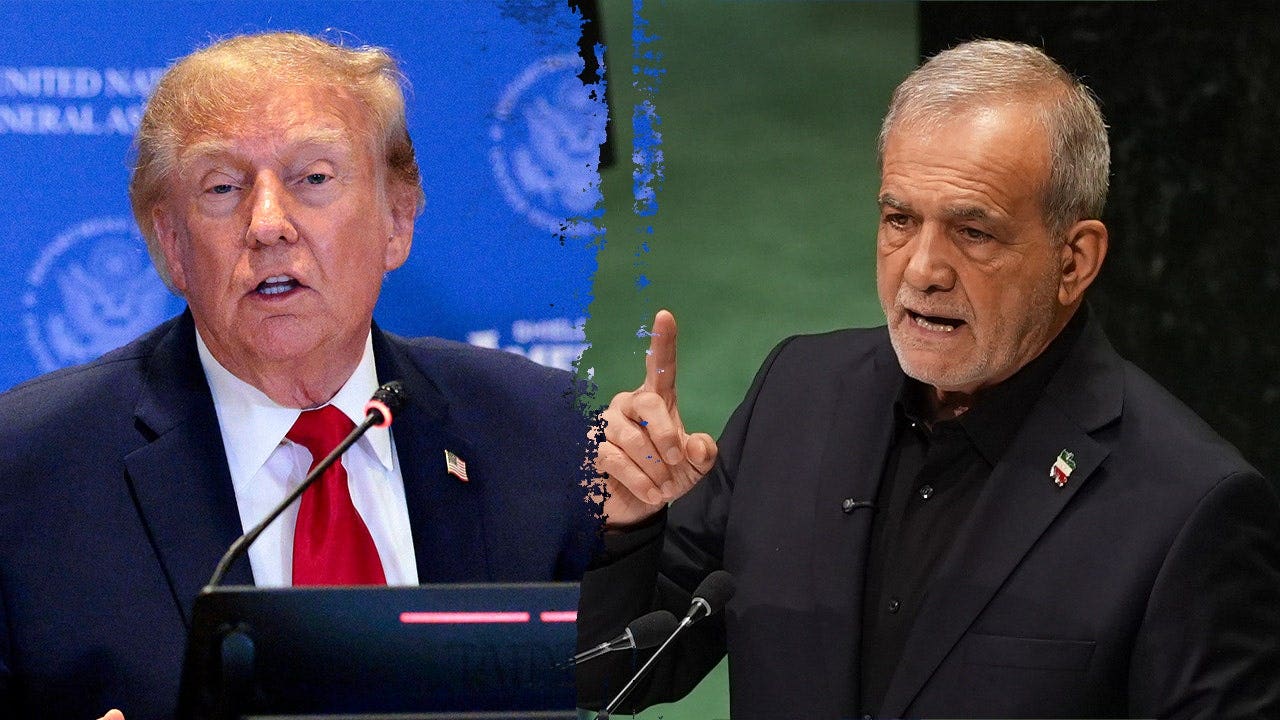
Trump laid out the stakes in stark terms during his U.N. General Assembly address. He presented Tehran with a choice between reaching a deal that would allow Iran to rebuild or facing potentially devastating U.S. action. He questioned whether Iran would choose a deal or face annihilation. Trump predicted Tehran would ultimately choose a deal, arguing that Iranian leaders are waiting to see if the midterm elections weaken his position.
Iran’s Proposed Seven-Day Plan
Iran has put forward its own proposal. Iranian Foreign Minister Abbas Araghchi said Tehran presented U.S. mediators with a seven-day plan this week. The plan would restore passage through the Strait of Hormuz if certain conditions are met, followed by renewed negotiations toward a broader agreement. The proposal draws from the memorandum of understanding Trump and Iran reached in June. A mediator told CBS News the latest discussions were positive but remained in their early stages.
U.S. Control Over the Strait of Hormuz
A U.S. official said discussions through mediators remained “positive and constructive” but that the administration was not in a rush to reach an agreement. The official said the U.S. is in a strong position with control of the Strait of Hormuz. They predicted oil and gas prices would fall back to pre-conflict levels as the U.S. continues to maintain control. Pigott pointed to growing oil flows through the Strait of Hormuz and the economic pressure Washington has imposed on Tehran as evidence that the balance remains in Trump’s favor.