Source: Fortune
Summary
Coastal erosion has significantly impacted San Clemente, California, with rising sea levels and stronger waves threatening the city’s beaches and infrastructure. The erosion has led to repeated rail line closures and damaged homes. Scientists predict continued beach loss by 2100. Residents are considering a 1% sales tax to fund sand replenishment and wildfire protection. Officials face challenges in securing permits and finding long-term solutions, including potential rail line relocations. The city faces a sand deficit of 3 million cubic yards, making restoration efforts costly and complex.
Our Reading
The numbers tell one story.
San Clemente’s beaches are shrinking, and the rail line is in danger.
Residents want to tax themselves for sand, but officials are hesitant.
Officials admit the ocean is winning the battle.
Beaches are more than sand — they’re identity, recreation, and infrastructure.
Author: Evan Null
Coastal Erosion and the Fight for San Clemente’s Beaches
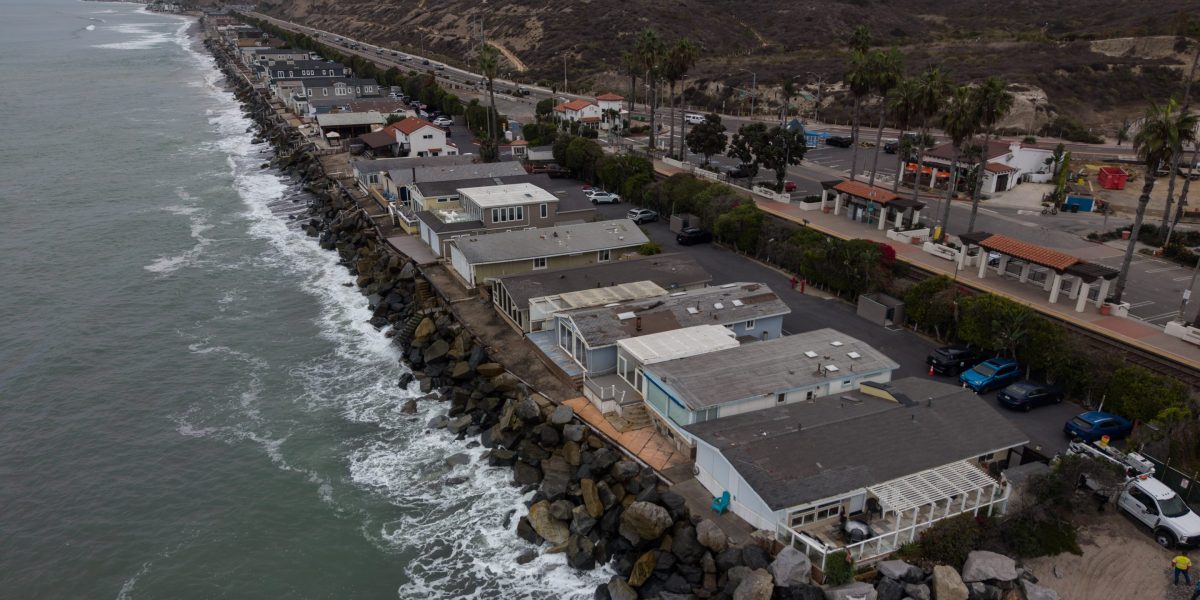
San Clemente, a Southern California beach town, has seen its iconic North Beach shrink due to coastal erosion. For years, residents could walk a mile along the sand, but that is no longer possible. The shoreline has been pushed inland by rising sea levels and powerful waves, damaging homes and forcing the closure of a key rail line. The city is now facing a crisis that threatens both its natural beauty and its infrastructure.
The erosion has been exacerbated by urban development, which has slowed the flow of sediment that once nourished the beaches. Warmer ocean waters have also increased wave intensity, further accelerating the loss of sand. Scientists have long warned that more than half of Southern California’s beaches could erode significantly by 2100, and San Clemente is a prime example of that forecast. The town is now considering a 1% sales tax to fund beach restoration, a measure that has divided the community.
The rail line, which runs along the coast and is one of the busiest in the country, has been repeatedly closed due to erosion. Transportation officials have tried to stabilize the tracks by placing rocks along the shoreline, but this has only accelerated sand loss. The city manager estimates a sand deficit of 3 million cubic yards, making restoration efforts both expensive and logistically challenging. Trucking sand to the beach would require 300,000 trips, a daunting task for any city.
Opponents of the tax argue that San Clemente should work with neighboring communities to find a regional solution. Some believe that fighting the ocean is a losing battle. City Councilman Zhen Wu, who opposes the tax, said, “Fighting Mother Nature is very expensive.” Meanwhile, officials are considering long-term options, including moving the rail line inland or even halting it altogether. The question remains: what happens to passenger rail and freight if the coast continues to erode?
For residents like Cameron Cosgrove, the loss of the walkable beach is a personal and cultural blow. “We’ve lost our walkable beach,” he said. “It used to be you could come to North Beach, walk the beach trail, or on the beach to the pier and actually all the way down to the south end of town. Can’t do either anymore.” The struggle in San Clemente is not just about sand — it’s about preserving a way of life that is increasingly under threat.