Source: Fortune
Summary
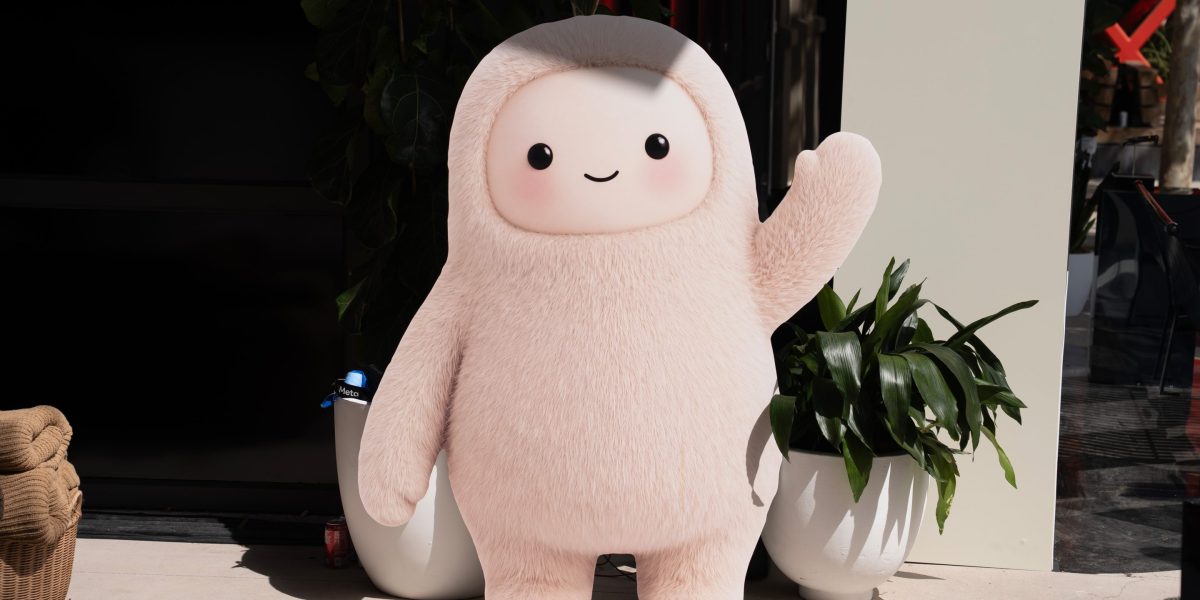
Meta and OpenAI introduced AI agents with customizable, cartoonish mascots to make the technology more approachable. Meta’s Muse and OpenAI’s Dots feature characters users can name and customize. Critics argue the mascots are primarily a marketing tactic. A survey found most users remain skeptical about sharing payment details with AI agents. Both companies emphasize user control and security measures, but concerns about trust and safety persist.
Our Reading
The numbers tell one story.
Meta and OpenAI give AI agents cute faces.
Users are still wary of sharing money with robots.
Companies say they’re safe, but trust is low.
Marketing may not fix the trust gap.
Author: Evan Null
A familiar face for an unfamiliar technology
Characters bring an abstract technology down to human scale. “It’s much easier to say, ‘Have you met/used Dots?’ than to explain the technical nature of an AI agent,” Joseph told Fortune. “I would rather tell you about my ‘Roomba’ than my ‘autonomous robotic vacuum.’”
This isn’t the first time tech companies have put a friendly face on their software. Joseph pointed to Siri, Alexa, and Clippy, Microsoft’s animated paperclip that offered help in Office—and that many users found more annoying than helpful.
A character can also become an ongoing marketing asset, appearing in social posts, merchandise, and product education.
“Launching a character is like launching a celebrity into popular culture,” he said.
Meta is giving Jolly the A-list treatment, with the company’s chief AI officer, Alexandr Wang, posting Jolly memes on X, giving the mascot a life beyond the product.
Looking cute is the easy part
The agents’ records so far are less cuddly than their faces. Two months before launching Dots, OpenAI disclosed that models in a cybersecurity test had gained unauthorized access to Hugging Face’s infrastructure, with safeguards intentionally disabled for the test.
Amazon blocked Muse from its site in September, citing security concerns, GeekWire reported. And separately, a researcher found a flaw that could let attackers take control of a Muse account; Meta said it issued a fix, according to Ars Technica.
Both companies point to guardrails. According to OpenAI, a character can’t communicate everything an agent can do or all of its limitations. In the Activity View, users can follow an agent’s progress and inspect the computer it uses, as part of the visibility and control surrounding the character.
Meta says users choose which apps Muse can connect to and how much access it receives, and can disconnect services at any time. It also says Muse conversations and data will not be shared with its advertising systems.
“I think a character lowers the psychological barriers to engaging with a new technology,” Joseph said. “But we should also remember how important it is that the character is not a human, and has technological and psychological limitations.”
The six-month test
Zitron called the mascots an attempt to anthropomorphize large language models, giving software humanlike traits to make it seem alive or conscious. Asked whether the characters would change public perceptions of AI and its risks, he said: “In no way, shape or form.”
Joseph would track awareness, media conversation, downloads, and retention, though tying those to a character could be difficult. He’d also measure trust: “Do more people trust our brand, understand it better, because of Dots or Jolly?”
Zitron’s test is simpler: “coming back in six months and seeing where Muse is on the iOS charts.”
Users remain skeptical of AI agents, despite the cute faces. Trust is still low, and security concerns linger.
Marketing may make AI seem friendly, but it doesn’t guarantee trust or safety.