Source: Fortune
Summary
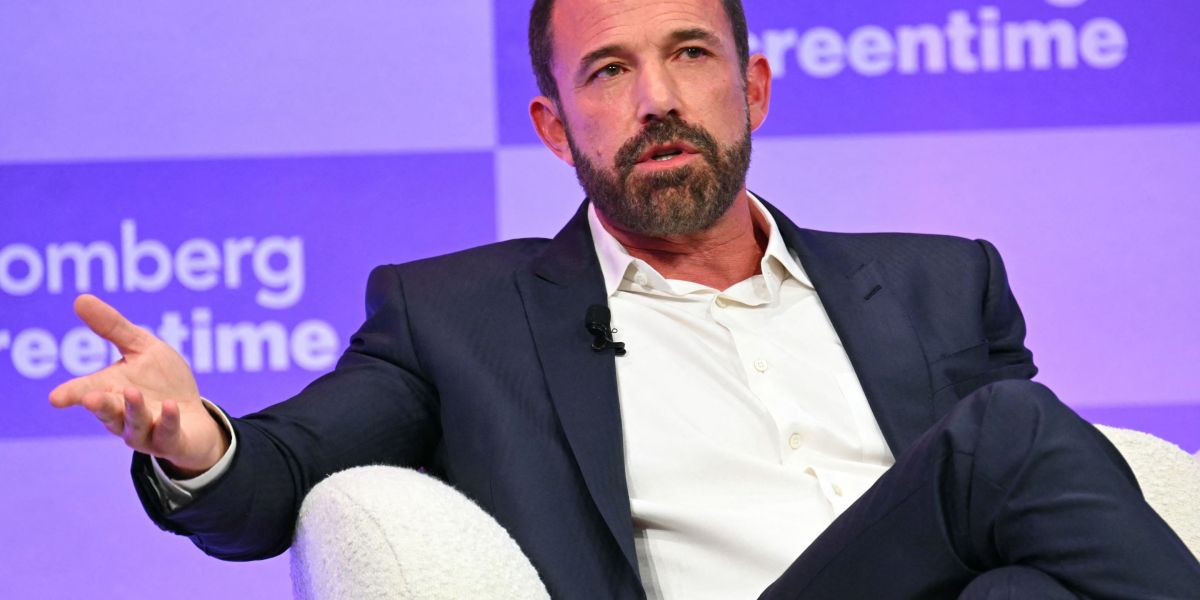
Ben Affleck, actor and founder of AI filmmaking startup InterPositive, claims fears about AI are exaggerated and calls them “propaganda.” He says AI is a tool for good and not the existential threat some claim. InterPositive was reportedly sold to Netflix for $587 million. Affleck also expressed concerns about AI’s impact on education and job reliance but argued it is augmenting rather than replacing workers in Hollywood. Industry data shows job losses in film production over the past decade.
Our Reading
The announcement sounds familiar.
Affleck calls AI fears “propaganda” and says it’s just another tool.
He founded an AI startup, sold it for $587 million.
He worries about AI’s impact on education and job reliance.
The numbers tell one story: Hollywood is changing, but not as fast as the hype suggests.
Author: Evan Null
Ben Affleck’s AI Perspective
Ben Affleck, a Hollywood actor and filmmaker, has expressed a balanced view on AI. He believes the technology is not the existential threat some claim it to be. Instead, he sees it as a tool that can be used for good, especially in the film industry. His perspective comes from his own experience with AI, as he founded InterPositive, an AI-focused filmmaking startup, which was reportedly sold to Netflix for $587 million.
Affleck’s views on AI are not without nuance. While he supports its use in filmmaking, he also expresses concerns about its impact on younger generations, particularly Gen Z and Gen Alpha. He worries about the potential for over-reliance on AI and the risk of learned helplessness in education. This concern is echoed by industry data showing a decline in employment in the motion picture and video production sector over the past decade.
Despite these concerns, Affleck maintains that AI is not replacing workers but rather augmenting them. He claims that in the film industry, the number of people employed has not decreased, and in some cases, has even increased. This view contrasts with broader industry trends, which show a significant decline in jobs over the past 10 years.
Affleck’s stance on AI is part of a larger conversation among Hollywood figures. Other notable names, such as James Cameron and Matthew McConaughey, have also weighed in on the role of AI in the industry. Their perspectives highlight the ongoing debate about how AI should be used and regulated in creative fields.
As the film industry continues to evolve, the role of AI remains a topic of discussion. While some, like Affleck, see it as a tool for progress, others are more cautious. The challenge lies in finding a balance between embracing the technology and ensuring it is used responsibly.
Hollywood’s AI Adoption
Ben Affleck is not the only Hollywood figure advocating for the use of AI in filmmaking. Other industry leaders, such as James Cameron, have also taken steps to engage with the technology. Cameron, known for directing films like The Terminator, has joined the board of Stability AI, a major player in the AI industry. This move highlights the growing interest in AI among Hollywood professionals.
Actor Natasha Lyonne has also embraced AI, but with a focus on protecting artists’ rights. She is the cofounder of Asteria Film Co., an animation and film studio that aims to develop copyright-friendly generative AI. Lyonne argues that the film industry must be involved in shaping AI development to ensure it benefits artists rather than exploiting them.
Matthew McConaughey has similarly acknowledged the inevitability of AI in the entertainment industry. He has taken steps to protect his likeness by filing trademarks covering his image and signature expressions. McConaughey’s approach reflects a broader trend among Hollywood figures who are trying to navigate the challenges and opportunities presented by AI.
These examples show that while the use of AI in Hollywood is still evolving, many industry leaders are actively engaging with the technology. Their perspectives highlight the need for a balanced approach that considers both the potential benefits and the risks associated with AI.
As AI continues to shape the future of filmmaking, the industry will need to find ways to adapt while maintaining its creative integrity. The experiences of figures like Affleck, Cameron, Lyonne, and McConaughey provide valuable insights into how Hollywood can navigate this complex landscape.
AI and the Future of Employment
The impact of AI on employment is a major concern for many in the film industry. While Ben Affleck argues that AI is not replacing workers but rather augmenting them, industry data tells a different story. Between 2016 and 2026, the motion picture and video production industry lost 49,000 jobs, a decline of 21%. This trend raises questions about the long-term effects of AI on employment in Hollywood.
Affleck’s claim that AI is not reducing the number of workers in the industry contradicts these statistics. While he points to the use of AI in films where the same or even more people are employed, the broader industry data suggests that AI is contributing to job losses. This discrepancy highlights the complexity of the issue and the need for a more nuanced understanding of AI’s impact on employment.
As AI continues to advance, the film industry will need to address these concerns. The challenge lies in finding a way to use AI to enhance creativity while also protecting jobs. This will require collaboration between industry leaders, policymakers, and workers to ensure that the benefits of AI are shared fairly.
The debate over AI’s impact on employment is not unique to Hollywood. Across industries, there are growing concerns about the potential for AI to displace workers. However, the film industry’s unique position as a creative field adds another layer of complexity to this discussion.
As the industry moves forward, it will need to balance the opportunities presented by AI with the need to protect jobs and maintain the integrity of creative work. The experiences of figures like Affleck and others will be crucial in shaping this balance.
AI and the Education Sector
Ben Affleck’s concerns about AI extend beyond the film industry to the education sector. He has expressed worries about the potential for AI to contribute to learned helplessness among students. This concern is supported by data showing a 30% rise in the number of As given out at colleges in the last three years. Affleck fears that students may become overly reliant on AI, leading to a decline in critical thinking and problem-solving skills.
This issue is not unique to the film industry. As AI becomes more integrated into education, there are growing concerns about its impact on learning. While AI can provide valuable tools for students, there is a risk that it may be used in ways that undermine traditional learning methods. This raises important questions about how AI should be used in educational settings.
Affleck’s perspective highlights the need for a balanced approach to AI in education. While the technology has the potential to enhance learning, it must be used responsibly to ensure that students develop the skills they need to succeed. This requires careful consideration of how AI is integrated into the curriculum and how it is used to support, rather than replace, traditional teaching methods.
The debate over AI’s role in education is part of a larger conversation about the future of work and learning. As AI continues to evolve, it will be essential to find ways to use it to support students while also preparing them for the challenges of the future. This will require collaboration between educators, policymakers, and technology developers to ensure that AI is used in a way that benefits everyone.
As the use of AI in education continues to grow, the lessons learned from Hollywood’s experience with the technology may provide valuable insights. The challenges and opportunities faced by the film industry can serve as a model for how AI can be used responsibly in other sectors, including education.
The Broader Implications of AI
The discussion around AI in Hollywood is part of a larger conversation about the technology’s impact on society. While some, like Ben Affleck, see AI as a tool for progress, others are more cautious. The debate over AI’s role in the film industry reflects broader concerns about its impact on employment, education, and creative work. These concerns are not limited to Hollywood but extend to other industries as well.
The film industry’s experience with AI provides a useful case study for understanding the challenges and opportunities associated with the technology. As AI continues to shape the future of filmmaking, it will also influence how other industries approach its use. This highlights the need for a coordinated effort to ensure that AI is used responsibly and equitably.
As the use of AI becomes more widespread, it will be essential to address the concerns raised by figures like Affleck. This includes ensuring that the technology is used in a way that supports workers, protects creative integrity, and promotes responsible use. The lessons learned from Hollywood’s experience with AI can inform these efforts and help shape a more balanced approach to the technology.
The future of AI in the film industry and beyond will depend on how it is used and regulated. While there are challenges, there are also opportunities for innovation and progress. The key will be to find a way to use AI in a way that benefits everyone, rather than just a select few.
As the conversation around AI continues, it will be important to consider the perspectives of a wide range of stakeholders. This includes not only industry leaders but also workers, educators, and the public. By working together, it may be possible to develop a more responsible and equitable approach to AI that benefits society as a whole.