Source: Fox News
Summary
The Philippines reported a significant increase in Chinese naval and coast guard activity in the South China Sea, with 101 vessels tracked in September compared to 56 in August. The Philippine military accused China of aggressive and coercive behavior, including a recent encounter where a Chinese fighter jet reportedly approached a Philippine patrol plane dangerously close. China denied the allegations, claiming the Philippine aircraft violated its airspace. The U.S. has a mutual defense treaty with the Philippines, which complicates the situation as tensions rise in the disputed waters.
Our Reading
As expected, the matter has reached another stage.
Chinese ships appear in greater numbers around disputed islands.
Philippine planes fly near Scarborough Shoal, watched by Chinese fighters.
Both sides claim the other acted improperly, as before.
The pattern repeats, like a clock ticking toward the next move.
Author: Evan Null
China’s Naval Buildup in the South China Sea
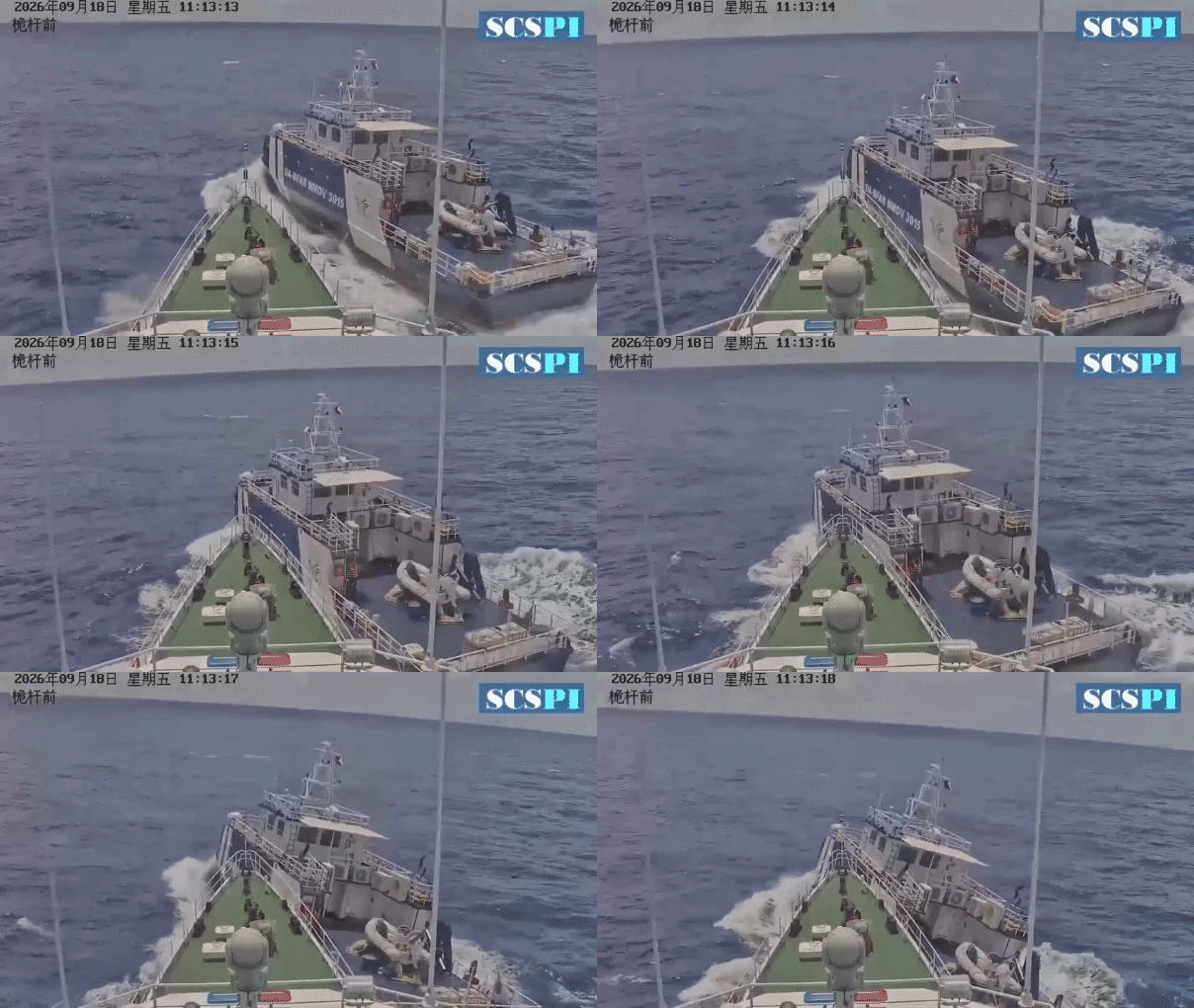
China increased its naval presence in the South China Sea, with the Philippines tracking 101 Chinese ships in September. This is the highest number recorded in recent months, showing a growing trend of military activity. The Philippines accused China of aggressive behavior, including a recent encounter where a Chinese fighter jet reportedly flew close to a Philippine patrol plane. The increase in Chinese vessels is seen as a sign of continued pressure on the Philippines.
Escalating Tensions Between China and the Philippines
The recent encounters between Chinese and Philippine forces have raised concerns about the potential for conflict. The Philippines has been patrolling disputed waters and resupplying its positions, leading to repeated close contact with Chinese vessels. The U.S. has a mutual defense treaty with the Philippines, which adds another layer of complexity to the situation. Despite diplomatic efforts, tensions continue to rise in the region.
China’s Claims and the Role of International Law
China asserts sovereignty over most of the South China Sea, including areas within the Philippines’ exclusive economic zone. The country uses coast guard ships, naval vessels, and aircraft to enforce these claims. In 2016, an international tribunal ruled that China’s historic rights claims had no legal basis, but Beijing has rejected the decision. This ongoing dispute continues to fuel tensions between the two nations.
U.S. Involvement and the Mutual Defense Treaty
The U.S. has a mutual defense treaty with the Philippines, which includes protection for Philippine armed forces, public vessels, and aircraft in the South China Sea. This commitment has made the situation more complex, as the U.S. is now closely watching the developments. The recent diplomatic thaw between the U.S. and China has not stopped the rising tensions, with both sides continuing to assert their positions in the disputed waters.
Continued Confrontations and Diplomatic Efforts
Despite recent diplomatic efforts, confrontations between China and the Philippines continue. The latest incidents have put renewed attention on the U.S. defense commitment to Manila. The two countries have been bound by their mutual defense treaty since 1951, and the U.S. has emphasized its obligations under the treaty. As tensions persist, the situation in the South China Sea remains a critical point of concern for regional stability.