Source: Fox News
Summary
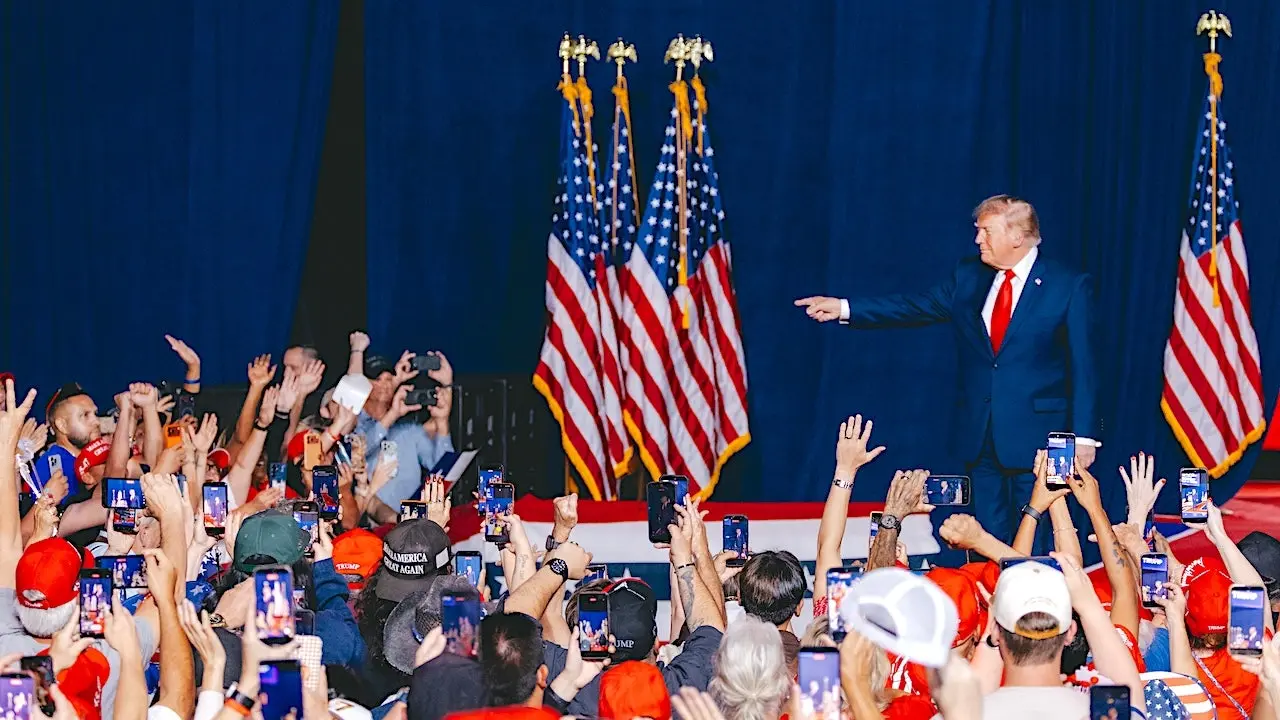
President Donald Trump addressed a rally in San Antonio, Texas, where multiple protesters interrupted his speech. He accused the protesters of being paid by Democrats to spread a left-wing agenda. Trump claimed the protesters wore identical signs and shirts, suggesting they were organized. He also criticized the Democratic-led city and urged his supporters to vote for Republican candidates, including Senate nominee Ken Paxton. The event saw several interruptions, with some protesters being removed by police. Trump reiterated his stance on border security and criticized former President Joe Biden and Kamala Harris.
Our Reading
As expected, the matter has reached another stage.
Trump stands on a stage, waving to a crowd.
Protesters step forward, then are led away by police.
He points at signs, then at people, then at the sky.
He says the same things, again and again, as if they are new.
Author: Evan Null
Trump’s Rallies and the Performance of Resistance
At every rally, Trump faces the same pattern. Protesters appear, then disappear. The crowd cheers, then chants. The same accusations repeat, as if the event is a script that must be followed. The protesters are not just dissenters; they are part of the act. Their presence is expected, their removal is rehearsed.
Trump’s speech is a routine. He speaks to his base, reinforces their fears, and frames opposition as a coordinated effort. The same phrases return—paid protesters, enemies of the nation, the threat of losing the country. It is not a debate; it is a ritual.
The crowd’s energy is predictable. They chant, they laugh, they shout. The interruptions are met with the same response—anger, dismissal, and a call for loyalty. The stage is set, the lines are known, and the performance continues.
Each rally is a mirror of the last. The same people, the same arguments, the same crowd reactions. It is not a campaign; it is a repetition. The message is unchanged, the structure is fixed, and the outcome is expected.
The spectacle is not about winning. It is about maintaining the illusion of control. The protests are not a threat; they are a necessary part of the performance. The crowd’s loyalty is reaffirmed, the message is reinforced, and the cycle continues.
The Ritual of the Rally
Trump’s rallies are not just political events. They are performances. The crowd, the stage, the interruptions—all are part of a familiar script. The protesters are not unexpected; they are part of the act. Their presence is not a disruption but a necessary element of the show.
The same lines are repeated, the same accusations are made. It is not a debate but a ritual. The crowd’s energy is predictable, their reactions are rehearsed. The event is not about persuasion but about reaffirmation.
The interruptions are met with the same response. The protesters are dismissed, the crowd is rallied, and the message is reinforced. It is not a moment of change but a moment of continuity. The rally is not about the present; it is about the past and the future.
Each rally is a repetition of the last. The same people, the same arguments, the same crowd reactions. It is not a campaign; it is a performance. The message is unchanged, the structure is fixed, and the outcome is expected.
The spectacle is not about winning. It is about maintaining the illusion of control. The protests are not a threat; they are a necessary part of the performance. The crowd’s loyalty is reaffirmed, the message is reinforced, and the cycle continues.
The Repetition of the Message
Trump’s message is not new. It is a repetition of the same themes—paid protesters, enemies of the nation, the threat of losing the country. The same words are spoken, the same phrases are used, and the same arguments are made. It is not a campaign; it is a performance.
The crowd’s response is predictable. They cheer, they chant, they shout. The interruptions are met with the same anger, the same dismissal, and the same call for loyalty. The stage is set, the lines are known, and the performance continues.
The rallies are not about persuasion. They are about reaffirmation. The message is not new, the structure is fixed, and the outcome is expected. The crowd’s loyalty is reinforced, the message is repeated, and the cycle continues.
The performance is not about the present. It is about the past and the future. The same people, the same arguments, the same crowd reactions. It is not a debate but a ritual. The event is not about change but about continuity.
The spectacle is not about winning. It is about maintaining the illusion of control. The protests are not a threat; they are a necessary part of the performance. The crowd’s loyalty is reaffirmed, the message is reinforced, and the cycle continues.
The Crowd and the Performance
The crowd at Trump’s rallies is not just a collection of supporters. It is a part of the performance. Their energy, their chants, their reactions are all part of the act. The same lines are repeated, the same arguments are made, and the same energy is felt. It is not a debate but a ritual.
The interruptions are met with the same response. The protesters are dismissed, the crowd is rallied, and the message is reinforced. It is not a moment of change but a moment of continuity. The rally is not about the present; it is about the past and the future.
The performance is not about winning. It is about maintaining the illusion of control. The protests are not a threat; they are a necessary part of the performance. The crowd’s loyalty is reaffirmed, the message is reinforced, and the cycle continues.
The same people, the same arguments, the same crowd reactions. It is not a campaign; it is a repetition. The message is unchanged, the structure is fixed, and the outcome is expected. The event is not about persuasion but about reaffirmation.
The spectacle is not about the present. It is about the past and the future. The same words are spoken, the same phrases are used, and the same reactions are seen. It is not a debate but a performance. The message is repeated, the crowd is rallied, and the cycle continues.
The Illusion of Control
Trump’s rallies are not about winning. They are about maintaining the illusion of control. The same lines are repeated, the same arguments are made, and the same crowd reactions are seen. It is not a debate but a performance.
The interruptions are met with the same anger, the same dismissal, and the same call for loyalty. The protesters are not a threat; they are a necessary part of the act. The crowd’s energy is predictable, their reactions are rehearsed, and the message is reinforced.
The performance is not about the present. It is about the past and the future. The same people, the same arguments, the same crowd reactions. It is not a campaign; it is a repetition. The message is unchanged, the structure is fixed, and the outcome is expected.
The rally is not about persuasion. It is about reaffirmation. The crowd’s loyalty is reinforced, the message is repeated, and the cycle continues. The same words are spoken, the same phrases are used, and the same energy is felt. It is not a debate but a ritual.
The spectacle is not about winning. It is about maintaining the illusion of control. The protests are not a threat; they are a necessary part of the performance. The crowd’s loyalty is reaffirmed, the message is reinforced, and the cycle continues.